Saturday, October 27, 2018

DEEP WATER BEGINNER PROGRAM REVIEW

  
PERSONAL BACKGROUND

 
Hi, I'm the internet's "MythicalStrength", and I make poor decisions

For anyone new to me, I’ve been lifting weights for 18 years and have competed in 3 powerlifting meets and a dozen strongman competitions.  After deciding against competing in strongman nationals this year, I found myself with a lot of downtime between comps and decided to give Jon Andersen’s “Deep Water” program a try.  I had first seen Jon back in IFSA, and was immensely impressed with his physique and ability, and then rediscovered him in Mark Bell’s “Power” magazine where he’d have a monthly Deep Water column written about him by his training partner Jasha Faye.  Through these columns, I got to understand/appreciate Jon’s mentality and find it resonated pretty well with my own.  It’s a focus on overcoming and pushing the body to the limits, rather than a more academic approach to training.  I ended up purchasing his $10 kindle book earlier in the year, read it, enjoyed it immensely, and always had the program on the back of my mind as something to try.  In prepping for my last competition, I had stolen bits and pieces of the program and found it pretty damn brutal, but now I was ready to just run it in full and see what would happen.

SUMMARY OF PROGRAM

 Image result for gates of hell
Yeah, pretty much every squat day

Out of respect for Jon, I’m not going to write out the full program here.  The book is only $10, and it is well worth it.  In addition, I’m pretty sure you can get it for free off his Instagram account, and he gives a lot of details about it on youtube as well.  You could pretty easily piece it together.  

For a brief overview, there are 4 days of lifting and 1 day of active recovery/cardio/conditioning.  In the lifting days, you have 2 days that could be considered “bodybuilding days”, which are a back day and a chest day essentially, and 2 days that are the “Deep Water” days.  The latter days take 1 big movement and train it 10x10.  1 of those days will either be a squat or a deadlift depending on the week, and one will be a press or a push press.  You’ll use a weight that is supposed to be about 70% of your 10rm for these days.  After the 10x10, there will be some assistance work.  You train abs every lifting day with the program.


The first 2 weeks of the program, you rest 4 minutes between sets.  The second 2 weeks, it’s 3 minutes.  The final 2 weeks, it’s 2 minutes.  I applied those rest protocols to EVERY movement in the program, not just the Deep Water days, as it seemed to make the most sense.  The weight does not change for the 10x10 work.  Trust me: you won’t want to change it.  For the bodybuilding days, I kept pushing the weight each training day.  So basically, there’s a few different approaches to progression here.


SUMMARY OF NUTRITION
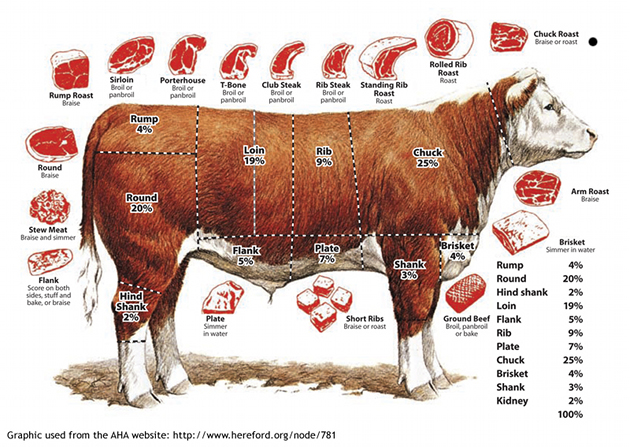
Image result for massive beef rib rack
Memorize this chart

Jon is very much anti-carbohydrate.  If you watch his videos or read his works, this becomes clear.  He has a video called “Carbs are for the weak”, wherein he discusses how there is no such thing as an essential carbohydrate (compared to essential fats or amino acids) and compares carbs to painkillers.  It’s worth noting that, in Jon’s books and videos, he discusses how he grew up with a bad relationship with food and still has one, and this will certainly color his dialogue on the topic.  All of that being said, this nutritional approach was pretty much spot on with how I approach nutrition, so it was very easy to adopt.  I dropped what few excess carbs I had (primarily from greek yogurt) and ate some more fats to compensate (using avocados and fatty meats).  Jon provides a list of approved foods in his book and has a macro calculation if that is your thing, but also like me, Jon doesn’t count calories.  Which, again, I was a big fan of.


Jon does say though that, if you MUST eat carbs, eat them around training, and I did employ that.  I eat fruit with my post training meals, because it has health benefits, and would usually eat something small with carbs prior to training just to get something in my stomach.


MODIFICATIONS

 Related image
Would you believe it is still street legal?

I made a few small tweaks to the program to fit my lifestyle, but kept it almost entirely in total.  Unlike my time with 5/3/1, Jon’s program really gelled with my mindset, and I didn’t have to do anything to make it please my psyche.  I started my training weeks with the 10x10 lower body workouts on Sat, rather than on a Monday.  This was because those workouts could take 2 hours on the squat day, and I don’t have time to do that during the week. Sunday, I’d do the active recovery work, and then Monday would be my back workout.


I used an axle for all pressing and curls, a buffalo bar for all squats, and a texas deadlift bar for the 10x10 deads and an axle for light deadlift technique work.  I did the ab work every training day, but the program would call for hyperextensions 2 days a week and planks the other 2, and I ended up just doing planks 4 days a week.  I don’t have a hyperextension (but I own a reverse hyper…go figure), and though I DO have a ghetto GHR, trying to set it up for hyperextensions sucked.  Also, since my legs would be sore a full week after the 10x10 squats, I’d be in too much agony to have the pads press up against my quads.  Fully willing to admit to being a wimp there.


One other slight change was that I added in band pull aparts to superset the 10x10 presses/push presses.  They make my shoulder feel better.  For the active recovery work, I’d do the prowler on deadlift weeks and Stone of Steel on squat weeks.  Also, I added in 3x10 reverse hypers on the back day, because reverse hypers are awesome.


PERSONAL EXECUTION/EXPERIENCE
Image result for you ain't got no legs meme
Pretty much me half of each month

-I followed the program about as close as I could, with the above exceptions noted.  Of note, anyone who has seen how I squat knows it is a painful mutant affair, and after doing that 10x10 on a Saturday, I would be sore until Friday.  The amount of pain I was in was very obvious.  Many co-workers would ask me what was wrong.  I wonder if someone employing a high bar style squat with a bouncy eccentric would fare better.  I did not experience nearly as much soreness with the deadlifts.


-The squat was definitely the worst day of the program in terms of difficulty.  As soon as I’d finish the final rep of the final set, I’d start a clock in my head for 2 weeks down the line, dreading when I’d have to do it again.  During that workout, it was pretty common for me to start laying down between sets at about the 6 set mark.


-The program’s back day is basically teaching/prepping you for the intermediate program, which has a 10x10 power clean in it.  There is no clean on the beginner program, but there are clean pulls, which I had to learn pretty quick, since I had never done them before.  This is combined with 4 weeks of bent over rows and 2 weeks of shrugs, trying to teach you strength in the forward torso position to get strong on the initial pull and then how to get power out of the traps on the final pull.  The big takeaway is, don’t modify it.  At first, I contemplated switching the bent over rows out for a t-bar row or dumbbell row, but I am glad I stuck with it.  There is a method to the madness.


-That same method holds true to the order of the days.  You end up doing 2 pushing days in a row, which makes little sense from a “muscle resting” perspective, but makes total sense in that it keeps you from having 2 10x10 days back to back.


-You will be in a constant state of recovery with this program.  In turn, I found that I could eat pretty much without restriction in terms of quantity, so long as I stuck with the approved foods.  A snapshot of a training day would be this


0440: Wake up, eat 2 cookies and a serving of fat free greek yogurt,

0500-0605: Training
0630: Post training meal of 2 cups of mixed berries, 2 scoops of protein, 1 serving of non-fat greek yogurt, 2 tablespoons of PB2 peanut butter powder, 1 cup of skim milk and 2 tablespoons of raw honey
0900: 2-3 beef ribs
1200: 1 can of diced tomatoes and 3 heaping handfuls of chopped kale mixed in with 1+lb of meat
1730: Meal similar to noon
1900: 3/4 cup of full fat cottage cheese, half an avocado and 2 tablespoons of PB2


On non-training days, I’d skip the 0440 meal, and at 0630 I’d have a shake that was 3/4 cup 5% greek yogurt, 2% milk, a heavy serving of cream, 2 scoops of protein and 2 tablespoons of PB 2, along with some fatty meat (bacon or ribs).


RESULTS AND CLOSING THOUGHTS


How you feel at the end...until you realize it is just the beginner program

-I started the program at 192.4 lbs, and started the 6th week at 199.6lbs.  I am the leanest I’ve ever been at this bodyweight, as typically, once I start approaching 200lbs I tend to see fat accumulate, especially lovehandles.  I have slightly more lower back fat than when I started, but my midsection has remained tight.  Still in the same size pants, still on the same notch on my lifting belt.

-I successfully went from squatting 270lbs 10x10 with 4 minutes rest between sets to 270lbs 10x10 with 2 minutes rest between sets.  If that’s hard to quantify, another fun tidbit is that I squatted 240lbs 10x10 with 2 minutes rest between sets the week before I started the program, so that’s a 30lb increase on squatting ability in 5-6 weeks.  I also went from benching 226 for 3x10 to 256 for 3x10 in 5 weeks while on the program during the chest day, while reducing the rest periods from 4 minutes to 2 minutes between sets, and still more room the grow. 

-My chins, dips and push ups declined during my time on the program.  For the latter 2, they are at the end of the chest day, and I’m willing to call it a result of fatigue.  For the chins, it might be due to the added bodyweight and reduced rest times.

-This program absolutely kicked my butt.  I’ve been training for 18 years, I’ve competed in a dozen strongman competitions, I’ve run 20 rep squats and Building the Monolith, and this was a whole different beast.  It’s not Building the Monolith on steroids; it’s Building the Monolith on bathsalts.  That said, it’s paced well enough that you are able to recover.  Your bodybuilder days start out light and get more intense as time goes on, serving as a break after the initial shock of the first 10x10 day.

-On the above, you have to swallow your ego on this program, specifically when it comes to weight selection. 70% of your 10rm LOOKS really small, and when you hit set 7 of 10 it’s going to feel like the whole world coming down on you. 

-I attribute my success on the program to my dedication to eating.  Unlike Building the Monolith, there was no pre-req for a specific amount of certain foods, so instead of suffering through a dozen eggs a day, I was allowing myself a little creativity so long as I stuck with the approved foods I’d eat until the point of discomfort frequently, and it was the right call, because I’d need the energy for recovery and to get through the training.  Also, an interesting aside, but I no longer craved/needed my weekly cheat meal with this approach.  I was eating so much damn food that I never felt like I was lacking anything.

-PB2 is Jon Andersen approved, and as you can see, I used it frequently.  It was a quick way to add some calories and protein to meals.


WHAT’S NEXT

Image result for psychologist couch
Maybe I need some of this

I am sold on the Deep Water method, and want to continue it.  That said, looking at the intermediate program weights, I’m unsure of myself.  I plan to hit a middleground between the beginner and intermediate weights to help ease me in for 6 weeks and then attack it in full force after that.  If a competition creeps up, I may alter or abandon as needed to prep, but I can see this becoming my go to off season approach for the foreseeable future.


Saturday, October 20, 2018

SHOULD I BULK OR SHOULD I CUT?


Oh my god this question drives me nuts, so now is my time to rant about it.  First, if you’ve been following along, you know I hate the terms “bulk” and “cut”, as they are greatly misused by the training populace.  People tend to say “bulk” when they really mean “eat more” and by cut they mean “eat less”, not at all giving consideration to how TRAINING needs to change during periods of bulk or cut in order to actually have nutrition match training demands.  But that aside, this question is even more aggravating because it’s absolutely inane.  Should you bulk or cut?  How the hell should I know what you should do.  Here’s a quick test.  Do you want to get bigger?  Then bulk.  Do you want to get smaller?  The cut.  There!  I just solved it!  Print that out and carry it with you and that way, before annoying any strangers on the internet, you can have the answer for you right then and there.

Related image
Bring this one with you too

“But how do I know WHEN to bulk or cut?”  Are you serious?  You bulk when you want to be bigger than you currently are, and you cut when you want to be smaller than you currently are.  That’s it.  That’s all there is to it.  “But isn’t there a formula I can use?”  A formula to know when you want to do things?  Are you nuts?!  No, there’s no formula!  It’s a thing YOU choose because it’s what YOU want to do.

Jesus man, do you think Paul Anderson or Pat Casey or Doug Hepburn asked when it was time to bulk?  Hell no!  These guys decided on a goal: to get as strong as possible, and in turn, they decided on a method: to get as big as possible.  That’s how you figure it out!  You have goals, and then you take the course of action needed to get to those goals.  Paul, Pat and Doug ate herculean amounts of food and gained massive amounts of weight.  Did they get fat?  Hell yeah they got fat.  Did they care?  Hell no they didn’t care, because they had a goal: to get as strong as possible.  And they achieved those goals.  And hey, if you care about getting fat, you know what you can do?  You can cut when you get too fat.


Crazy talk, I know


“But I heard from some guy with a LOT of letters after their name that there is an IDEAL bodyfat% to be at before cutting or bulking!”  Hey guess what?  Now we’re talking about goals, because that statement is made under the understanding one wants to minimize fat gain and maximize muscle gain.  NOW we’re getting somewhere, because if THAT is your goal, THEN you have to employ a specific method compared to simply if you want to get big or small.  But DOUBLE guess what?  You’re amateurish attempts to ascertain your bodyfat would be comical if they weren’t aggravating. 

No, seriously, let me get this straight: a guy whose accreditation is having a youtube channel told you that you need to be a certain bodyfat to bulk or cut, and you decided you were going to determine your bodyfat % by posting shirtless photos of yourself online for a quorum of strangers to evaluate?  Once again, your insanity knows no bounds.  Do you think internet people have calibrated eyeballs?  Even better, do you think they have X-ray vision?  How the hell are they going to see the visceral fat that’s contained between your organs do know your actual bodyfat%?  Oh, they’re just supposed to base it off of other photos of people with bodyfat %s listed next to their photos?  Well for one, can’t you already do that yourself?  Why do you need someone else to do it?  But secondly, what the hell is the credibility of those photos?  Oh, these are people that super duper pinky swear that their numbers are accurate…right.  Sounds good to me!  Use those numbers to calculate your future!

Image result for monkeys on typewriters
To clarify, this is an actual accepted theory, meaning your idea is even more stupid than this

Wait wait, no, I got it: the NAVY method.  It’s accurate within 4-6%!  Hell, I made that number up, because the sheer notion of measuring your bodyfat with a tape measurer is also silly.  And let’s be real honest: pretty much every method is going to have a range of errors in it.  I got measured at 8.4% on a BODPOD once, and the internet assured me that was impossible because I didn’t LOOK like 8.4% bodyfat…once again, based off the photos of people they had seen at 8% bodyfat.  Because again, we’re all so very stupid. 

Quit letting other people determine your goals!  Everyone is in such a rush to quantify and calculate everything in a search to obviate themselves from actually having to THINK.  You’re not smart because you use a lot of numbers, especially when you consider that everything is done with a calculator and a spreadsheet and you’ve completely removed your brain from the equation.  You exercise intelligence when you engage in the action of FREE THINKING, and this means taking the time to critically think about what your goals are and how you want to get there.  Letting everyone ELSE tell you that your goal is to optimize everything and never stray too far outside the realm of acceptable bounds is how you end up exactly like everyone else: mediocre.  The true giants out there, metaphorical and otherwise, kept chasing their goals until they met them, and sometimes it meant doing things that other people didn’t like or weren’t comfortable doing.  It sometimes meant not looking their best 100% of the time.  It sometimes meant having a set of numbers that the internet would scoff at.  But it also sometimes meant being the literal best at what they did, because they set a goal and went after it irrespective of the literature and groupthink.

Image result for squatting on a bosu ball
Hey, you know what: you go do you

Should you bulk or should you cut?  You should do whatever it takes to reach your goals.    

Sunday, October 14, 2018

ON PREDESTINATION: THERE IS NO DISCIPLINE


I have had many people tell me that they admire me for my discipline.  They witness my dietary compliance, or how rigorously and regularly I engage in physical training, or that I wake up early to get things done, and through their observation they conclude that I am a highly disciplined individual.  Many times, they even express envy, how they WISH they could be as disciplined as I am, because, if they were, they could really do the things they want to get done.  But that is where I have to ultimately disagree with them.  My experience has dictated that, fundamentally, we always do the things that we want to do.  There is no discipline: our actions are predestined as a result of our inclinations, motivations, and desires. 

Image result for giant plate of nachos
And if we did not pursue these desires, there would be no greatness in the world

But isn’t that exactly WHAT discipline is: the ability to overcome your desires to instead do something else?  In point of fact, I argue that the logic on this is reversed.  We must utilize the outcome to determine the motivation, rather than attempt to determine that the outcome is the result of a circumventing entity of discipline.  Put simply, if a thing was done, that thing was done as a result of the desire to do that thing.  If one’s compulsion were to do something other than that thing, then something other than that thing would have been done.

And again the statement is made “but discipline is the OVERCOMING of these desires”, to which again I refute that there IS no discipline.  All we have control over is our desires, but once that is set, the chain of events becomes set in motion.  So what of the individual that wakes up at 0500 to engage in a grueling training session day after day and then eats a bland diet rich in nutrients but lacking in enjoyment?  A true paragon of discipline?  NO!  That individual is as hedonistic as the rest of us: pursuing their own personal joy.  It just so happens that, for that individual, the joy of BEING something great is greater than the joy of experiencing pleasures.  That individual required absolutely zero discipline to engage in their protocol: the path was already set as soon as the decision was made that they preferred the results of training over the experience of non-compliance.

Image result for billiards trick shot meme
My Hume readers will appreciate the reference, but also be aware that photoshopping exists in all activities

The notion of discipline exists because people operate under the false premise that all individuals share the same desires and share these desires at the same intensities.  “I enjoy pizza, I enjoy it immensely, consuming it gives me great joy, therefore, to not consume it would deprive me of joy, and to choose to not consume it would necessitate great discipline, which must also be true for that guy over there that I observe NOT eating the pizza”.  But in point of fact, it turns out Mr. No-Pizza Eater finds greater joy in dietary compliance than he does in the consumption of pizza, because dietary compliance, in turn, allows him to BE something that he enjoys.  In both instances, the person eating the pizza and the person NOT eating the pizza are exercising the same degree of discipline: that is to say, none.  It requires absolutely zero discipline to engage in an activity that you WANT to do.  Discipline would only be needed to engage in an activity you don’t want to do and, as we are observing, want necessarily dictates activity.  We cannot reasonably argue for the existence of discipline.

So what of those that are definitely vectored toward accomplishing a specific goal but, in a “moment of weakness”, they engage in activities that run counter to that goal?  Surely that’s an indication of one’s discipline failing, no?  Once again, no.  What we observe there is the fluidity of desire.  Desires can change rapidly, especially in the presence of new stimulus.  Doubt this?  Come home from a long, 18 hour day of work, and your desire will be to collapse and not move.  Collapse onto a hot stove and suddenly, despite your initial desire for sloth, you will be prompted to action.  Your desire changed: you went from “I don’t want to move anymore” to “I want to move to any place other than this one RIGHT NOW”.  In both cases, we observe the lack of presence of discipline, and instead it is the goal and desire that changed and drove the change in action.  The same is true if you only maintain dietary compliance in the absence of temptation but, once prompted, cave to eat things you shouldn’t.  You did not experience a moment of weakness: you have always been following your goals and desires.  It is simply the case that your goal changed.

Image result for squatting on a bosu ball
I'm sure the goal was originally "get stronger" and is now "kill trainer"

What is the relevance of all of this rambling?  I have freed you from the shackles of discipline!  Now you are a much different slave: you are a slave to predestination as determined by your desires.  What you want fundamentally dictates what you do.  HOWEVER, what you have the absolute most freedom over is in DECIDING what it is that you want.  Yes, once decided, the actions are set in motion, but you still control the desire, and, with the right desire, you will accomplish amazing things.  If you honestly, really and truly WANT physical greatness, you will always make the decision to accomplish the things that achieve physical greatness versus the things that deny it.  You will always train when you need to train, eat what you need to eat, sleep when you need to sleep, etc.  You need not exercise any discipline whatsoever: just make the decision and let the universe take its course.  And when you make the wrong decisions, don’t beat yourself up over your “lacking discipline”: you simply wanted non-compliance MORE than you wanted compliance.  There is nothing wrong with that: you’re STILL achieving your goals when you do that.  It just so happens that your goals changed.  The more you want your goal, the more it will consistently remain your goal, which means the more you will continue to do the things that will achieve it.  If you are “failing”, just want your goal more.  And if you find you are “trying” to want your goal, I think it’s pretty obvious that it’s not really your goal.

Sunday, October 7, 2018

KLINGON WISDOM: MAKE A DECISION


I’m fairly certain I’ve shared this before, but if not, one of my favorite quotes comes from a mentor of mine, who was in turn a Star Trek fan.  One day, he shared the Klingon proverb “In battle, make a decision.  If it’s a good one, even better.”  That day was a monumental one for me, as it has in turn shaped how I approach life, and has accounted for a vast majority of the success I have encountered.  It’s such an amazing pithy saying that holds so much truth in everything you do in life, not just battle.  When pressed with a choice, MAKE one, for a wrong decision will ultimately be better than no decision.  Choose the road less traveled by, choose the well trodden path, take the high road, take the low road, just take A path so you can keep moving in A direction.

Image result for robert frost meme
You're about to really train your conditioning by running the f**k away

No transition sentence in the above, because I couldn’t think of one, but hey, look at that: I made a decision.  Trainees are fundamentally CRIPPLED by an inability to make a decision, mainly because they feel there is some sort of ridiculous demand for them to make the BEST decision.  I’m not sure who told them this, but that man was clearly a lunatic and should be disregarded at all costs.  There’s no need to make the best decision at all here: if there were, we surely wouldn’t leave it up to you, the inexperience and uneducated trainee.  No, merely A decision needs to be made.  If it is good is dandy, but if not, it’s still A decision, which is better than NO decision.

Examples?  “What training program should I use?”  Who cares: pick one, run it until it doesn’t work, then try another one.  “Should I do high carb or low carb?”’  Doesn’t matter: pick one and try it.  If it doesn’t work, try a different one.  I can say with 100% certainty that making a bad decision and moving forward with it will yield more positive outcomes than making no decision.  Do you know what kind of progress you get if you spend 3 months refusing to go to the gym because you STILL haven’t found the optimal program yet?  Do you know how much further along you’d be if you just did 100 push ups a day for those 3 months?  That’s a DUMB program, and it’s STILL far more effective than no program.  Not only would your super optimal program have to overcome the damage of 3 months of sedentariness, but it would ALSO have to overcome the 3 month head start “sub-optimal you” achieved with their dumb, half-cocked plan.  The same is true of people that refuse to pursue some sort of nutritional program, some sort of training philosophy, some sort of coaching service, etc.  Just make A decision and go with it.

Image result for indecisive meme
I genuinely don't know why this meme exists, but I'm glad it does

To say nothing of the immense value inherent in LEARNING from bad decisions.  Bad decisions are how we grow: through experience.  Your childhood was marred with bad decisions, as you (like all children) were incredibly stupid and inexperienced and never understood your parents’ warnings until AFTER the fact.  But man, the first time you touched that hot stove, you learned right quick WHY you should never do that.  The same is true when you try out setting a 1rm everyday of the week for 8 weeks, or max effort continentals, or the variety of other bad decisions out there.  You learn what doesn’t work, and, by extension, what does THROUGH these bad decisions.  What do you learn through indecisiveness?  Simply that you need to make a decision.

And this includes deciding on what the hell your goals are in the first place.  Were it not for my exceedingly low faith in humanity I would be absolutely shocked at how frequently I am asked “Should I bulk or cut?”  I, of course, have to stifle my disdain for those very words before I ask my inevitable obvious question “Do you want to be bigger or do you want to be leaner?”  And BOY does that follow-up question upset people, because apparently they want ME to decide their goals for them.  They have abdicated their future to a stranger: what madness is this?!  This is so incredibly simple.  If you want to be bigger, eat more.  If you want to be leaner, eat less.  If you want to get better at weightlifting, weightlift.  Running?  Run.  These are such obvious ideas: why will no one make this decision?

Image result for squatting on a bosu ball
I'm sure this is exactly what this guy decided he wanted to be better at


“But I want ALL those things!”  Hey, that’s cool: me too.  Which one do you want the most right NOW?  Again: no one likes that question, because they don’t want to make that decision.  The battle is waging on, and they’re stuck deciding on if they want to use a mace or a sword or an axe or a spear before some ogre with club smashes unarmed skull in.  Folks, I’ve been training for over 18 years now, and that is through multiple injuries and surgeries: you get to spend a LOT of time doing this.  You will have no shortage of opportunities to pursue multiple goals, which means you don’t need to pursue them all at the same time. 

Think about that 18 years statement, realizing full well that I STILL have life left in me and more time to train: what if I spent 1 year pursuing a different goal.  Just dedicated myself to a full calendar year of chasing 1 physical goal?  I honestly don’t think I’d be creative enough to manage that without some overlap in years.  And meanwhile, how awesome can you get at something if it’s what you dedicate your sole focus to in the span of a year?  Hell, people can learn to play the guitar over a summer with enough dedicated practice time, people have lost an entire human being’s worth of weight in less than a year, you can accomplish AMAZING things when you make it your singular dedicated focus for a prolonged period of time.  And these skills don’t go away once built, assuming you return to them with some semi-regularity.  It certainly won’t require the initial build up that it once took.  This means, if you dedicate yourself to getting lean, and then don’t get too terribly fat again, it’ll be easy to get lean again.  Build a big deadlift, take some time away from it, and it won’t take long to come back to it.  Run fast, take a break, run fast again.  It’s all there: you just have to make A decision to pursue A goal at some point, and know that you can come back when the time comes.

Related image
I imagine being The Terminator means you can train for a VERY long time

The battle is on: make a decision.  If it’s a good one, I’ll be happy for you.  If it’s a bad one, I’ll still be happy. 

Saturday, September 29, 2018

HOW DO I KNOW WHEN I’M NOT A BEGINNER?


I get asked the question “how do I know when I’m not a beginner” a LOT, and every time I give the same response “if you don’t know, then you’re a beginner”.  People tend to not like that answer, because they want something quantifiable.  They want to know how much they should be able to squat to not be a beginner, or how many years they need to train to not be a beginner, or what rate of progress that can achieve before they are no longer a beginner.  The thing is, ironically enough, this is approaching the question of “how do I know when I’m not a beginner” in the way that a beginner would approach the question, and it’s why an answer that requires thinking beyond quantifiable metrics confounds the asker.  But today, let me offer something a bit more in depth to elaborate on the answer: you are no longer a beginner when you are at a point in your training where you will take full accountability for your decisions and your actions.

Image result for squatting on a bosu ball
And sometimes that means telling the trainer you hired that he's an idiot

Let me back up a bit and discuss 2 of my favorite topics: beginners, and beginner programs.  Beginners are people new to the world of training, both physically and intellectually.  However, what is fascinating about those two qualities it that lack of experience in the former is a blessing, whereas the latter is a curse.  An untrained individual will flourish on ANY program or protocol they are put on, because, simply put, a body transitioning from sedentary to active undergoes substantial physical changes under a rapid timeline due to the nature of physical adaptation.  This is why those select few people that actually stick with their New Year’s resolutions look totally different at the 4-6 month mark, because simply sticking with AN approach for a few months will yield rapid and remarkable results.  Hell, Jared Fogle of Subway infamy lost 200+lbs by walking to Subway and eating veggie sandwiches, and his story is honestly not terribly unique in the world of extreme weight loss, and, in turn, physical transformation.  So then, why the hell do beginner programs even exist?

Knowing that beginners can pretty much do ANYTHING and see results, the point/benefit of a beginner program is to not bolster the physical inexperience of the trainee but the INTELLECTUAL inexperience.  Beginner programs don’t unlock magical physical powers that lay dormant in a beginner trainee to “maximize beginner gains”; they outfit a new trainee with a program that is basically impossible to screw up as long as they do it EXACTLY as written.  It’s why these modern day beginner programs are so incredibly basic and can be hosted on a single webpage of poorly programmed app.  Give the beginner only 3-5 movements to learn, give them only 1 rep range, only have them train 3 days a week, and only have them focus on putting weight on the bar.  If you think the beginner is REALLY dumb, you make the number of reps the same number as the number of sets, so that they only need to know 1 number to do the program.  This type of programming coddles the beginner, spoonfeeding them a very very basic routine (I hesitate to call it an actual program) in the hopes of building compliance with training and established habits to one day transition to something greater.

Related image
Or you could just try to follow it indefinitely and see what happens

And what inevitably occurs?  The physical outpaces the intellectual.  Trainees stay on these beginner routines for WAY too long because they keep waiting to transform into something else: a non-beginner (or, of course, the real goal of so many of these: the esteemed “intermediate” title).  In fact, I’ll go off on a small rant here to point out that I’ve seen people refer to themselves as various stages OF being a beginner, to include late stage beginner, advanced beginner, intermediate beginner, etc.  What the hell?  Being a beginner should be a VERY short period of time in your training history: there shouldn’t BE stages.  But I digress.  Once this situation occurs and the trainee is no longer seeing the results they saw when they first started, they want to know if they are in fact ready to begin on the fabled “intermediate programs”.  And then, a follow up question: what the Hell IS an intermediate program?  And from there, the fabled search begins.

Oh, sure, the same charlatans that sold these trainees a beginner program will GLADLY sell them an intermediate program as well.  And what does it look like?  It’s the same damn beginner program with just a few of the numbers scrambled around.  And the “graduated beginner” eats it up…and makes no growth.  And then the tailspin begins, and with it comes the overeating, the “overtraining”, the stalling, the regression, and the eventual giving up.  But it doesn’t have to be that way!  All that trainee needs to do…is take control.  They have to give themselves autonomy and wrestle it away from those who stole it in the first place.  They have to lay claim to their own destiny and, with it, agree to suffer the consequences of failure in the pursuit of success.

Image result for terminator 2 no fate
Author's note: please do not take this as a call to shoot someone working on SkyNet

Specifically, they need to start trying new things, seeing how they work, and figure out what they respond to.  New rep ranges, new movements, new splits, differing amounts of days per week trained, max effort, repetition effort, EXTREME stretching, dropsets, rest pausing, etc etc.  Throw stuff against the wall and see what sticks.  But again: they have to be willing to take accountability for their decisions.  If that trainee posts one “sanity check” on some forum somewhere in regards to the path they’ve decided on, they just gave up their “non-beginner” status.  Get into an argument on social media over the validity of your approach because you’re insecure?  That guy you’re arguing with just made you a beginner again.  Beginners see the training of intermediate/advanced lifters and observe a variety of different approaches and techniques employed, and they mistakenly interpret those techniques AS “intermediate/advanced techniques”, under the guise that they “do not work for beginners.”  Here we mistake effect for cause, as it’s not that the techniques don’t work for beginners: it is that beginners cannot use these techniques, for they lack the ability to take the necessary degree of accountability should these techniques fail.

And sometimes we revert back to being a beginner, and that’s ok.  Sometimes, we’ve been out there on our own, doing our own thing, trying stuff out, and we stray so far from our roots that we forget how the hell to train in the first place.  When this happens, we become beginners again, and we seek out someone to give us another “beginner program”.  Something that is bound to work, so long as we stick with it.  We get our feet back under us, remember our core principles, and take on the mantle of accountability again.  And some people will simply never NOT be beginners, and if that’s how they want to live, that is their choice, but they will find that their results simply will not be significant until they’re willing to take some chances and deviate from the program to find out what they personally need to do to ensure growth.  But for those that are on the fence, wondering if they’ve “maxed out their beginner gains”, wondering if they are still considered a beginner, wondering if they’re ready for the next step, I will once again say that: if you are wondering, yes, you are still a beginner.  Once you know you aren’t, then you aren’t.       

Saturday, September 22, 2018

THE RICHEST MAN IN BABYLON AND 400 PUSH UPS: STORIES FROM MY YOUTH


A thanks is owed to user “oldbeancam” on t-nation for suggesting this post, despite the fact I have it on good authority he is not a member of the legume family, nor is he particularly aged.

Like most boys that grew up with a strong male presence in the family, my dad was my hero.  Honestly still is.  He was a big influence on me too.  As a kid, he was always the strongest and smartest man around, and anything he said I took to heart.  He lifted a little when he was in the military and a little when he got out, hurt himself and stopped later, but when I was really young he was still staying in shape, so that struck a chord.  Anyway, I say all this because the things he would tell me when I was young would stay with me for a LONG time, and, in turn, it sets up the reasoning and origins behind this story.

Related image
Although my dad's advice to "never get a girl pregnant" messed me up a little when he would never go on to specify "outside of wedlock"

My dad would always tell me stories about guys he knew in basic training or tech school that could do amazing things.  I was into martial arts when I was young (started Tae Kwon Do when I was 9, YMCA karate before that, super into the Ninja Turtles, etc), so my dad would tell me stories about a guy that did Tae Kwon Do that would do jump spin kicks over the heads of the guys in the barracks.  Or how he knew a guy that was a boxer that would reach out and snatch flies out of the air.  But one day, my dad told me the story about a guy in the barracks that went to take off his shirt to change uniforms and was completely jacked out of his mind.  My dad told me how he stared at him agog, and then asked him “Dude, how did you do that?”  The guy’s answer?  “200 push ups a night, every night.”

So, of course, that implanted the seed in my brain.  If you do 200 push ups a night, every night, you will be jacked.  Moving on, a few years later, when I was about 14 or 15 or so, my dad gave me a book called “The Richest Man in Babylon”.  For those that haven’t read it, it’s a very short read that basically gives financial saving and investing advice in the form of Babylonian parables.  Honestly very enjoyable, but at one point in the book, the author goes on to explain small investments staying up to something big with the following example (paraphrased): “Let’s say you were to do just 1 more push up a day, every day.  Just 1 push ups doesn’t seem like much, but after 100 days?  Suddenly you’re doing 100 push ups.”  I imagine my Dad had no idea that I would read this book and completely miss the message there, but my mind locked on to that notion and I wondered “Wait…will that actually work?”

Image result for squatting on a bosu ball
The fact I've tried all sorts of crazy ideas but not this should say something

So teenage me set out to try it out.  I went and tested my top amount of push ups for the day and clocked in somewhere in the low to mid 40s.  With a baseline established, I decided to keep testing.  I did them every night before bed (remember, it’s push ups a NIGHT, not a day…because reasons), never missed a session, and true to form, I was able to get to 100 with that approach.  And now, the fire was lit.  I was halfway towards a childhood goal.  If I could get to 200, and then do them every night, I’d be just as jacked as the recollection of a guy that I had never actually seen before.  Yes, 30 something me realizes how silly this was in retrospect, but as a teenager it was brilliant.

I’ll spare dramatics and just say, 100 days later, I had made it to 200.  I’ll unfortunately spoil the end here and let you know that a 158lb 17 year old doing 200 push ups a day honestly doesn’t look very impressive. My teenage friends would call me jacked, but you be the judge


I still own that shirt by the way

Sadly, this was one of those fish stories.  I don’t doubt my dad that he saw a visibly impressive looking guy whose claim to fame was 200 push ups a day, but I imagine the hidden variable is a dude that walks around at low bodyfat and will look impressive from any muscular development.  As a person that naturally carries higher bodyfat, I wasn’t looking like much of anything.  Still, I diligently kept the 200 push ups a night going for as long as I could on top of a regular regimen of weights and sports training. 

Wait, doesn’t the title say 400? Alright, here we go.  I kept up the 200 push ups a night thing for a long time, but with me not seeing a great deal of benefit from it and college looming, it eventually fell off my radar in my later high school years.  However, once I got to college, the spark got re-lit.  For one, I went from my very bare bones high school weight room to (what seemed like at the time) a very well stocked college weight room, and my lifting took off.  Along with that, I put on about 12lbs of mostly shoulders in about 3-4 months upon arrival, and was suddenly becoming “big”.  It was like 180-185 at 5’9, but having transitioned from wrestling 152 in high school, I felt huge.  And so, I thought, this might be the time to REALLY get the most out of those push ups.

Image result for vegeta push ups
Yes, I may have had some other influences at the time too

I started it up once again, and found that I could get 100 in one go when I first tried.  Huh, interesting.  Looks like all that time before had a little carryover.  Well, on to 1 more a day.  And so I went, and once again worked my way back to 200.  And then, in a true Forest Gump-esque fashion, I wondered how far I could push this.  Since I was doing 200 a day, it was getting to be pretty easy to add 1 more, so I started adding 5 a day.  When I got to 300, I went with 10 a day.  Finally, there I was, home for a fall break, doing my daily push ups, and I worked my way all the way to 400.  The “set” took about 20 minutes, because I operated under the rules that I could rest as long as needed in the top position, I just couldn’t break 4 points of contact.  The first 200 flew by, the final 200 sucked, I collapsed in a heap, sweating and panting…and wondering what the hell I was doing.  I didn’t look any different, and didn’t feel any stronger, and I couldn’t see any sort of end in sight.  If I just kept it up, where was I going to go?  Was 500 going to matter more than 400?  And thus, the end of the journey.

But why do I share this?  A few interesting things of note.  Remember how I said that, when I tried to do the push ups again, I could do 100 in a set at the start?  Well that “memory” became even crazier after getting up to 400, because that set pretty much documents the last time push ups were a regular part of my training.  I pretty much never do push ups when I train.  However, I take a physical fitness test once a year with a max push ups in a minute, and without practice always manage to hit the max (68 up until very recently) with about 20 seconds to spare.  I do Murph once a year, and have no issue with getting in the push ups, even with the weighted vest.  And my 1000 push ups in under an hour challenge workout is a thing.  I have some sort of “push up reserve” in my body now that won’t ever go away, despite my last serious attempt being about 15 years ago. 

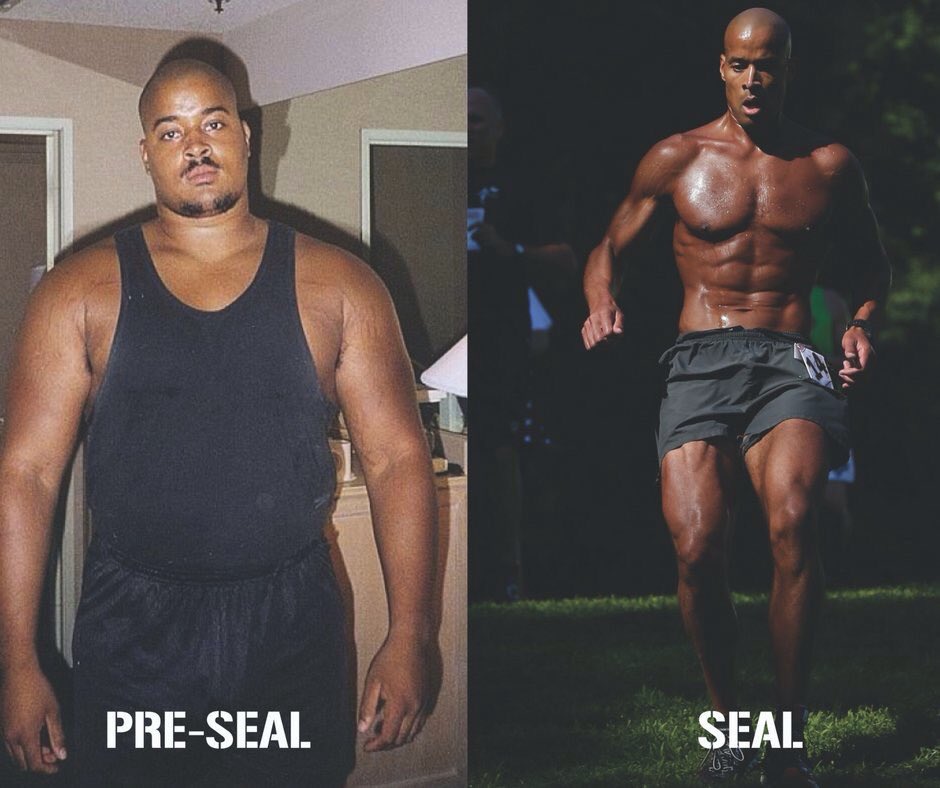
Image result for David Goggins
Inspiration for the 1000 push ups came from this dude, who is a legit badass

Along with that, this is literally the easiest program ever, and no one EVER believes me when I tell them about it.  If you have a goal that involves doing as many push ups as possible, I can’t think of a better approach.  You don’t need the 100 push ups program, or grease the groove, or anything like that: just do 1 more than you did yesterday.  Once you’re at like 40 or 50, it’s REALLY not a question of getting stronger or more endurance: it’s purely a mental challenge.  It’s about having the willpower to do just 1 more, and when it IS “just 1 more” it’s easy to overcome.  And you can see how those “just 1 mores” can add up to something great.  In a roundabout way, I learned the lesson my dad was trying to teach me, I just had to live out the allegory.

And finally…doing 200 push ups a night won’t make you jacked.  Neither will 400.  Quit eating so much you fattie.