Sunday, June 2, 2019

MY TRUE FORM


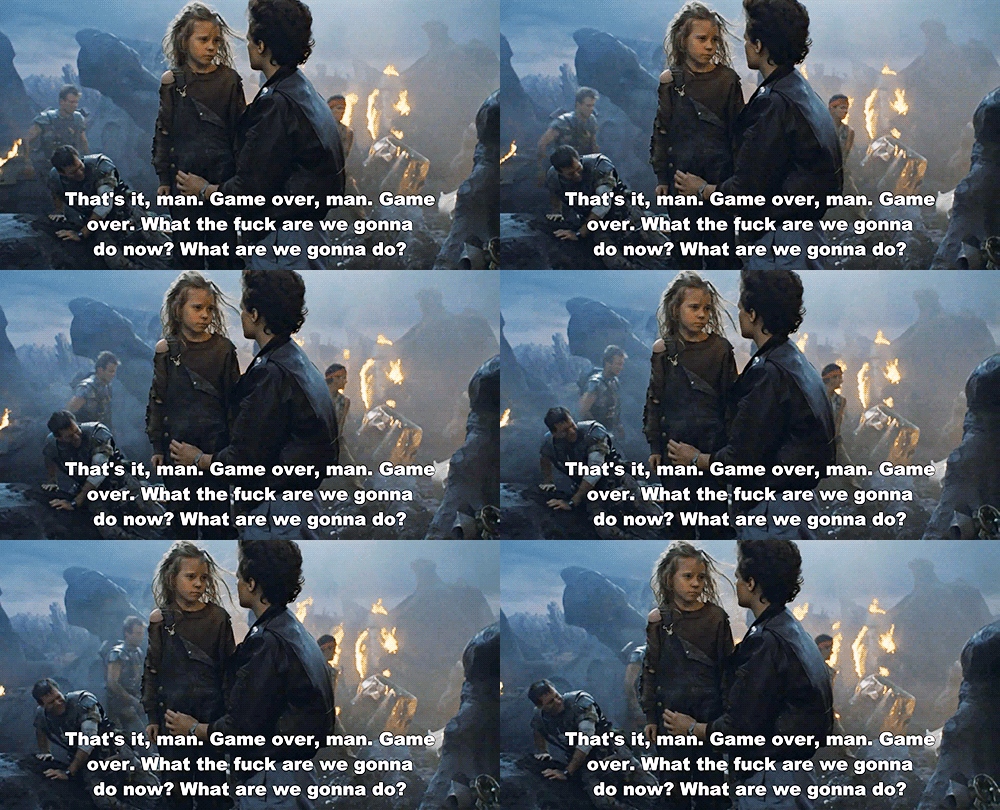
My nerdism ahoy!  The “true form” trope is so rampant in all things nerdy, but primarily so in video games and anime, areas of which, I’m sure, my regular readers are not at all shocked to discover I am intimately familiar with.  I want to first lament that I ended that previous sentence with a preposition, but ALSO educate some of my less cultured readers who spent their high school years being social vs catching up on the latest DragonBallZ episode or spending 14 consecutive hours binging Final Fantasy 7.  The “true form” trope is the notion that, whenever the good guys encounter a major level bad guy (most typically the ultimate bad guy/boss/villain), the party soundly gets their butts kicked for a good majority of the fight, only to finally start eeking out and earning the upper hand.  Things start to look promising, but then the bad guy begins to chuckle.  Then, much to the horror of the heroes, the bad guy reveals “this isn’t even my TRUE form”, before suddenly undergoing a physical transformation and becoming even more menacing and powerful.  The implication is easily understood: the good guys are f**ked.  They could BARELY squeak by while the bad guy was holding back and fighting them in some sort of lesser state, and NOW here we are at the true form: what’re we going to do now? 
Related image
Yeah that's about right

That long introduction above paves the way for the discussion today: you need to have your own “true form”, and the way this is done is by NOT finding your max in your training.  It is no secret that I am very much an advocate of “build strength, don’t test it” when it comes to training, and there are many reasons why.  The first being the physical benefits of such practices.  Trainees understand that maxing is tough.  It’s taxing on your recovery system.  This is why people tend to take breaks after competitions, as they need to give their bodies a chance to recover.  Well, if you’re maxing in training, you’re taxing your recovery in training, which means you also have to spend more time recovering: time that COULD be spent training instead.  It’s an opportunity cost, and really, the benefits that come from maxing in training are incredibly minor compared to the consequences.  If your goal is to BE big and strong, you don’t need to test it when you train: you need to build it.  Save the testing for the competition.


However, that’s all far too mundane and average compared to what I really wish to discuss: the PSYCHOLOGICAL benefit to avoiding maxing in training, and the real notion of the “true form”.  Going back to the trope in anime and videogames, the real frightening aspect of the whole “this isn’t my true form” rhetoric is the fear of the unknown and its implication.  While the good guys fight the bad guy, they have a sense of the power the bad guy has.  Even if that very power is crushing them, it’s still finite, defined, quantifiable and understood.  If it’s a videogame, you see the damage on the screen.  If it’s an anime, you see how hard they get hit.  But once the declaration of “this isn’t my true form” is made, suddenly, the fear comes back.  Just how powerful IS the bad guy?  How much strength are they hiding?  What is their REAL capability?


That moment when you're the X-men and you find out the goddamn Juggernuat has been holding back...


YOU possess this same capacity for fear OF yourself: you just have to not RUIN it by testing in your training.  As soon as you test yourself in training, you FIND your limits, and now that you know them, you, in turn, limit YOURSELF.  That was a lot of capslock: I apologize.  But seriously, if you set yourself up optimally one training day, eat the right meal, do the right warm up, wear the right clothes, use the right equipment, hit the right peak leading up to it, and then smash a PR, you get that brief feeling of elation…and then then sudden sinking feeling of realizing that you’ve just discovered your potential. That is it.  That is ALL you are capable of doing.  You can squat 500lbs, so now you know, if the situation requires a 501lb squat, you can’t do it.  You know your true form now, and suddenly the fear of yourself is gone. 


But if you keep your true form hidden from yourself?  Then that fear of the unknown will always remain and, in turn, your ability to surprise even yourself exists.  Suddenly, when the situation arises where you need to really dig in deep, you’ll have no idea where your limits are, which means you approach the situation with the prospect of victory looming.  Rather than a literal 0% chance of success, there exists the possibility of success based off the fact that no one, not even yourself, really knows what you are capable of.  And you may in fact surpass even your own abilities in this absence of knowledge of your true self.  You may, in fact, be something greater than you are.

Image result for squatting on a bosu ball mythicalstrength
You never know until you try...

Keeping your true self hidden is an easy task.  Don’t max in training.  Learn how to train under fatigue.  Don’t fully recover between sets.  Train supersets and giant sets.  Train back to back to back.  Train off little food and little sleep.  Etc, etc.  Always push yourself as hard as you can at that MOMENT: not as hard as your max potential allows for.  When you do this, you continue to get stronger, no question, but you never discover just what you are capable of.  That only gets discovered when the time is right, when the good guys have suddenly gotten the upperhand and the time has come for you to transform and show your true self.


Because maybe it’s time for the bad guys to start winning.      

Sunday, May 26, 2019

ANTAGONISTICALLY STRONG


Folks, I’ve come to terms with something: I’m a jerk.  I really am.  Twice this week, instances have reminded me of this.  And amazingly enough, it was RUNNING that inspired this instead of lifting.  As many of my regular readers know, I engage in the Murph Memorial workout each year in May, typically on or around Memorial Day.  This year, I’m doing it twice: I did it once on the 18th as part of a group workout my work was putting on, and I’ll be doing it again this Sunday with my wife, as she wanted to give it a try.  The group workout was put on by a local crossfit affiliate, and when I showed up, I discovered, much to my horror, that we were going to WARM UP before we did the workout.  As many of you know, my warm-ups are sparse, if at all existent, and the sheer notion of doing this before such a challenging workout was mind boggling to me.  The last thing I was going to do was change how I had been training on the DAY that I needed to perform.  When the group went for a 400m warm-up run, I stayed behind.  Someone asked me why, and I responded with “I’m not about to go run before I go run.”  The person took that response, said it made sense, and then went about with their warm-up.  Later that week, my work hosted a 5k run that I partook in.  Training for Murph got me into good running shape, and, in turn, I ended up coming in first.  Unbeknownst to me, among our group was a running analyst, whom I had passed at the end of the run.  This gave them time to analyze my gait from behind, and, in turn, they informed me that I have an awful running style, marred with poor form and technique.  My response, was once again simple: “I beat you, didn’t I?”
Related image
Perhaps it was my footwear affecting my stride

And it’s forced me to reflect a little bit here.  I AM a jerk, but my hand has also been forced in that regard, because I just simply cannot buy into so many of the things that are so cool and fun and popular and en vogue and party approved.  I’m now a 20 year veteran teenager, which means I’ve perfected counter-culturalism simply for the sake of not liking popular things, and it reflects in the things I obsess over.  But, in turn, I feel I’ve accomplished so many unique things that these folks that just do the same thing everyone else is doing haven’t, nor will ever, due to their approach.  I’ve written before about how you have to do abnormal things to get abnormal results, and the trend continues.  I’m honestly at the point now where, if I hear an idea being championed enough, I know it’s a bad one.  Or, if nothing else, it’s at least ineffective for my own goals.


I aim to be antagonistically strong.  That is to say, I am to be strong in spite of all the things out there that tell me that, by all accounts, I should NOT be strong.  I aim to be strong even though I use poor form, bad programming, the wrong nutrition, poor sleep hygiene, no mobility or stretching, etc etc.  Why?  Because I am proof of concept that people aren’t nearly as smart as they think they are, and that maybe we’re overcomplicating this whole thing a bit too much.  Maybe, just maybe, instead of foam rolling and cryobaths and 8 hours of uninterrupted sleep and perfect mobility patterns and not an ounce of scar tissue to be found, maybe the results can be realized simply through hard work over a long time.  Maybe, if you never warm-up, you’ll never NEED a warm-up. 

Related image
I'm always warmed up

And if you can’t be an example, you can be a warning, right?  Maybe it’s all going to come crashing down one day, like so many people predict it will.  Maybe I’ll get my due, and be broken and ruined.  Or maybe I’ll die TOO early to see the effects of my training, an accusation I recently saw levied against Konstantins Konstantinovs as something of the ultimate grasping at straws.  But hell, at least that’s SOMETHING different than the norm. 

Because man, I might get broken LATER, but some of you folks are already broken NOW.  Why do you need to spend 30 minutes warming up for a 60 minute workout?  Why not just warm-up for 5 and then you have 85 minutes to train?  What good is your expert running technique doing for you if you get beat by a guy missing 20% of his meniscus with an obese BMI?  Your prime is going to rapidly vanish at this rate, and you’ll spend so much of your life being OLD while you spent all of your youth living like you were already there.

Image result for squatting on a bosu ball
Youth truly is wasted on the young

And with this approach of being antagonistically strong, you’ll never run out of motivation or goals.  So many people are out there putting limits on others and saying what’s impossible that it can easily trigger your “a-hole response” protocol.  Apparently, that’s in full effect on me, because as soon as I see someone saying something isn’t possible I’m quick to give it a try and prove that wrong.  At my Murph workout on Saturday, they taught us how to kip, because they said trying to do the full 100 pull ups with a weight vest strict would be too big of an undertaking.  I had already planned to do them strict, but this just drove it even more home.  Can’t gain on low carb?  Watch me.  Can’t make your running and lifting better at the same time?  I got this.  Need a coach if you wanna do cleans?  Nope.

So many trainees are lost, because they just see the same routines everyone else is doing and get hooked into the gameplan and, after a few months, ennui sets in and they wonder if this is some sort of life they’ve been doomed to.  Well here’s how you relight that spark: start becoming bigger, stronger, fitter and faster in spite of all that you do.  Be antagonistically strong and overcome the status quo.

Sunday, May 19, 2019

STRONGER? DID YOU MEAN BIGGER?


Time for one of my rare academic type posts, but my slumming on forums has resulted in me having a dialogue with what was effectively my past self and it forced me to flesh out some ideas that I wanted to capture here.  For many of you, this will be rudimentary, but hopefully a fresh take on an old concept.

Since this blog’s creation, it’s been about “getting bigger and stronger”, and I felt like that was the simplest way to convey my goals, but upon further reflection, what I’ve written is redundant.  Bigger IS stronger.  And not simply in the sense that weight moves weight and the absolute weightclasses have the strongest competitors, but that, when one’s goal is to get stronger, this is a statement that one’s goal is to become bigger.  Why?  Because, all things being equal, a bigger muscle is a stronger muscle.  This is something we all know…yet somehow, there is still confusion regarding this topic.

Related image
Some of you nerds can't even tell just by looking at this photo that the Half-orc gets +2 to strength while the halfling is -2...

What is the issue?  As I’ve written about in the past, people employ incorrect heuristics in the discussion of training, and it leads toward incorrect conclusions.  You tell a trainee “to make a muscle stronger, you must make it bigger”, and they instinctively counter with “then how come powerlifters are stronger than bodybuilders?”  This question may seem genuine from the asker, but in truth, this is arguing in bad faith.  Why?  It presupposes that bodybuilding is the training of muscular size while powerlifting is the training of muscular strength.

These are SPORTS (I know, some folks are going to be upset that I called bodybuilding a sport, but stick with me), NOT training methods.  Size is important to the sport of bodybuilding, but it is not the SOLE factor.  Strength is important in the pursuit of powerlifting, but it is not the SOLE factor.  And it’s the inclusion of these confounding variables that makes the comparison of the sports as training modalities and proofs of concept non-viable.

Related image
Plus, good luck explaining this

What do I mean by the above?  That it’s ineffective to say something like “if making muscles bigger makes them stronger, then how come powerlifters don’t train like bodybuilder?”  Because the training of a bodybuilder is about training to be better at bodybuilding, NOT simply to make all muscle as big as possible.  If it were truly the latter, Markus Rhul and Greg Kovacs would have been the longest running Olympia champions the world has ever seen.  Instead, bodybuilding will always be about the ILLUSION of size moreso than just size itself, and this means emphasizing certain physical qualities and deemphasizing others to create a more striking appearance.  Why else are so many people upset about the current bloated stomachs seen in the mass monster arena?  If bodybuilding were TRULY the sport of maximizing size, wouldn’t the individual with the biggest abdomen be the winner, not the loser?

And the same to be said about powerlifters (and, by extension, strength athletes in general).  If being strong was truly the only thing that mattered in strongman, O. D. Wilson never would have lost to Jon Pal Sigmarson.  Mark Henry would have been the greatest everything forever.  Mariusz Pudzianowski would have been a ZERO time winner of WSM.  There’s more TO these things that JUST strength, and again, that is why the training will vary.  As funny as it sounds, a strongman or powerlifter who focuses ONLY on getting their muscles strong will lose to a competitor who is better at being a strongman or powerlifter.

Image result for o.d. wilson
Not strong enough for WSM?  Are you serious?

Acknowledging this, we understand that we cannot analyze the training of these athletes as the established standards of training for size vs training for strength.  Where to start?  Analyze the off season methods, where weaknesses are brought up.  What is the solution FOR these athletes across the spectrum?  Volume and specificity.  The weak muscle is singled out, targeted, and hammered.  Why?  To make it GROW!  And why?  BECAUSE SIZE IS STRENGTH.  Written in all caps because it’s stronger, BECAUSE WE GET THAT.  Humanity totally gets this on an instinctive level, primarily because nature has conveyed this reality to us consistently through our history, but it’s only recently that the internet has tried to convince us otherwise. 

Look at Westside Barbell’s approach to conjugate.  80% of the workload is repetition effort.  Why?  Because when you make muscles bigger, you make them stronger.  Max Effort is about learning how to strain, Dynamic Effort is about learning how to be fast, and RE is about getting strong (by getting big).  Basic Western Periodization?  You have an accumulation block at the beginning, so you can get stronger by making the muscle bigger, and then you start intensifying so that you can get better at moving heavier weights for low reps.  The leader phases in 5/3/1 are higher volume to get you bigger and make you stronger in time for the anchors.  This pattern persists CONSTANTLY in the world of getting stronger: you have to make the muscle BIGGER.  That’s the “secret”! 

Image result for that's my secret cap i'm always angry
Ever stop and notice how the HULK gets bigger when he gets stronger?

You want some bro-science?  How about we understand that increases the muscular cross sectional area is what generates more strength potential?  Because more cross sectional area=more available fibers=greater ability to pull from said fibers.  Yes, it’s true that size doesn’t immediately result in improved ABILITY to move a heavier weight, but it certainly improves the potential to do so.  A realization process is required in order to benefit from this improved size, but this isn’t a new concept in the world in the slightest.  If I have a 10 gallon gas tank, then buy a 20 gallon tank but only fill it with 10 gallons, this doesn’t negate the fact that I have a bigger gas tank: it just means I’m not maximizing its potential. But at the same time, if I have a 10 gallon tank, attempt to fill it up with 12 gallons, and then spill 2 of them, I didn’t somehow make my 10 gallon tank a 12 gallon tank.  …that metaphor got weird on me, but I think you still get it.  Peaking strength isn’t building it, and building strength doesn’t necessarily peak it, but if your goal is to GET stronger, you want to get bigger, not peak strength.

The big takeaway here is that the folks getting wrapped around the axle about “training for size vs training for strength” need to take a BIG stepback and realize that these are the same things.  The processes that make muscles bigger will necessarily make the same muscles stronger, because you’ve increased that muscle’s potential for strength.  To be stronger in a specific movement requires specialization of training, and that is where vectoring toward something like powerlifting or strongman can come into play.  But if you legit just want to get muscles to be stronger, you need to focus on making them bigger.  And, as a bonus, you may actually look like you lift, which is always cool.      

Sunday, May 12, 2019

AND THEN?


I tend to have something even greater than a 30,000 foot view, more along the lines of a 30,000 mile view, as my propensity to engage in nihilism/stoicism/absurdism tends to make me not appreciate the present at all as I’m already living in the era where I’ve been dead so long that not even the memory of the memory of my memory even exists.  But goddamn if some of you folks need to learn how to have at least a 3 foot view.  I swear some of you folks can’t see 2 hours into the future, let alone weeks, months and years, and it’s severely hamstringing your ability to progress and grow.  When you can’t see the future, not only can you not plan for your success, but you also are unable to truly realize the significance of your failure.  Specifically, just how INSIGNIFICANT your failure will be.  When discussing the immediate future, you must never forget to ask yourself the follow-up "and then?”

Image result for dude where's my car and then
Do people still get this reference?

I’m gonna start with what originally prompted this post today, and something that shouldn’t shock my regular readers: injuries.  Oh my god do I lose my mind when trainees talk about these, because they absolutely do NOT exercise “and then?”  “If I do that, I might get injured!”  Ok, great…and then?  Your story does not end with an injury.  It’s not like you get injured and then fade to black.  This isn’t a goddamn movie.  LIFE GOES ON.  What is the “and then?” of your injury?  Will it be the kind of injury where you just shut down the workout for the day, go home and ice yourself and come back tomorrow?  Will you be out for a week?  Are you going to need surgery?  Physical therapy?  And guess what: those are RECOVERABLE!  Your “and then” is that you get injured…and then you heal, and then you continue to get stronger.

But these folks aren’t thinking in the future, where they’ll be healed, big and strong again.  No, most these people are so in the immediate that their only fear of the injury is simply the PAIN they’ll experience as a result of the injury.  They don’t want to get injured because, for one incredibly brief moment in their existence, they’ll experience a moment of pain.  This is why people will terrifyingly BEG internet strangers to tell them how to know when they’re close to failure on squats, because they don’t ever want to run the risk of failing a set and having to dump the bar.  What if the knurling scrapes their skin!?  What if they conk themselves in the back of the head?!  Christ folks, live like 15 minutes in the future at least, when they owie no longer smarts and you’ve already stripped the plates off the bar.

Image result for squatting on a bosu ball
and fired your coach

And this phenomenon continues to exist outside of this realm of my personal annoyance: it bleeds into training in general.  So many trainees exist in the absolute and most immediate present that they have zero ability to appreciate the future and working towards it.  Trainees want PRs NOW, rather than building toward something much MUCH greater in the future.  And so they’ll constantly be grinding away at max weights, setting tons of Instagram PRs and ultimately making zero REAL growth over the span of weeks, months and years, all because their ego can’t handle the idea of taking some weight off the bar, accumulating some serious volume and building up to something insane.

I know I’ve become a Deep Water zealot as of recently, but it’s been a great example of long term thinking in effect.  I was handling weights that were around 60% of my 1rm for 12 weeks: a situation that would drive so many internet denizens absolutely bananas since they NEED those PRs NOW.  However, once I completed the program and transitioned to something with greater intensity, I started absolutely crushing some old PRs, to include ones I had set prior to blowing out my ACL.  I became stronger than I had ever been before, and it was because my plan included an “and then”.  “I’m going to run Deep Water, and then I’m going to make use of that volume to hit an intensification phase and set PRs” vs “I’m going to set a bunch of PRs in training and then…I don’t know.”

Image result for Starting Strength meme
Seems like a good plan

The “and then” is always present, and it’s incumbent upon you to ask the question and provide an answer.  If you don’t, the future is going to catch you flat footed, and you’ll have to REACT rather than be proactive.  Don’t be at the mercy of the future: decide your own fate IN ADVANCE.  Know how things are going to play out and already have a plan in place.  And when there are multiple paths, have multiple plans.  Have a plan for how you’re going to succeed if you succeed and how you’re going to succeed if you fail.  If your “and then” results in you getting injured, have an “and then” that is how you’re going to train and recover from that injury.  If your “and then” is that you’ll soon have a compressed training schedule, have an “and then” that is HOW you’re going to get all of your training done with less time.  Don’t be at the mercy of an unpredictable future: go SUPER big picture and recognize just how potential is out there.    

Sunday, May 5, 2019

WESTSIDE VS THE WORLD REVIEW


As I’ve written about previously in this blog, I backed the kickstarted for the movie “Westside Vs the World”.  For those completely unaware, this was an independent film chronicling the history of the Westside Barbell powerlifting club.  Also for those unaware, the release of this film was mired in as much drama as anything powerlifting related could be, to include having its release date pushed back indefinitely after one of the developers of the film split from the production crew, stole all the kickstarter funds, used the money to buy drugs with intent to sell before getting arrested, resulting in the original film creator having to sue that individual to get back the kickstarter funds along with screenings of the film held in gyms all over the country in order to help replenish lost funds.  A good amount of us backing the film had pretty much resigned ourselves to the fact that we’d never actually get our copies, and many disparing things were said about the film and its creators.  I myself equated it to the “Duke Nuke ‘em Forever” of powerlifting.  But then, finally, the day had arrived and I got my early release digital copy of the film.  I have sense watched it, and wanted to share an advanced screening review with you to help you decide if it’s something worth spending your $10 on (if you pre-order).

WHAT IS THE FILM ABOUT?

Image result for Louie Simmons
Pretty much just this guy

The actual “Westside vs The World” film is about the history of the Westside Barbell Powerlifting Club, which, in turn, means it’s primarily a story about Louie Simmons, as there is no Westside without Louie.  It starts off discussing Louie’s youth, his discovery of the Culver City Westside Barbell club, his journey into powerlifting and his accomplishments.  You find out that Louie was (and really, still is) a badass, and definitely earned his place in the sport.  Not much time is spent discussing the methods of Westside, but really more the stuff that most people wanna hear about: the drama.  You hear stories of some big names in the bygone era of powerlifting before youtube, where most info read about in Powerlifting USA or through stories passed on in clubs.  If you follow the sport, it’s cool to hear some indepth stories about these legends.  If you’re new to it, it’s great to get acquainted with the forefathers.  The film tracks Westside all the way to its current form, detailing its domination through the 90s and early 2000s to its relative obscurity in the raw era of powerlifting. 

This film REALLY could have been better understood to be “Louie Simmons vs the World”, because he is the key and central focus of the film here.  Other folks get interviewed, and you hear some perspective from current and former Westsiders, but Louie IS the show of this film.  However, you do get to hear a few cool things regarding the evolution of the methods, why Louie did what he did, and his thought process.

THE GOOD

Related image

- Ron Perlman is a delightful narrator, and allows the story to flow through very naturally.

- As stated above, you get to hear some cool stories about lifters from yesteryear.  I was familiar with what an accomplished lifter Matt Dimel was, but I had no idea how psychotic he was in and out of the gym.  Hearing more about Chuck V is always worthwhile too.  Many of these guys had larger than life myths about them, and getting to see behind the scenes is awesome for fans of the sport.

- Pacing is solid.  I didn’t find myself wanting to break away from the film out of boredom at any point. 

- Louie provides a fantastic role model of a total force of nature as it relates to getting and making people stronger.  The interviews completely solidify this.  As well, you get a peek at what was going on behind the scenes at Westside, and discover that the rumors were all true.  You also get some interesting perspectives as well.  For as much as Brandon Lilly talked about being a “Westside Lifter”, I never realized he only trained at the gym for a year before being kicked out.

THE BAD

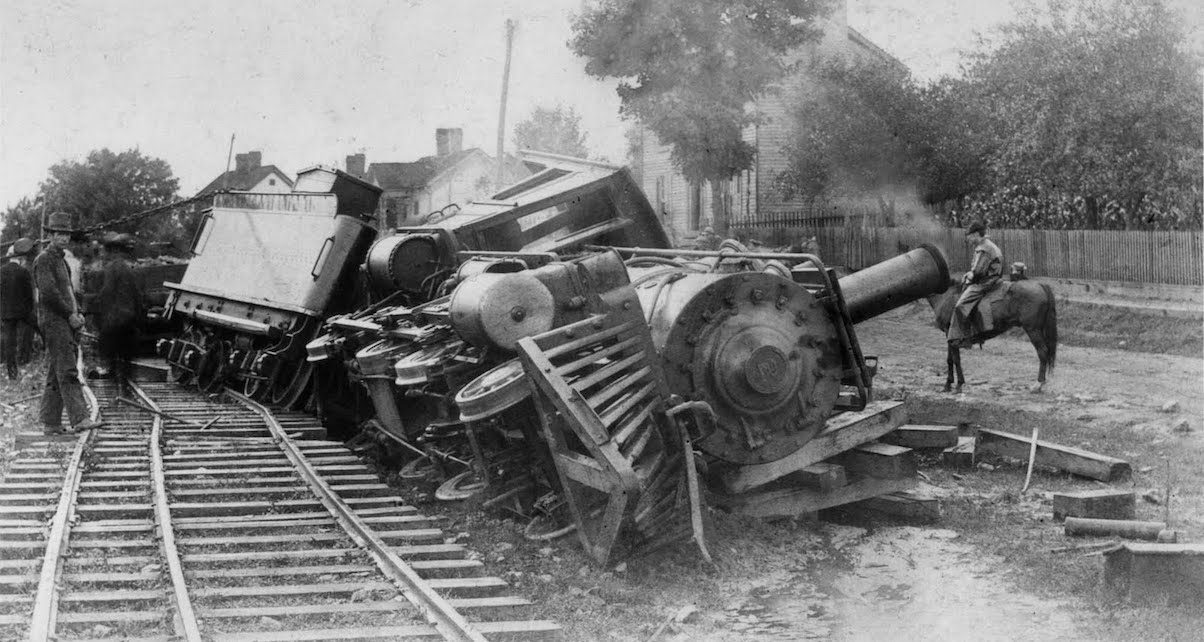
Image result for Trainwreck

- This film simply cannot live up to its own hype.  And that’s an unfortunate problem created by its production, but kickstarters have been waiting since Jan 2018 (when it was originally promised to be released).  During that time, we’ve seen the updates over e-mail, promises, rave reviews at screenings across the US, and just tons and tons of drama as the movie FINALLY was released in digital form…all for what is, by all accounts, simply a good movie.  This would readily find a solid place in Netlfix’s bin of decent documentaries on fringe sports.

- I would have enjoyed more time spent focusing on the actual methods of the gym.  How they came about, why, static they faced for introducing them, etc.  Kickstarter backers are supposed to get physical DVDs that go into how to implement the conjugate method, and I’ll review them once I get them, but still, this was primarily a dramapiece, which isn’t shocking for powerlifting.

- No subtitle option from what I can tell.  Louie only has 13 teeth and speaks in a jumble many times, and I had to go back a few times and try to hear what he was saying.  The music occasionally makes this an issue too.

SHOULD YOU BUY IT?

Related image

If you are an old fan of powerlifting, I’d say it’s worth the current $10 pricetag.  If you followed the sport during the WPO era, you know all these names, heard these stories, and will most likely get something out of it.  If you just joined in during the raw era, I honestly can’t imagine you’ll find much of this terribly interesting.  If you don’t know the sport at all, I’m not too sure how much appeal it will have for you.  You could spend 90 minutes doing something worse than watching this film, but I can’t imagine it will appeal to anyone but the most hardcore of powerlifting nerds.


Saturday, April 27, 2019

AD HOMINEM


Oh man, time for everyone’s favorite topic: logical fallacies!  Journey with me once again, dear reader, to the early 2000s, where I was dutifully attending a majority of my undergrad classes and had found myself taking a semester of Logic in pursuit of my philosophy minor.  We started the course with the good stuff: logical fallacies.  Within 2 days of the course, I suddenly felt as though I had become the conversational equivalent of Neo in the Matrix (remember, once again, that this was the early 2000s, so that reference wasn’t dated then).  There I was, able to call these all out the moment I saw them.  Strawman, boom!  Red Herring, KAPOW!  And of course, ad hominem ad hominem ad hominem!  Oh you suckers are screwed now…until I noticed that no one gave a damn about these fallacies.  Either they argued that they had not committed them, or they disregarded them entirely.  What gives?  Why was no one relenting to my skill?  Because in the real world, during a real conversation, an argument being logical is only PART of the equation.  The real world isn’t purely logical: it’s empirical, and, in turn, experience, expertise and observable qualities DO matter.  Knowing this, here is what I’ve come to say: ad hominem?  You’re goddamn right ad hominem: who are YOU to make this argument?

Image result for princess bride land war in asia quote
And never accuse a misanthrope of ad-hominem and expect it to matter

When you share your opinion on something, YOU come under the spotlight AS the opinion sharer.  That’s simply how a dialogue exists.  That this is somehow shocking to some folks is a reflection of the falsely perceived anonymity that social media and forums and the internet have granted to us as a population.  People want to trick themselves into believe that all voices are of equal weight, and it’s merely the content of the message that is of any concern, and this is patent absurdity.  Examples?  Why not combat absurdity WITH some absurdity.  Say you are presenting zero symptoms of any diseases, and then a random individual says “I think you are in the early stages of cancer.  Some cancer do not present until later.”  Would you take them equally at their word, compared to if these same words came from an oncologist?  No?  But it’s the same argument!  How ad hominem of you!  How dare you hold that person’s lacking credentials as reason to not give their words any weight.  Why…why you siding with the oncologist is merely an appeal to authority!  Not logical in the slightest, my friend.


Because logic isn’t the only thing that matters!  Not in an illogical world.  Not in a world where we AREN’T the experts.  And when you delude yourself into perceiving that you ARE one, logic can cripple you, because your “logical” arguments are based off of false pretenses in the first place.  If you sat in on my Logic course with me, you woulda heard the same thing: the pretenses MUST be true when constructing a logical argument.  Otherwise, you end up with arguments that are logically sound but factually untrue: of benefit to no one.  That’s why, when you skim the abstract of a few studies and then get into a 400 post long internet shouting match screaming “Ad hominem!” every time someone calls you stupid and unaccomplished, you end up setting yourself up for failure.  You HAVE to acknowledge your own shortcomings, limitations and misunderstandings, and many times this means applying the old “appeal to authority”.

Image result for squatting on a bosu ball
This guy should have appealed to more authorities...


There’s a goddamn reason these people ARE the authority to appeal to!  We MADE them authorities because they tend to be right on the subjects FAR more often than they are wrong!  That’s what you do in a society: you make experts so that everyone doesn’t have to know everything.  Without having experts TO appeal to, society would crumble, because there simply isn’t enough time to learn everything about everything.  Think how long it takes to become a doctor.  “But doctors are wrong sometimes”, yeah, when you push them OUT of the realm of their expertise, but that’s the point: stay in your lane.  People would rather not vaccinate their kids because they heard from Jenny McCarthy that it causes autism rather than trust the collective medical knowledge of the entire Western hemisphere over the span of many decades?  What madness is this?!  The same madness that prompts people to roll the dice and trust random internet youtube sensations on how they should lift weights simply because they have an Instagram account versus listening to the collective wisdom of thousands of successful trainees and high level coaches that have accomplished things of note. 


And THAT is why you get challenged when you present an idea.   ARE you the expert?  No?  Have you accomplished anything?  No?  Have you TRAINED anyone to accomplish anything?  No.  So then why do I listen to you?  “BECAUSE IT’S ILLOGICAL NOT TO!”  Great: I guess I’m choosing to be illogical.  Because I’d rather be illogical and strong than logical and weak.  And I don’t care if you’re parroting the experts, because if you don’t have the requisite education to even be able to understand what they are saying, there’s a significant chance you’re misinterpreting or misapplying what they’ve written.  So then I get to ask: what are your credentials to read and APPLY what the experts say?  F**k me man, I’ll even take an undergrad degree in SOMETHING exercise related, as it’ll hopefully show that you have AN understanding of how to read and interpret the science in these studies.  But man, if you’re a poli-sci scrub like me, the jig is up, because I know EXACTLY what you don’t know.    

Related image
However, my philosophy background has helped quite a bit with my training

Put yourself in a position where you CAN’T be ad hominem’d.  BE credible, BE accomplish, BE worthwhile…or just be quiet.  And hey, there’s nothing wrong with sharing your opinion when asked, but remember our previous talks on the signal-to-noise ratio: ask yourself, what is the value of my contribution to this topic?  Does my opinion NEED to be heard?  Does it DESERVE to be heard?  Have I done enough, seen enough, learned enough, that I actually matter?  Or am I just talking just to hear myself talk?  Because, if it’s the latter, you could always just go write in a blog. 

Sunday, April 21, 2019

SOME THOUGHTS


-If you wanna eat the way you wanna eat, you don’t get to train the way you wanna train, and vice versa.  What I mean is, I enjoy eating a LOT of food.  I have a voracious appetite.  However, the only way I’ve ever trained to be able to justify that intake was when I ran Deep Water or Building the Monolith: and both of those programs were ROUGH.  However, if I don’t train like that, I have to ease up on the food intake.  There’s never going to be both going in the right direction.

-You did one meet and now you’re a powerlifter, or you did one comp and now you’re a strongman?  Great.  Instead of using this as an opportunity to strut around and call out non-competitors, realize that now you’re an ambassador for the sport and act accordingly.  You represent more than just yourself.

-I thrive when given limitations.  Limitations are what breed creativity.  I got creative when I couldn’t train my knee, I get creative when I have to train in a gym that isn’t mine, etc.  I feel like decisions are easier to make WITH limitations vs without, because now you know the operating parameters.  Understanding this, maybe you should self-impose some limitations if things are getting stale.  Or maybe, if you’re just starting out and you’re feeling overwhelmed, you create some arbitrary limitations.  Only 1 author you listen to, only 5 movements, etc etc.  See what it forces you to do.


If you can't figure out how to train for a decade using this and a barbell, you're most likely spoiled

-So many people are drinking “Bang” energy drinks now, to include non-lifters.  I remember when creatine first hit the scene and people thought it was steroids.  Hell, some people STILL do, and yet people are just knocking back creatine drinks.  I’m wondering what’s going to be the impact, especially for those drinking a few of these a day and not hydrating terribly well.

-People with meticulous form and light weight seem to get upset when I point out that the weight they are lifting isn’t much, whereas I don’t get upset when they point out that my technique is poor.  Is one of us living unauthentically?

-I miss the old MHP Mass Gainer “Up Your Mass”.  Also, I most likely also miss MHP, because I don’t see them around anymore.  Maybe I should just be honest and say I miss the mid 2000s.

-I legit don’t understand the dietary goals of some people.  “I’ve been eating to gain muscle, but now my gas smells bad: how do I fix it?”  Are you eating to have good smelling gas?  What a weird goal.  “I’ve been eating to gain muscle, but now I’m getting acne.  How do I fix it?” Use proactive and keep eating. ARE YOU GAINING MUSCLE?  That’s what you are eating for!

-Ever notice how it’s only testosterone that guys will try to manipulate with over the counter remedies?  Like, so many kids are wondering “How do I boost my testosterone” with no actual idea on if they have low test, but where are all the people shooting up insulin because they think that they MIGHT be diabetic?


Image result for Anotest
I'm sure that asterisk is just standard boilerplate stuff

-Dips and chins are 2 of the most popular upperbody assistance exercises because they’re the easiest to set up.

-On the above, the lesson is to not confuse popularity with effectiveness.  Dave Tate talked about how, on some Westside days, they’d decide their supplemental and accessory work based off what the ME workout was for that day.  “Hell, we’re doing block pulls?  Let’s do some RDLs for supplemental work, and then some barbell rows for accessory.  We can just unload the bar as we go!”  If you just looked at their workout WITHOUT that context, you’d be confused as hell about the layout.

-They call kale a superfood because, otherwise, no one would eat it.

-I really hoped that, when Eddie Hall retired, his fans would go away.  Not only did that NOT happen, but now we have Larry Wheel’s fans along for the ride too.

-And that’s not to denigrate Larry.  He’s a strong dude.  In fact, I think it’s pretty uncool that NO ONE is giving him a competition shirt to wear at his competitions.

-Allegedly, Westside Barbell vs the World is being released on 7 May to iTunes, and I’m supposed to get my direct download sometime before that.  I have a feeling there is no way it can live up to the hype of 2 years of production and drug deals and money laundering and lawsuits, but at this point I’m in too deep NOT to watch.  Also, I want to point out that what I wrote is probably one of the few times “Westside Barbell” and “too deep” appeared in the same paragraph.


It's amazing that powerlifting has become even MORE ridiculous since this time...


-How to tell if you’re stupid: when you see a unilateral exercise in a program and it says 3x10, do you ask “Is that per side, or total reps?”  Know how you can tell you’re stupid?  Would you have asked that same question if it said 3x11?

-I’ve switched to benching exclusively using the Ironmind Five Star bench press, which is basically just solid steel with a thin close cell foam padding, and in doing so I’m wondering what the hell the big deal is about the Thompson Fat Pad for benching?  And hey, if you’re putting up 600lbs, I get it, but that’s not the people I see clamoring over it.

-People ask for the “solution” to being light headed when you train as though it’s a problem.  Just be lightheaded. 

-When people link me studies, I’ve taken to just say I don’t understand the science enough to be able to comment or respond to what is being reported.  I’m wondering how many people will follow my lead on that…

-I can always tell when a lifter is just parroting an author when they say the phrase “The deadlift is the most taxing movement on the CNS.”  Oh really?  Ever try walking with a yoke? But that’s the other fun comedy too: you do one of those “which 5 movements would you pick if you could only do 5” things, and 99% of the people that respond will pick static lifts.  Bench, squat, deadlift, press and chin.  Oh cool: guess there’s no front carries, or farmers, or yokes, or throwing, or jumping, etc etc.  Good luck with all that.

Image result for squatting on a bosu ball
You know: the IMPORTANT exercises

-I find many people quoting abstracts at me fail to understand what the words “prove” and “cause” actually mean.

-“Touch and go deadlifts are bad form”.  Agree.  Squats too, right?