Saturday, March 28, 2020

MAYBE YOU SHOULD JUST QUIT


A few years ago I was at a Bill Kazmaier seminar, which, if you’ve not attended one, you owe it to yourself to do so.  Bill has an incredibly rich history in powerlifting and was one of the founding fathers of strongman, and he’ll even discuss his time in pro-wrestling if you prod him to do so.  He also is completely unafraid to share his opinion on anything and anyone, and much like many of the other greatest of all times, he shares a general frustration with people who just can’t try as hard as he did.  One of the best quotes from his seminar was a bit of wisdom he shared (paraphrased) “if you’re having a rough time with this lifting weight stuff, what you should consider doing is just take 2 weeks off, think about what you’re doing…and then just quit”.  This soon became one of my favorite parts of the seminar, because it’s something I’ve employed to a variety of questions and comments I encounter in lifting.  For a lot of folks, quitting may in fact be their best option.
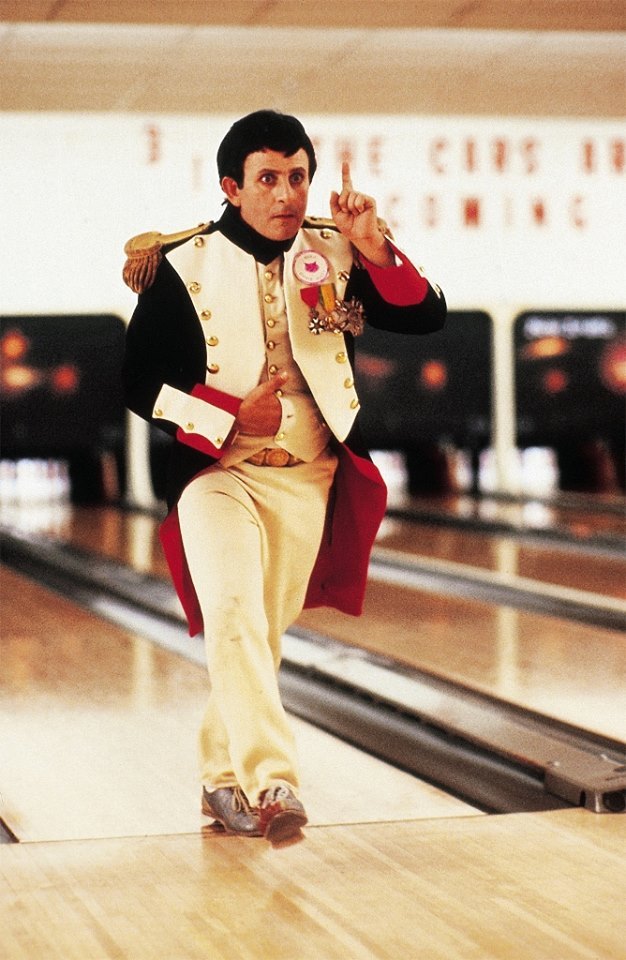
NapolĂ©on Did That — That time when movie Napoleon decided to ...
This dude definitely shoulda known when to fold 'em

Worried about genetics?  Yeah: maybe you should just quit.  I’m so sick of people crying about genetics when they’ve only trained for a few months.  “But my friend has trained just as long as me and he’s in MUCH better shape than me”, yeah, cool, and some folks were born without legs.  If you have all your limbs and the normal number of fingers and toes correctly distributed, you are incredibly genetically blessed: so go do something with it.  Go train skull splittingly hard for a decade and THEN find out where your genetics leave you.  Because there’s something funny about that: once you do that, THEN other people will start telling you you’re genetically blessed.  I come from a total stock of non-athletes, my dad is 5’8, my mom is 5’, they’re both tiny framed people, yet I constantly have people tell me that I must have “good genetics”.  They’re just those special kind of good genetics that only turn on after 20 years of training.  And I’m talking a decade of uninterrupted training, not the “off and on” training that is FAR more “off” than on.  If you’re willing to quit before you ever start, maybe you should just quit.

Worried about injuries?  Yeah: maybe you should just quit.  Everything has risk and there is no guarantee of safety in any activity, and your constant hand-wringing and pacing is, quite frankly, getting on my nerves.  How about some goddamn power of positive thinking for a change?  And you safety-minded people already confuse the f**k out of me by the choices you make.  Ok, cool, you’re not going to bench with a thumbless grip because it’s “too dangerous”, but you’re going to speed on the highway while texting and driving, not come to full stops at stop signs, not use your turn signal, etc etc?  You’re going to drink alcohol (a literal poison), eat known carcinogens, shower without an anti-slip mat, not get a flu shot, not chew your food properly but bench pressing is where you think the REAL danger is?  And folks, I’m guilty of a lot of the above, because I understand life has risks and we take risks in the pursuit of the things we want.  If you’re too crippled by fear of injuries to ever actually push yourself to the point of achieving something, maybe you should just quit.  I hear kazoo is a lovely hobby.

One Man Band in 2020 | Band, Street musician, Vintage drums
Or you could take a more crossfit style approach to music

Worried about getting fat?  Yeah: maybe you should just quit.  Ever notice how much we mock the folks that are afraid of getting “too muscular”, as though it happens overnight, yet whenever someone worries about getting too fat this mockery doesn’t occur?  It’s the same goddamn process folks: eating more food and the accumulation of mass.  The sole difference is WHAT kind of mass is accumulated.  You’re not going to accidentally become fat: there will be signs and indications along the way.  In turn, it’s not going to happen overnight.  I’ve seen so many idiots critique 5/3/1 Building the Monolith saying that the eating plan will make you fat, and my response is always the same: if you get fat in only 6 weeks, you were already fat to start.  No one goes from ripped to fat in the span of 6 weeks while following a program like that.  In addition, if you’re absolutely, totally and completely unwilling to put on even the slightest bit of fat in the pursuit of physical greatness, if you’re unwilling to let your 6 pack go to a 4 pack, if you’re unwilling to suffer just the smallest inconvenience in order to actually achieve something, maybe you should just quit. 

And I feel the slightest bit of guilt over the fact that I didn’t really address the whys and hows on the topics I discussed in the above, but the truth is that I’ve done that before elsewhere, as have many other authors, which, in turn, is part of the reason behind my advocacy of quitting.  This information is already all out there, and we all know it.  If, at this point, you just don’t want to accept it, quitting is your best choice.  And there’s nothing wrong with quitting: not every activity is suited for every person.  I have an electric guitar and amp in my basement right now that I have moved between 3 different houses and haven’t played at any of those locations.  It just gets moved, and serves as a reminder of something I took up and subsequently quit because I was unwilling to do what it took to get good at it.  Rather than bang my head against the wall or complain to anonymous strangers online about how unfair it was that guitar wasn’t easy for me, I accepted my losses and moved on.  I’ve quit quite a few things in my time.  Knowing when it’s time to quit is valuable.  Recognize these signs in yourself, and when it comes down to it, ask yourself if quitting is the best move.

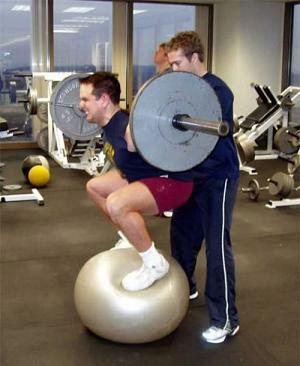
Hate BOSU Balls? Don't Use Manual Perturbations - Driveline Baseball
This dude definitely should have asked the question earlier

And if you refuse to quit, then just shut the hell up, put your head down, settle in, and go do some damage.

Sunday, March 22, 2020

FAIL HARDER THAN OTHER PEOPLE SUCCEED


I continue to write about failing because, quite frankly, too many people write about succeeding to the point that people are only good at the latter and not the former.  And no, this isn’t about practicing how to fail a squat or something inane like that.  Christ, you people asking for that information have to be even more oafish than me, because let me tell you, as a dude that has failed a few lifts in his day, your body will figure that sh*t out QUICK when the time comes.  No practice necessary.  No: I’m discussing failing in your PURSUIT of success, and how to do that well.  Specifically, how to fail HARD, and, in turn, BETTER, than other people.  Because if you get to the point where you learn how to fail hard, you’ll get to the point where you can actually fail harder than other people succeed, and this, in turn, will put you in a better position to succeed than those who wish to minimize their failures.

Image result for rocket launch explosion
If the internet had it's way, we'd still be using Wright Brothers' planes rather than risk failed rocket launches

Already those of you familiar with my educational background are most likely thinking that my lack of STEM degree is starting to show through.  Why would failing MORE better set you up for success than failing less?  Shouldn’t failing less mean you don’t stray as far from success, and can more easily course correct compared to when you fail hard and go completely off the rails?  THIS is the exact kind of foolish thinking that prevents people from REALLY succeeding: this absolute and utter fear of failure that one will only permit themselves to experience the very SLIGHTEST failure before reverting back to “success”.  And I put success in quotes because, quite frankly, most peoples’ definition of success is pitiful, paltry, and, quite frankly, embarrassing.

Why were we failing in the first place?  Because we were trying something new.  Why were we trying something new?  Because what we were doing before WASN’T working!  We’d have no reason to risk failure if we were already satisfied with the results we were getting before.  So then why are we in such a rush to get right back to what clearly WASN’T working?  Failing just a little bit and then returning back to what we were doing before is simply failing TWICE: we did something that wasn’t working, and then returned right back to something that wasn’t working.  Thus, it stands to reason that, instead of failing a small amount, one must endeavor to fail a MASSIVE amount.  Why?  Because failing by a massive amount means one took a massive detour from an already failing method.  We are FINALLY off course enough for it to matter.

Image result for Vikings and native americans
And you can make all sorts of friends once you get there

Because once we are that far off course, we can now develop some momentum on our way back to success.  In much the same way that one must have enough clearance to build up speed in order to generate maximal distance on a running leap, one must fail so catastrophically hard in their efforts that they have enough distance between them and success to take a massive running start and generate maximal distance.  You won’t accomplish this with only a 1 week experiment with mega high volume or mega dosing protein or training 2 a days: this is the kind of failure you can only experience after months of pounding your head against a wall.  After absolutely running your body into the ground.  After ignoring all the warning signs for MONTHS, actively feeling yourself getting weaker, slower, broken, and saying “nope: I’m gonna ride this out and see where it takes me.”

You have to bomb yourself back to the Stone Age!  Because only with a clean slate can we begin to truly rebuild: to be reborn!  When there are too many remnants of the old guard remaining, it affects your paradigm.  When you still allow yourself to see the shoreline on your expedition, you never truly reach “uncharted waters”, but when there’s nothing left of the old world to refer to, you have to start making everything up again from the beginning.  And it’s HERE that true learning, true discovery and, finally, true GROWTH occurs.  Without such a catastrophic failure, there’s no opportunity to forget everything you “knew” and start learning new things.  You’re going to hit rock bottom so hard and fast that you BOUNCE.

Image result for squatting on a bosu ball
Almost there!

The United State was suffering the Great Depression when it bounced back and became the number 1 superpower, and, coincidentally, when it did that, it also attacked Japan with nuclear weapons, erased everything, and THEY bounced back and became an economic superpower.  History is abound of such examples.  Is this survivor bias?  Absolutely: so go be a survivor!  Because how hard you fail AND how hard you survive are both entirely dependent on you, and when you choose to do both to the best of your ability, you gain the best benefits you can from the experience. 

And that’s to say nothing of the benefits you get when you TRY to break yourself and fail in that.  When you fail at trying to fail, you end up succeeding!  Wrap your brain around that one.  When you set out and say “I’m going to push myself to the point that my body collapses and my growth reverses”, you end up having to push harder and harder, growing stronger and stronger through the process as you continue to survive, adapt and overcome.  You find where your REAL limits are and learn that you are capable of SO much more than you give yourself credit for. 

Image result for Grandpa simpson shoot down german plane
Being a lunatic goes a long way

In truth, about the only way you can really fail is by not failing hard enough.   If you fail super hard, you set up a new baseline and can finally start growing again.  If you screw UP failing, you end up accidentally succeeding, and you end up having to bypass the whole “starting from zero” aspect.  But if you just dip your toes in the waters of failure, you waste all of your time and effort and then, ONLY then, have you actually failed. 

So go fail, and fail hard. 

Sunday, March 15, 2020

THINKING ABOUT THINKING


I’m going to be honest with you readers: I haven’t read a study on lifting since about 2005 or so.  Some of you may be aghast at such a statement, but some of you may also be in the same boat as me and not even realize it, because reading an abstract about lifting is NOT the same thing as reading a study about lifting.  I’ve already digressed from my main point, so getting back on track, the truth is, I genuinely don’t care about what any study has to say on the topic of lifting.  About the only exception to this is when Will Ruth over at r/strongman shares studies with me, but even then, he tends to do it with stuff that is more related to coaching than lifting, and we have many shared interests on the topic.  As for books on lifting, I haven’t read anything remotely academic on the topic since about 2008.  I greatly enjoyed Jim Wendler’s “5/3/1 Forever”, but that was more a tome on all things 5/3/1 rather than all things lifting.  Otherwise, the only book I read about lifting these days is an annual read through of Paul Kelso’s “Powerlifting Basics Texas Style”, as it’s an incredibly enjoyable and told as a story, rather than an academic text.  What I tend to gravitate towards reading, whenever I have the opportunity, is philosophy.  Why?  Because I’m not interested in learning how to think about lifting: I want to learn how to think about thinking.

Image result for schopenhauer
Although not enough that I'm willing to kick a woman down a flight of stairs...

Allow me to inflict a multi-pronged assault on you here.  One of the biggest reasons I advise trainees NOT to read studies is due to the sheer, uncomfortable, stark, true reality that many individuals simply lack the ability to UNDERSTAND studies.  Folks, my undergrad and masters was in POLITICAL science, and even with that barely tangentially related “scientific” aspect to my education I can tell you that there is SO much that needs to be understood when it comes to studies that, as a layman, it’s best to not trust your own ability.  Do you have a necessary understanding on what makes a sample size relevant, or how to prevent biasing in the collection said sample sizes, or which method of measuring outcomes is free of bias AND accepted within its own community, or what is considered statistically significant when measuring outcomes, or etc etc etc.  Studies can be great for the people that are trained and educated to understand them, but for the vast majority of people, having access to them just confuses them, and when read with an intent to specifically prove or disprove a belief, they’re basically worthless.  Actually, not worthless: dangerous. 

The above paragraph is already going to chap a lot of folks, but if it does, ask yourself if you’re the exact kind of person I’m talking about when you get mad about it.  Then see if you can find an individual educated on the topic and see if they agree with me or agree with you.  After that, allow me to get into my other issue when it comes to the reading of studies: all this does is teach you something about lifting.  Isn’t that worthwhile if you want to get better at lifting?  Ya know, maybe it CAN be, but, alternatively, I find that all studies do is LIMIT an individual rather than enhance them.  When a trainee reads that “protein synthesis is maximized with 72 hours of training”, they just sigh with resignation and go “well I guess 3x a week full body training is the best and only way to train”, and eliminate for themselves a SIGNIFICANT amount of training programs and opportunities.  They read that the squat and the deadlift release a significant amount of growth hormones and, with defeat, resign themselves to HAVING to have squats and deadlifts in every single program they ever run.  It’s rarely a case of “now I have a secret weapon” and far more often “now I have an albatross around my neck”.  And, consequently, rarely do I ever have someone share a study with me to share with me that I’m right about something, but more to “prove” to me that I’m wrong about something because a study says it’s not possible.

Image result for Sumo vs child
Well good luck with all that

My interest, instead, is to learn how to think about thinking rather than how to think about lifting.  In the case of the latter, I rely on someone/something else to tell me WHAT to think when it comes to lifting, which is fundamentally just being an information bank, holding and dispensing words from studies (ideally CORRECTLY remembered, but often not).  With the advent of the internet and electronically stored memory, it honestly seems silly, for I can simply look up information as needed rather than have to memorize tomes of it.  Thinking, true thinking, is not simply memorizing information and recalling it when needed.  You can train a fish to do that trick.  Thinking is taking that information and being able to comprehend it, extrapolate it, apply it and, if necessary, totally reject it.  Going even further, thinking eventually reaches a point where no new information is needed in order to reach new conclusions but, instead, all one needs is new WAYS of thinking in order to reach new conclusions based off old information.

Yes, so many trainees feel that what is lacking in their lives is information when, in truth, what they lack is the ability to take what is already out there and think about it in a new way.  The human body has existed for millennia, making it work hard has existed for just as long, there’s genuinely not going to be anything new under the sun when it comes to making it get bigger and stronger: all that’s limiting us is how we THINK about approaching it.  I read philosophy because I want to learn about different ways to THINK about thinking, and I take that different way to think about thinking and use it to think about getting bigger and stronger.  And the more I learn how to think about thinking, the LESS limitations I find.  Whereas those that dedicate themselves to learning how to “think about lifting” tend to wind up only knowing one way to go about the process, I continue to find more and more ways to get bigger and stronger.

Image result for squatting on a bosu ball
And ways to not do that

Instead of getting into study wars with people, where you go back and forth citing different studies and tearing apart the methods of your opposition, allow yourself to not CARE about what the studies say.  If someone quotes something at you “proving” that you’re wrong, allow yourself to be unaffected by this.  All this person is demonstrating to you is that they have given up on thinking and are putting all faith, trust and confidence in one source.  This information is all already out there, it’s been out there forever, it’s simply a question of how you want to think about it.  If you’ve already found a way to think that contradicts what in that study, it simply means the studies need to keep up with your thinking: NOT the other way around.  Continue to expand how you think about thinking and you will continue to find more ways to think about anything you want to think about and, in turn, more and more ways to succeed.

Sunday, March 8, 2020

THE BARBARIAN VS THE MONK: BRUTALITY OVER TECHNIQUE-PART III: THE BATTLE OF STAMFORD BRIDGE


Lord help me, I am going to write about Vikings in a strength blog.  But here’s the thing: when you write a series titled “The Barbarian vs The Monk”, you can’t NOT write about the Vikings.  They were LITERALY the original “barbarian vs the monk”.  And I don’t mean purely in the metaphorical sense, of a rage filled warrior battling one that was highly disciplined and trained: I mean they literally sacked monasteries and killed monks as part of their pillaging and looting.  While the rest of the western world had embraced Christianity some 800 years prior, or Judaism some 2500 years prior, or Islam some 200 years prior, the Vikings were still worshipping a pantheon of gods, sacrificing humans, dying valiantly in battle to reach Valhalla and, in general, being a bunch of pagans.  So when these folks wound up on the shores of Lindisfarne and found a bunch of pacifists monks, they all had the same thought: “Dude: FREE gold.”  Because while the monks had been relying on the rest of the world to have enough good taste and decency to not pillage holy sites and slaughter pacifist holy men as their means of protection, the Vikings, unfamiliar with such concepts, simply asked “but why?”

Image result for Odin
When this is how you envision the divine, that whole "love and noble sacrifice" thing sounds more like an invitation

And enough of this behavior over a couple of centuries got the local pretty righteously pissed off about Vikings such that, when the Viking King Harald Hardrada led a less than successful invasion of England, the English King Harold Godwinson felt the need to give chase to the retreating force in the hopes of completely eliminating them, which allowed us to know the story of the Battle of Stamford Bridge.  For the unaware, that name “Battle of Stamford Bridge” sounds quite dramatic, but it’s worth knowing 2 things about it.  1: it wasn’t so much a battle, as it was a siege.  For those aware of military jargon, a siege is an instance where a defending force is locked into a fixed location (such as a castle or fortified bunker) and an aggressing force tries to gain access to that location.  The old battering rams and boiling oil affair.  The other thing to know about this siege is that the defending force consisted of ONE Viking Berserker, while the aggressing force consisted of the entire English army.  …and the siege lasted for FAR longer than it should have, allowing the retreating Viking force to be able to re-group across the river, with the English suffering a 40 to 1 fatality rate.

To put that into some perspective, the famous Battle of Thermopylae, from “300” fame, had estimates of 300 Spartans to an estimated 20,000 Persians, meaning Spartans were averaging around 66.66 (repeating of course) Persians per Spartan.  HOWEVER, many claim that the 20k number for Persians is exaggerated, AND, it’s worth noting that though, yeah, there WERE 300 Spartans at the battle, there were ALSO other members of the fighting force present, with estimates of anywhere between an extra 700-1300 troops comprised of Helots and Thebans.   This means, under the most GRACIOUS estimates, where we make the Greek force as small as possible and the Persians as large as possible, with the Greeks killing EVERY Persian (which, spoiler alert, they did NOT) we're looking at 1000 Greeks to 20k Persians, averaging 20 fatalities to 1.  Then factor in that the 40 English killed by the berserker was the estimate from the ENGLISH side.  I’m sure the Viking stories place the numbers even higher!  Which means, at his worst, this Berserker doubled the effect of the Spartans at their best.

Image result for viking dual wield
Sometimes, such solutions may seem obvious

Then factor in that the Spartans had persistent military training and unit tactics.  They had the phalanx: a shield wall that relied on the strength of each individual man to bolster the defenses of the unit and turn back the advances of the aggressor.  They had SHIELDS in order to make such a shield wall.  They had OTHER troops available to watch each other’s back and flanks.  From birth they were dedicated to warfare and lived a literal “Spartan lifestyle” to facilitate that.  Contrast that with this lone Viking Berserker, armed with a Dane Axe which occupied both of his hands and allowed no room for a shield and had most likely been trained for warfare by his uncle and “learned on the fly” through various raids and skirmishes.  He had but 2 advantages here.  One is that the passage on Stamford Bridge was even narrower than the one that the Spartans occupied, such that 1 Viking was enough to hold off passage and the English could only send a man or 2 at a time, and the other is that the Viking had the gift of berserker rage.

And again, here I am, writing in a strength blog about berserkers: how clichĂ©.  But for our purposes today, that’s absolutely something worth considering: just how effective brutality was on this day when it came face to face with technique, refinement, civility, chivalry, etc etc.  Hell, it’s a microcosm for the Viking age itself: when you have to row yourself into battle, kill all the opposition, load up on heavy valuables and then row yourself all the way back home, you better be bringing a LOT of brutality.  The berserker’s gift that day was that, in the absence of armor, friends, advanced military training and tactics or even a shield, he had so much rage, fury and outright brutality that he was able to cut down 40 men before the English had to resort to “cheating” and sent a man UNDER the bridged to stab the Viking with a spear from below.  And just like I wrote about Jack Dempsey: when you’re so brutal that they HAVE to change the rules of the game just to have a chance of winning, it means, regardless of the outcome, you’ve won.  The English had to give up all semblance of chivalry, stabbing a man from a hidden position, in order to have ANY chance of defeating him.

Image result for stamford bridge viking
Not to say it was in any way a fair fight to begin with

The historical precedents are abound: brutality CAN overcome superior technique, ability, numbers, height, reach, weight, etc etc.  The Vikings discovered this and came up with the berserker AS their solution: sending unarmored maniacs with axes headfirst into battle as shock troops to disrupt the defender’s ranks and destroy their morale.  You have that same solution available to you when you encounter your own odds that, at first, appear insurmountable.  When facing a challenge that appears overwhelming, better able, more talented, better equipped, better trained, etc etc, there’s always the option to just crash so hard into it with all of the fury you have inside of you that, despite all of its advantages, it flinches, cracks and shows weakness.

And for my historically inclined readers, I’ll admit that all the details in the above may not be sound, but hey, it still makes a good story. 

Saturday, February 29, 2020

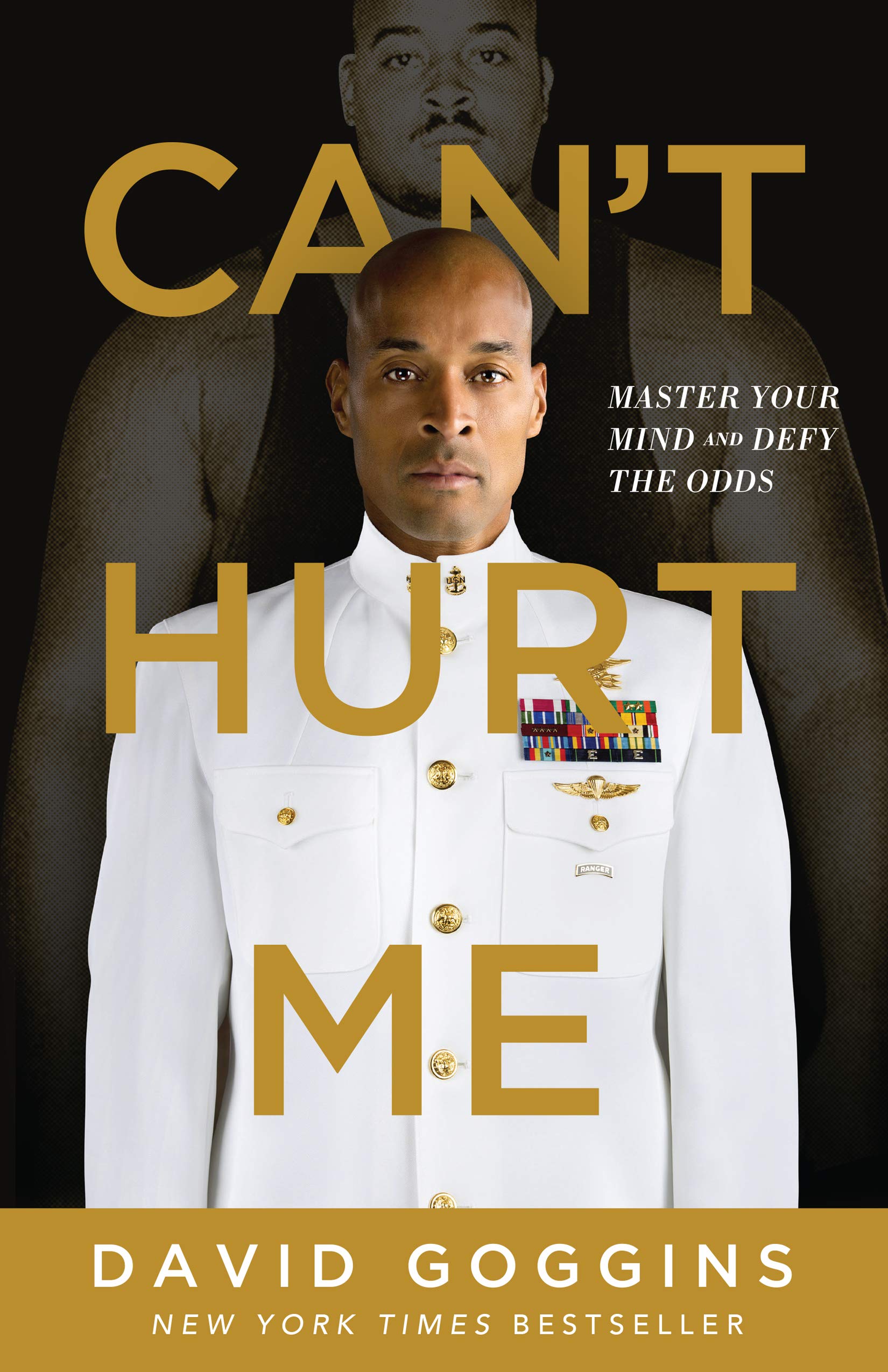
BOOK REVIEW: “CAN’T HURT ME” BY DAVID GOGGINS


It’s not often I read something from this century, but I recently picked up David Goggins “Can’t Hurt Me” and read the entire thing over 2 sittings, and after putting out some feelers there was some demand from my readership to give it a review, so here we go.

BACKGROUND

Image result for David Goggins
This is a good summary


If you’re completely unfamiliar with who David Goggin is, he’s a retired Navy SEAL and an extreme endurance athlete that has competed in dozens of ultramarathons along with triathalons and other races (I’m not too smart on what’s out there in the race world).  He’s been featured on several podcasts, and as much as I can’t stand the medium, I actually watched him on both Joe Rogan Experiences he’s been featured on and found them very entertaining.

This wasn’t my first exposure to Goggins: I had actually first learned about him from the book “Living with a SEAL” by Jesse Itzier, which I picked up expecting to be a comical romp and ended up being something I read entirely in the span of one sitting and found pretty captivating.  Particularly, the SEAL and ultramarathoner featured in the book seemed to share my sentiment regarding training: it sucks and we hate it.  That said, I also found myself having many moments of doubt regarding the stories told by the author.

Since I’m not reviewing THAT book (though I recommend it), I’ll give you a very quick overview on the premise: Jesse Itzier hired David Goggins as something of a live-in personal trainer for a month because he wanted to experience how David lived and trained, and Goggins put him completely through the ringer.  Because the story was told from the perspective of the trainee talking about the trainer, I assumed there were bits of hero worship and embellishment blended in, and in some cases assumed we were dealing with outright lies.  The book was still an entertaining read, and demonstrates how interesting of a character Goggins is.  

THE BOOK ITSELF

Image result for can't hurt me

“Can’t Hurt Me” clocks in at a pretty hefty 360+ pages, but the font isn’t small and there are occasional pictures. Having spent the majority of my leisure time reading 19th century German Existentialism, this was a VERY easy read, where David says what he means and writes in a very easy to digest manner.

The first 100 or so pages are David’s childhood, and it was ROUGH.  As a parent, it’s tough for me to read about someone treating their kids as poorly as David’s dad treated his family.  My heart broke for him, and I honestly think I read so much in my first sitting because I didn’t want to put the book down during such depression.  Just be aware that, if you are sensitive to such plights, it might be tough to get through.

If you are a fan of military heroism ala Richard Marcinko’s “Rogue Warrior” (the autobiography, which I highly recommend as well, but I can’t vouch for the fiction works), that’s not to be found here.  David talks primarily about military training rather than actual operations, so there’s quite a bit about his time going through SEAL Hell Week (BUD/S), Army Ranger School, Delta Force selection, etc, but about the only mention he makes of his work as an active duty military member is discussing recruiting efforts.  This is most likely by intention, and two-fold: it seems that many special forces members are reluctant to discuss actual operations in public, and David’s focus tends to be on experiencing misery and overcoming, with selection processes giving ample opportunity to discuss that.

Image result for richard marcinko rogue warrior seriesImage result for richard marcinko rogue warrior video game
For the love of god, you want the FIRST one

David is incredibly human, despite appearances of super-human abilities.  In turn, the book does not follow the traditional “3 acts” one sees in plays and movies, primarily because life doesn’t unfold that way.  David has highs and lows occur throughout the book which means that the reader can’t just settle back after the first 200 pages, assume the rough stuff is over and then settle in to absorb all the good vibes and victories.  You need to be paying attention to when mistakes are being made to be able to learn FROM these mistakes without having to make them yourself.  It’s not just the victories that are worth learning from, but the failures as well.

About the only thing that’s really jarring about the book is that David tries to sell it as a self-improvement book rather than an autobiography, and it gets a bit on the nose.  He starts out by telling you there will be 10 challenges in the book for you, as the reader, to face, and each chapter ends with a summary of the chapter, what lessons were learned, what the challenge is for the reader, and then instructions to upload photos or stories of yourself completing the challenges along with the appropriate hashtags to post to be able to share them.  The book came out a year ago and this has already aged poorly, and will fundamentally be silly when read 10, 20, 30+ years from now.  It honestly has to be the work of a ghost writer, because it’s just so completely out of character with the rest of the book.  That said, David s trying to start an online business based around his personality, so don’t hate the player.


      THE TAKEAWAYS

Image result for David Goggins
This is a good one

Once again, I had an understanding of David Goggins before picking up the book, and fundamentally wanted to read it to hear his perspective first-hand, rather than relayed by a trainee.  It did not disappoint in that regard.  I can’t say I particularly “learned” from Goggins, but more spent 300+ pages agreeing adamantly through the process, similarly my experience reading Jon Andersen’s “Deep Water” book. It’s nice to find that there are other people that share my mindset, especially when those other people are significantly more accomplished than I am.

The biggest point Goggins makes is how unfun and uncomfortable the experience of becoming better is.  Goggins is an ultramarathoner that hates running, he was a Navy SEAL that was negative buoyant (meaning he sinks instead of floats in water, a quality I also share with him), he had to lose 106lb in 3 months to join the military because he likes food and dislikes training so much, etc etc.  It’s so refreshing to finally read someone that ISN’T talking about how you have to LOVE the process and that this is a passion and training is their life and how it’s all they want to do etc etc.  I’ve always said the same thing whenever I’ve heard that “you’re not training hard enough”, and David is proof of concept that, when you are working hard enough to make REAL changes, the fun absolutely stops.

Image result for David Goggins
Not pictured: fun

But that also ties in perfectly with what else is great about this book: David’s emphasis on how many of our limitations are products of our mind. David espouses a “40%” principle, which basically boils down to, at any given point, when people think they’re “giving their all”, they’re only giving 40% of their all.  I LOVE that point.  For lifting, we see that ALL the time.  Kids who SWEAR up and down on a stack of Bibles that they’re going as hard as they possibly can in training, and then you finally get to watch a training session and see just how much they’re not putting out.  David talks about how the mind can put a governor on the body that limits its output, and how, through constant agony, pressing and overcoming, one can improve their ability to tap further and further into their potential. 

Reading about some of the absolutely insane things David has accomplished should hopefully shine some light on the reader about what the human body is capable of.  As painful as it is to read about David’s childhood and upbringing (painful due to the horror of his experiences, rather than as a matter of writing style), it illuminates to the reader that David is a human: flawed and limited like the rest of us. In turn, you’re not reading a story of a super human doing super human things, but about a REGULAR human doing super human things.  When you read about doing a 100 mile race with ZERO prep, armed with only a box of Ritz crackers and some protein shakes, it starts to dawn on you that maybe you can get up at 0500 and go lift some weights without a pre-workout, 2 hours of stretching, devil worship, intra-workout protein and carbs, and 27 warm-up sets.  Or that maybe you can add a few miles of running to your training plan without it catabolizing all of your muscle. 

SHOULD YOU GET THE BOOK?

Yes, absolutely, without a doubt.  It’s an easy read and has a lot of great lessons in it.  Based off some stupid stuff on amazon, I should apparently warn you that it contains a fair amount of profanity in it.  Honestly, if you’re shocked to find out that a Navy SEAL ultramarathoner employs a great deal of profanity, you most likely aren’t understanding just how much suck he’s undergone.