Friday, March 25, 2022

DUALITY: ANCIENT PERIODIZATION

Before I even write this, I feel like I’m re-writing “Moderation through extremes”, but my regular readers know that I tend to lock onto a theme for a while, obsess on it, then move on to the next thing.  Which is actually a fair bit of “case in point” here, so that’s a victory.  But, already, I have digressed before I’ve even started.


I always wanted to be big and strong, this is true, but ALONG with that I was obsessed with martial arts growing up.  It was the late 80s/early 90s, and Karate and Ninjas were everywhere, from Karate Kids to Teenage Mutant Ninja Turtle to Bloodsport to Surf Ninjas to just everything: it was an era of total cheese that we all loved and bought into fully.  I BEGGED my parents to enroll me in some martial arts training because I wanted to be like Ernie Reyes Jr in the second TMNT movie, and after a summer of YMCA “krotty” to see if I was actually bought in, I was enrolled in a local Tae Kwon Do school from ages 8-17.  Those of you familiar with Tae Kwon Do will be unsurprised to hear that I did not really become much of a fighter with that pedigree (though it did at least ignite the spark that eventually got me into wrestling, boxing, Muay Thai, submission grappling/BJJ, and now I’ve come full circle to Tang Soo Do), but it DID give me my first exposure to eastern philosophy, and specifically Taoism.  And though I tend to focus far more on the west when I talk philosophy, Taoism is pretty awesome.


You thought I was joking.  And yes, that IS Rob Schneider at the top...and Leslie Nielsen at the bottom. This movie is wild!


If you’ve never looked at the South Korean flag (spoilers: Tae Kwon Do is a Korean martial art), right in the center is what most folks know as the “yin/yang” (it’s “um” and “yang” for Korean, unimportant but interesting), which, to summarize so much that it’s to the point of wrongness, represent equal but opposite forces in the universe existing in harmony.  Yin is feminine, yang is muscular, yin is soft, yang is hard, etc.  This is the basic premise of duality: the harmonious existence of two opposing forces creating balance.  Too much of one disrupts harmony and creates imbalance.  It’s a contrast to western thinking: we tend to have virtues and vices, and you want to maximize the virtue and minimize the vice.  Imagine trying to tell people “You should be equal parts good and evil: that’s balanced!”  It wouldn’t fly.


But, in turn, this western thinking can hamstring a trainee that seeks to pursue physical transformation, because it tends to result in a SINGULAR approach.  So many trainees are in pursuit for that ONE way to achieve their goals.  What’s the ONE program I can use?  What’s the ONE diet I can follow?  What’s the BEST rep range?  How many sets are optimal?  Etc etc.  We see these questions all the time, and the most frustrating answer to give is the correct one: “it depends”.  And this, of course, speaks to duality: there will be times when the answer is one thing, and times when it is another.


Just do it all at once: duh!  RIP to a Legend.


And that’s because, a few thousand years ago, we had periodization figured out!  But we are, of course, doomed to repeat history (The Eternal recurrence ala Nietzsche?  Or perhaps “The Myth of Sisyphus?”  Hah!  Got some western philosophy in there), so here we go re-learning this lesson.  We can’t try to maximize virtue and minimize vice here: we need balance.  And balance doesn’t necessarily mean balance at ALL times: it can mean balance THROUGH time.  


You wanna run your linear progression program?  Alright, cool: you are hardcore into the yang.  You’re running it and you’re running it and you are just full on maximizing your yang.  Eventually, it stops working.  Why?  You are imbalanced!  You need some yin in your life!  You were running sets of 5 this whole time, 3 days a week, full body, few lifts?  Time to run high reps, split workout, 4-5 days a week of lifting, with a large variety of lifts.  Or maybe even another “opposite” direction of single set work (Hello DoggCrapp/Super Squats).  And we run that until we are imbalanced, and then we seek balance again.


BALANCE!


Am I going to dare talk about duality of nutrition?  Mr Lowcarb/Deep Water/Mountain Dogg/Organic Pasture Raised Grassfed Piedmontese etc etc?  Hell yeah I am, because anyone who has followed the blog long enough KNOWS I was a total fast food fiend before all that.  And even without the fast food, I did the gallon of milk a day for Super Squats, and lots of fantastic carbs.  And when I ran DoggCrapp in 2011, I was doing carb cycling.  And right before I jumped onto this recent kick of health focused, I was purely strength focused.  I was chasing a 275lb keg press and was eating ANYTHING that would get me to that goal.  I had whole frozen pizzas as my pre-pre training meal.  I got my bodyweight up to a second all time high of 210lbs.  And then, so full of yang, I shifted to yin.  And I dropped to 177lbs and the leanest I had ever been in my life (which is the current avatar photo for this blog).  And now, these days, I strive to find balance: trying to be strong AND lean AND healthy.  I attempt to EXIST in duality.


And that’s all this process is: finding that balance.  And in order to do so, some time will need to be spent SHIFTING the balance as a means of course correction.  If we always do the same thing, we end up too much of one and not enough of the other.  We need different, we need new, we need unique, because we need balance.  And there’s no reason to fear this balance: it’s the necessary order of things.  Attempting to be all of one thing is unnatural: it’s unharmonious.  The “complete” being will have the qualities of both put together.  The incomplete being will never realize its potential.  Allow this duality to exist within you and manifest it by varying and adapting your training and nutrition as necessary.


Two opposing forces existing harmoniously can be PRETTY powerful


But keep doing your conditioning.          


Wednesday, March 16, 2022

STRENGTH OR TECHNIQUE: HOW DO WE KNOW?


This post comes by way of my brother-from-another-mother Will Ruth, who commented on one of my earlier posts


I think most of us are past "form," as the pursuit of aesthetic ideals, and get "technique," as the pursuit of performance ideals. However, I get easily stuck on how to know when a problem is technical vs. physical. I find it easy to get spun around on "is this something I'm doing wrong (technique), or do I just need to get something in the system stronger to get past this?"


This clean is awful...but this continental is fantastic!


This becomes something of a chicken and egg thing here, and it’s fun to chase it down.  Ultimately, we once again have to ask “what is our goal?”  And people get frustrated whenever I ask that question because goals SEEM obvious at first, BUT, typically, as we examine them further and further, we learn more about ourselves through the process.


Technique does not exist in a vacuum.  You fans of Plato need to listen up.  There is no one perfect technique.  Bring some Machiavelli into your life and understand that the “right” technique is the technique that GETS YOU TO YOUR GOAL.  In turn, sometimes, the technique that allows you to move the most weight is NOT the most ideal technique, NOR is the safest technique necessarily the most ideal technique.


A personal example.  Last training cycle, I had taken it upon myself to run the Grace WOD with a 155lb keg, doing 1 motions (which is probably more like Isabel, but I digress).  The GOAL/reason I was doing this was to get in some extra volume in my shoulders and back, as it was a hypertrophy block.  There was, of course, a conditioning benefit as well.  My goal was NOT to do the workout as fast as possible, or was it to set time PRs.  I cared about maximal strain/pain and effort.  I needed to push as hard as possible AND at the angles that impacted the desired muscles.  This meant employing INEFFICIENT technique as far as moving the keg went.  I was intentionally muscling it up and setting up each press from a disadvantageous position.


Despite my constant explaining of this, outside observers kept commenting “you’re so close to 2 minutes!”  “I bet you can just taste that sub-2 minute time!”  Etc.  I appreciated the enthusiasm and support, of course, but again: it wasn’t the goal.  I kept explaining that, if a sub 2 minute time was my goal, I’d get it done…until, finally, on the final workout, I decided “f**k it” and went and used the very technique that would have gotten me that time, and ended up crushing my previous time by 17 seconds and getting it done in 1:45, which is faster than even my best time with a straight bar.


And also a strong argument against people who "don't have time for conditioning"


With this, I demonstrate how the “best” technique was not the “right” technique.  There was a technique to the keg that could get me a faster time (setting it up better on the eccentric, setting my grip better to roll it up my body, etc), but employing it would NOT get me my desired training effect of getting more volume into my intended muscles.  This is similar to what I’ve written about many times in the past as well regarding the benefits of touch and go deadlifts, partial ROM lifts, not locking out lifts, etc etc.


All this just to lead us into tackling the actual question: how do we know when it’s a question of technique vs a question of lacking strength?  Well, we have to ask ourselves “Are we doing the movement to develop strength, or are we developing strength to do the movement?”  If it’s the former, then technique isn’t going to be a concern UNLESS what we’re observing is that the movement is NOT strengthening us in the manner that we desire (“I keep benching and my chest isn’t getting ANY stronger!”  well yeah: your grip is too close).  So this relegates us to the instance of the latter: there is a movement that we spend our time strengthening ourselves in order to be able to be better AT this lift.  For powerlifters, these are the big 3, for weightlifters it’s the snatch and clean and jerk, for strongman it’s going to vary from competition to competition, etc.  


And for you USAWA folks...


From here, it can STILL get a bit complicated, as these key lifts can be both tests AND strengthening tools.  Jim Wendler’s 5/3/1 is actually a fantastic example of this.  You can go for a PR on the main work sets and then use that same exact movement on the supplemental work to strengthen that lift, and, in turn, the technique used for the PR sets might be different than what is used for the supplemental sets.  But let’s put all THAT away so we can get to the question (which I’ve yet to answer, and have taken almost 800 words just to lay down some background).  From here, we need to have a clear understanding of WHAT the best technique would be to be the most successful at the lift (in this case, defining success as moving the most weight, or getting the most reps, or succeeding in whatever metric success is defined at) in order to determine IF there is a technique issue or not.  There’s various ways to approach that: direct one-on-one coaching, studying lifters with builds similar to our own to see what they do, analyzing our own movement on video, etc etc.  Reference, again, my Keg Grace story: I had awareness of what the technique was that could get me a faster time and was intentionally NOT employing it…but it meant I KNEW what to do IF my goal changed.


IF we do not know or understand WHAT the “right” technique is, we have no way of knowing if we are struggling with a technique issue.  And, with that, I’m going to suggest something that trainees HATE to hear: experiment.  Try a BUNCH of different ways to do a lift and see if one of them best suits your body, set-up, and strengths.  Stuart McRobert wrote about this in “Brawn” and it made so much sense that everyone ignored it for decades.  Where’s the drama?  But simply put, the technique that allows you to succeed according to whatever your metric is for success is the “right” technique for you.


Add it to your library if it isn't already there


Once you have figured out WHAT the right technique is, you have to determine WHY you’re not using it.  If the “right” technique for your deadlift is to deadlift with a neutral lower back and yours keeps rounding, WHY is that happening?  What’s funny about this is, despite me typically beating the “just get stronger” drum, most often trainees decide to chase after that as the solution and TOTALLY fail to solve the problem.  Johnny Roundback decides he’s going to engage in an AGGRESSIVE lower back strengthening block with reverse hypers, hyperextensions, good mornings, atlas stones, kettlebell swings, pull throughs, etc etc…and is still pulling with a rounded back.  Why? Because his set-up is absolute garbage!  The bar is too far out in front of him at the start of the pull, which is preventing him from setting up with any sort of decent leg drive and forcing him to round back the lift off the floor with nearly stick straight legs.  And sure, his lower back is now REALLY strong to lift that weight…but it’s rounded as hell too.  


I had a similar instance with squats when I was a newer lifter: my knees kept collapsing inward.  I had “learned” that this was because of weak hips, so BOY did I spend a lot of time strengthening those hips.  And my knees kept collapsing.  Until one day, I decided that I was just going to STOP letting it happen…and it did.  I had to consciously focus on pushing my knees OUT, because, left to my own devices, they’d collapse in.   Could that be physical weakness?  Possibly, but it was DEFINITELY lack of intention that drove it.  Getting strong is cool, but if you’re not USING the strength, what’s the point?


Granted, your local bar owners might appreciate your show of restraint


BUT, maybe you find yourself in a situation where you KNOW the right technique to use, you know what you WANT to do, but when you try to actually do the thing, it doesn’t happen.  Go back to my squats: what if, DESPITE my best efforts, when I tried to push my knees out during the squat I just simply couldn’t?  THEN we have identified an issue of actual muscular weakness holding us back on the lift.  And from here, we can specialize, do weak point training, bring up what is lagging, and continue on.


Boy, in truth, that is WAY too damn complicated.  I’ll be honest: I’d rather just lift.  But ON that, what’s cool is, on a long enough timeline, these things kinda sort themselves out.  If anyone has really been reading from the beginning of this log, you’ll know that I was a very solid deadlifter and that I squatted pretty much just like how I deadlifted: rounded over and ugly.  As of the past year or so, my squat has suddenly become more upright and technical looking.  Consequently, in that same time, I’ve done a LOT of front squat based conditioning work and included belt squats in my training.  This has meant that my quads have been getting a LOT more training, while my posterior chain has been de-emphasized.  Surprise: we found a weakness and we fixed it.  In turn, I’m suddenly absolutely DEMOLISHING squat numbers.  I finished up the final squat workout of Deep Water Beginner with 70+lbs more than the first time I ran it, and I did it WITHOUT having to lay down on the floor between sets, and keeping LEGIT 2:00 rest times.  But did I mean to do any of this?  


Nope.  It just happened.  I had run out of things to do and decided to do something else.  And these days, my new hotness is Tabata KB front squats every day.  And before that, I had that Keg Grace thing going.  And in the middle of that, I was doing that “20 rep squat straight to 20 rep deadlift” workout.  Over time, so long as we’re not locked into just ONE way to do things (which is dumb), we’ll end up tackling all sorts of lagging areas and weaknesses.  And in the interim, we’ll STILL get strong somehow someway.  If you’re putting in the effort, there’s no way you won’t.  


Monday, March 7, 2022

CONDITIONING IS THE ANSWER

Oh my god another post about conditioning.  But hey: it’s what I’m known for these days, and man I wish I had jumped on this train EARLIER so I could’ve spent even MORE time being absolutely bananas in my training, but here we are, and hopefully you can learn from my mistakes and benefit from my rambling.


Rambling about the iron...you get it?!


Conditioning is the answer to EVERYTHING in matters of physical transformation.  This is like having a one-sided die, or a broken magic 8-ball.  It’s honestly a bit of a let-down to have it already all figured out, but conditioning just plain fixes, addresses, completes and DOES everything, to the point that, as I reach my “twilight” competing years, I’m fairly certain that my training is pretty much going to be ONLY conditioning and heavy lifting will fall to the wayside.


I’ve already written how “conditioning is magic”, but for some key points: when you improve conditioning, you improve EVERYTHING.  The opposite is not necessarily the case.  Wanna get bigger and stronger?  Conditioning.  How?  For one, by improving your ability to recover BETWEEN SETS, you improve your ability to accumulate training density.  You can get in more volume in less time, because you can recover from intense sets quicker.  This means shorter rest periods WITHOUT having to use jazzercise-esque loads to accomplish it, which means more worksets per workout (assuming you are a human that has a schedule and only a finite amount of time to get things done). 


Like this guy for instance


On top of that, conditioning improves your ability to recover between WORKOUTS, and it does it twofold.  One: a better conditioned athlete is simply a healthier/more able athlete, which means they recover from training faster than a deconditioned athlete.  We call this “being in shape”.  Conditioning improves your base of general physical preparedness (assuming you aren’t conditioning like an absolute and total idiot), which means you can bounce back from almost anything.  If you and Joe couch cruiser decide to play a 3 hour pick-up game of beach volleyball today, he’s going to be floored for a week while you’ll be hammering your squats in the morning. 


But along with that, conditioning ITSELF is a recovery agent FROM training.  I feel that this is one of the more undervalued aspects of conditioning work.  When you do conditioning, you have an opportunity to train the muscles you have recently trained such that you get fresh blood pumping into the area to help promote recovery from training.  And, once again, unless you choose to condition like an idiot, conditioning isn’t going to further tax said muscle but instead help bring it back to life and be ready to perform again.  I’ve personally observed this with my various Deep Water runs.  The first time I ran it, I did NO conditioning outside of the Day 5 “active recovery” work, and I walked like a toy soldier for 6 days after the squat workout.  The second time I did it, I did some sort of thruster based conditioning work after the squat and could bounce back within a day or two.  This time around, I’ve been doing daily Tabata Kettlebell Front Squats (thanks Dan John!) ON TOP OF a daily conditioning session…and I don’t even get sore from squats anymore.  My body is so accustomed to squatting that there isn’t any real degree of volume that can impact it at this point, and every day I’m flooding my legs with fresh, restorative bloodflow. 


"I FEEL SO REFRESHED!"


What’s REALLY king for this strategy are movements without an eccentric load.  Sled pushes/pulls/drags, tire flips, high rep Olympic lift (I can hear the Crossfit haters gnashing their teeth), kettlebell work, stone/sandbag/keg loading, etc.  Glenn Pendlay wrote about the benefit of this, and it’s a “secret” that’s honestly been known by quite a few folks in the training world but we just love to forget it.  A REAL low cost option is just plain old running uphill.  No eccentric load. 


BUUUUUT, what really prompted me to write this post today was “pet lifts”, and how conditioning is the answer to that problem.  I get it.  We all have lifts we “love” to do.  And I write that in quotes because exercise sucks and if you love it, you’re most likely a masochist, but still, we have our “pet lifts”.  “Yeah, this program is great, but where can I fit in front squats/zercher squats/atlas stones/RDLs/Turkish get ups/etc etc”.  In conditioning.  THAT’S where you can fit them in! 


Trust me: you can find a place for it!


You no longer need to screw up your strength work by trying to shoehorn in a movement that doesn’t belong there.  You no longer need to worry about how you’re not hitting your muscles the requisite amount of times per week (twice right?  Unless thrice is an option?  I hear the Bulgarians go 5x a week.)  You no longer need to add another day to 5/3/1 to become the row day/arm day/calf day/etc.  All of this can be answered WITH CONDITIONING.


Get creative people!  Reference my “Devilish Strength/Demonic Conditioning” idea: conditioning CAN be chaos.  In fact, I argue it SHOULD be chaos.  Because we need to condition our bodies FOR chaos.  When all our body knows is order, that’s all it can operate under.  Well that’s cool when everything goes right, but if your shoe comes untied mid squat or you get a piece of dust in your eye, you may find that things are no longer going “according to plan”, and the trainee that has spent some time learning chaos will be able to overcome and survive.  The other guy?  I don’t want to be him.


Chaos winning


“I need more arm training!”  Cool: do a circuit workout of rope climbs and dips.  Or arm-over-arm sled drags and burpees.  Or set a goal for 100 chin ups and EMOM do 5 close grip push ups.  Wanna bring up your shoulders?  Reference my post on putting stuff over your head: it’s GREAT conditioning.  Legs and posterior chain just write themselves.  Need front squats in your life?  Run my Tower of Babel workout: you’ll HATE front squats.  Wanna spend some time on the Olympic lifts?  “Black and Blue” has got you covered.   I can go on and on here, but you get the point: you can get in that extra work IN conditioning.  It IS the answer. 


Say that extra work isn’t conditioning friendly?  You need more band pull aparts or curls or something.  Well, for one, you could always just do like I do and call it “daily work” and just make it something you do every day for submax sets (ANOTHER way to get restorative bloodflow to the muscles) OR you can make THOSE movements the staples of your strength training and then take out some of the big movements to make room, then make those big movements your conditioning so that you don’t miss out.  I took the 3x10 “technique” work out of the Deep Water main workouts and instead included it in a conditioning circuit paired with dips and chins so I could still get in a total of 30 reps (usually done 15-5-10, but I’ve also done 10-5-15 and 12-9-6-3) of work but ALSO get in conditioning.  I wanted to get in SSB squats AND deficit deads on my last training block and I DIDN’T want to take 30 minutes doing it, so I set them both up, hit an EMOM timer, and bounce between one movement and the other for 12 minutes.  At the end of it, I wanted to die…AND I got in 6 sets of SSB squats and deficit axle deadlifts.  Conditioning was, once again, the answer.


Same but different


This piece was honestly TOO easy to write, and I could really go on and on about this, but I’m already running longer than usual.  You know conditioning is good, but hopefully you also learned how you can use it outside of simply improving your conditioning.  Bounce back faster AND get in more volume both by improving your ability to recover AND employing conditioning as a means to accumulate volume in and of itself.  I’m getting in at least 448 KB front squats a week ON TOP OF whatever else my training requires of me.  That stuff will make you grow.   

Friday, March 4, 2022

DOING EVERYTHING BACKWARDS

 This is something that dawned on me the other day that I felt like sharing.  I pretty recent wrote a piece on “doing what everyone else is doing will get you the results everyone else is getting”, and this goes down a similar path, but still: the observation is entertaining because it allows you to further understand the insanity of my logic.  Allow me to explain.


Around 2006 or so, I had been training for 6-7 years and enjoyed the success that came from simply smashing my head into the wall as hard as I could and eating a lot of food (side note: that method STILL works by the way).  A buddy of mine had turned me on to Super Squats, and, of course, from there the rest is history, but the story AFTER the happily ever after from that is that I got FAR into the “hardgainer rabbit hole”.  I read Stuart McRobert’s “Brawn”, which also got me pointed toward all manner of abbreviated training, to the point that my long time readers (hey folks: we hit 3 million views!  And we’re on 10 years running now…holy crap!) will know that this whole blog started as I was just BARELY clawing myself out of that pit of abbreviated training obsession.


But why was I so into this hardgainer stuff?  Those of you familiar with my history know that I grew up a fat kid and, until VERY recently, had what would best be described as “endomorphic tendencies”.  I never had an issue gaining weight, and tended to be a bit on the dumpy side of things: a hardgainer I was not.  But my “logic” was bulletproof: if THIS stuff can make hardgainers gain muscle, just imagine what it can do for normal folks! 


This all happened BEFORE Starting Strength was a thing


And so off I went!  I drank the gallon of milk a day and did the 20 breathing squats.  I followed the Dave Tate “nutrition” protocols of the early to mid 2000s and tried my hardest to eat entire packages of Oreos, Poptarts by the boxful, and all other manner of debauchery best fit for “hardgainers”.  I focused on making that scale weight grow whenever I found my lifts stalling.  I did all the tricks.


And hey folks: it DID work.  Yeah, I got pretty fat, but my late teens and early 20s were some prime growing years.  It was the first time I ever managed to get to be over 200lbs, which, being completely and totally transparent with you all, I very much miss, but I’m at a point in my life where that’s not the priority (more on that in a bit).  But herein we observe the logic at work: if I wanted to put on muscle, I wasn’t going to follow the advice for people who put on muscle easily (no thanks “bodybuilder training”): I followed advice to put muscle on people that are STRUGGLING to gain.


Well here I am 15ish years later and I realize I’m doing this all over again.  How’s that?  Check this out: wanna know a GREAT way to train to put on some size?  Do some fat loss workouts.


I can already feel how much you hate me after you try this


Come again?  Yeah, for one, I get that “fat loss workout” in and of itself is pretty silly.  Exercise, in general, doesn’t burn a whole lot of calories, and the way to lose fat is through some fork putdowns and table pushaways.  Diet diet diet.  Yeah, I get it, BUUUUUT we can’t pretend like there aren’t training protocols out there with a goal to generate a serious metabolic demand in order to help stimulate fat loss.  Examples?  Of course.


The classic “Tabata front squats” from Dan John is marketed as a fat loss workout, as it is short and STUPIDLY high in intensity.  It brings your heart rate into the redzone quickly, and then you can spend several hours “coming down” from it, hence a serious metabolic hint in short order.  Many High Intensity Interval Style training protocols are similar in that regard, along with some Crossfit WODs like Grace, Isabel, Fran, etc.  If you look at the core of all of these protocols, it’s pretty much the same thing: take a BIG movement that uses a lot of muscles (taking stuff from the floor and putting it overhead is a GREAT example) and then do a lot of reps of it in a short time with minimal (if any) breaks.  It’s totally anaerobic, and basically you are trying to outrun your heart and lungs before you flood with lactic acid and die.


This took me 1:45 to complete and several hours to recover from


But wanna know something cool about fat loss workouts?  Since they are so metabolically demanding, they can make you REALLY hungry…which is AWESOME when you’re trying to gain weight.  Because truth be told, you can undo 60 minutes of exercise with 30 seconds of eating.  So if you’re struggling to get in the calories due to a lack of appetite, a quick fat burner workout can go a LONG way in opening up avenues for more food intake.  But along with that, if our goal is to turn all these calories into muscle, what better way than to sprinkle in these little 2-10 minute workouts on top of hard and heavy training?  Folks, most lifting workouts last 60-90 minutes, and those of you with epic 3 hour long “workouts” are spending WAY more time resting than lifting.  So for 90 minutes in your day, you do something physical…and then you spend the remaining 22.5 hours being stagnant?  What do you think your body will reflect more: what you’re doing for 1.5 hours a day or what you’re doing for 22.5?  BUT, if we keep hammering the body with these little intense microworkouts, we keep triggering that response to change.  If we do that and DON’T feed it, it’s a fat loss workout….but if we do that AND feed it, we are primed for growth.


A few personal stories: I’ve been doing daily Tabata kettlebell front squats for the past month as part of this current mass building phase, and it’s just been remarkable for my conditioning along with keeping on the lean side while I continue to mainline calories.  And the real origin of this whole “doing things backwards” come by way of my Dad.  When my grandma came to visit us one day, she brought a bunch of “Slimfast” shakes (this was the 90s, go figure) that she left in our fridge.  My dad discovered that they were delicious…and was drinking them alongside a ham sandwich at lunch.  Damndest thing: those “weightloss shakes” are FANTASTIC for weight gain when you drink them WITH food.  And hell, I can keep going down the backwards rabbit hole when I discuss my whole “training drives nutrition: not the other way around” idea, which STILL blows peoples’ minds…BUT this is already getting on the long side here, so let me conclude…


Try doing things backwards for a bit.  Put your heavy compounds at the END of your workouts instead of the beginning: you’ll be able to push MUCH harder on them because you don’t need to save any energy for the rest of the workout.  Eat and train like a hardgainer if you’re an easy gainer.  Train for fat loss while you’re going for weight gain.   Run “punt block” on the first down.  Honestly, when I observe the results of people doing everything “right”, doing things wrong seems a lot more appealing.


Friday, February 25, 2022

EAT LIKE A HOBBIT, TRAIN LIKE AN ORC, THINK LIKE AN OGRE

I came up with this while posting on a training log in t-nation and it was so good I had to write it out.  I’m going to cop to the fact that I’ve never read a single JRR Tolkien book and have only watched the Lord of the Rings Movies and that my “knowledge” of that universe is really more from Dungeons and Dragons, so for the true nerds out there: I apologize for appropriating your culture and all the mistakes I’m about to make, but bite me, because this is my blog.


You're welcome for your stat boost


All that aside, for all you folks out there looking for “fitspiration”, you can do no better than these 3 fantasy creatures: the Hobbit (Halfling to you civilized folks), Orc and Ogre.  First, what’s great about picking a fantasy creature is that the lie happens UP FRONT.  You don’t need to worry about genetics, drugs, photoshop, filters, SARMS, surgery, synthol or any other insanity: it’s CLEAR that this is all make believe.  And any of you who have read my blog previously KNOW that I am a much bigger fan of being inspired by wildly impossible myths and legends than anything even remotely resembling reality.  If you try really hard to be like Kaz and you fail, well that sucks, but if you were trying REALLY hard to be like The Juggernaut and you fail…well you never had a shot kid!


Ok, that’s 2 intros: I should actually write something now.  Let’s talk about eating like a Hobbit.


WHY EAT LIKE A HOBBIT?


These guys get it


Hobbits have it figured out.  Eat FREQUENTLY!  Boy will I beat this drum forever.  I am ALWAYS eating.  I think of it like “grazing”, but anyone that read through my reviews of Deep Water/Building the Monolith observed my every 30 minute approach to eating SOMETHING, to say nothing of the giant meals I have at the beginning and end of the day (reference my “Bookending” post).


Frequent eating became big in the 90s due to the idea that it “stoked the metabolic fires”.  Some suggest the idea that, if the body is fed constantly, it knows that food is in abundance and, in turn, won’t store bodyfat.  Science, of course, has come out and denied all of this…and then there will be a study next week that affirms it, and whatever.  Use some solipsism and just make this work for you!


Frequent eating is awesome no matter the goal.  Want to gain weight?  Know what stops a lot of people?  Feeling FULL!  You eventually run out of room in the guts and can’t eat more.  Well, that happens when you have a goal of eating 4000 calories and only 3 meals to get it done: those are 3 HUGE meals.  You are NOT going to feel happy about that.  Chop it into 6?  Smaller meals: easier on the guts.  6 meals and 3 snacks?  Now we’re really getting somewhere.  I’m a total d*ck at work because whenever I’m eating someone will make some stupid comment like “You’re eating ground beef for breakfast?!” and I reply “I got up at 0305 and this is my 5th meal of the day: I don’t bother naming them any more”.


But I suppose that works


Losing weight?  Frequent eating is a FANTASTIC way to bridge the gap of time.  People fail weight loss because they are HUNGRY, and, eventually, they let hunger override logic and just binge at the end of the day.  That’s the absolute worst, because you suffered ALL day AND undid all that work at the end, so you feel bad for failing AND you felt bad all day suffering.  With frequent eating, you never have to be hungry for long.  Instead of it being 6 hours until your next meal, it can be 3.  The more frequent, the shorter the time.  No: you won’t eat until you are FULL, but you CAN eat enough to no longer be starving.  And, if nothing else, you can deceive yourself into thinking you had “enough”.


Break away from the 3 meal a day constraint.  It’s a manufactured concept.  There’s nothing special about breakfast, lunch and dinner: have second breakfast, tea, elevensies, and all the other names they came up with for meals.  Or do like I do and quit naming them and just eat.  But either way, eat like a Hobbit.  We don’t eat like Orcs, who engage in ritual feasts, filling up at giant meals before soldiering off for battle.  We don’t eat like Ogres, going for long periods of fasting/starving before landing an ambush and absolutely gorging themselves because they don’t know when the next meal is coming.  We will find a way to get in a meal no matter what the situation.


WHY TRAIN LIKE AN ORC?


Maybe that will persuade you


Orcs are the mortal and sworn enemy of the elves along with the dwarves.  And elves and dwarves don’t necessarily get along either, so when two diverse people can come together in harmony over how deplorable they find you, you know you’re a bad people.  Both the elves and dwarves have formed well trained and regimented military units, highly trained in tactics and equipped with well forged (and often magical/mythical) weapons and armor in order to combat the Orcish threat.


A threat, mind you, comprised of a bunch of razor toothed lunatics outfitted in animal hides armor with rusted steel and no actual strategy.


What he lacks in nuance he makes up for in GIANT F**KING HAMMER


Because, for what that threat lacks in battlefield skill, weapons and training, it compensates for with sheer brutal intensity and insanity.  The Orcs personify “bloodthirsty”.  They are not here to fight: they are here to kill.  THAT is what you need to bring to training.  THAT is the “secret”.  Because not all of us will be so lucky to get magical chain armor that is weightless, or an enchanted axe, or the blessings of the gods, but ALL of us have a choice to be brutal, savage and crazy, and those of us that pick that choice can be a threat to those that are blessed.


We don’t train like Hobbits: they are soft and too used to the good life. They fight begrudgingly, often preferring to hide.  We don’t train like Ogres: as fearsome as they are, they are inherently lazy, relying on ambushes, sneak attacks, and their natural gifts of size and strength over a weaker foe.  We train like the Orc: willing to take on foes 3 times their size because their berserker bloodlust frenzy compels them to die on their feet.  They are “will to power” personified.  They are intensity.


WHY THINK LIKE AN OGRE?


Peep that intel score of 5


An odd choice no?  The ogre is not historically appreciated for their intellect.  Quite the opposite, of course.  Ogres are known for their stupidity: for their single-minded drive toward filling their bellies and satiating their lusts and, otherwise, sulking off and being left alone.  They are no mighty wizard, controlling magic through intellect, they are no Gandalf or sage.  Why would we think like them?


BECAUSE they are so stupid!  Folks: we’re trying to get big and strong here.  We’re the meatshield of the party.  We are the barbarian.  NO ONE is expecting us to be the genius here.  Save that for the wizards and bards: they’re super fun to talk to at the tavern…AFTER you survive the battle.  And that last part requires the ogre-like intellect found within the tank of the party.  And trust me: those wizards and bards are GREATFUL that their “none-too-smart” friend was there to STOP thinking and START smashing.


He was handy in the right situations


Because ACTION is far more valuable than inaction here.  Folks, I know people that didn’t go to the gym because they were “researching programs still”.  Are you f**king kidding me?!  Look: I’ve read a ton of books on lifting weights too.  It can be fun to do.  But BEFORE I did that, I was doing SOMETHING.  I wasn’t getting bogged down in the details: I was chasing after my goals with a single-minded drive.


No plan, no strategy, just start smashing stuff and, when the stuff is dead, start eating stuff.


And when you smash the stuff, smash it with the intensity of the Orc.


And when you eat the stuff, eat it like a Hobbit.


Friday, February 18, 2022

WHAT I WOULD TELL MY TEENAGE SELF: PART II


Continuing on from last week’s post, here are some final bits of wisdom I’d pass on to my teenage self.


---


* BUY AND READ “SUPER SQUATS”


This was my "Catcher in the Rye"


I’ve written many MANY times about Super Squats the program, and it is absolutely an amazing program that everyone, regardless of goals, should run at least one time.  However, the book is ALSO incredibly valuable, equally so to the program, such that, those who try to run the program without having read the book pretty much always short themselves out of any real growth. 


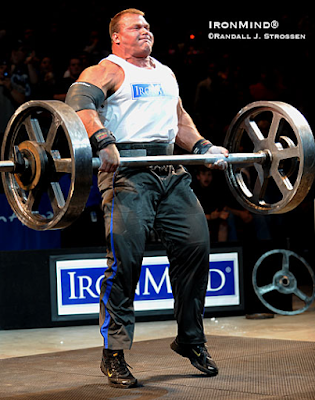
Here’s why I’d tell my teenage self to read the book: the author, Randall Strossen, makes excellent use of his degree in psychology by writing one of THE most motivational/inspirational books on training I’ve ever read.  I got the book in Christmas of 2006, purely as a fun read based off the recommendation of a friend.  I read it Christmas day, and by the evening I already had my first day workout planned for my 6 weeks of the program.  I had ZERO intention of running Super Squats, but Strossen got in my head and had me hooked.  And, of course, running that program was my first taste of real “hard work” as far as training went, and was transformative for me, physically, mentally, and otherwise.  Those assets have lasted me my whole training career, and extended well beyond the realm of physical transformation.


But beyond that: it’s the perfect book for a teenage lifter.  It’s short enough that it can be read in an afternoon, it offers a few different programs (giving the teen a roadmap for training for a while), it covers basic nutrition in a manner that is perfect for teens (minimal cooking required, simple, brutal and effective AND enough food for a young metabolism to be able to crush), and goes over basic exercises in a vivid enough manner to have all the tools required to train.  It’s a fantastic “all in one” training manual that EVEN takes time to discuss the history of training to give an appreciation for the iron game.


Are there other training books I love?  Absolutely.  Paul Kelso’s “Powerlifting Basics Texas Style” is still my FAVORITE book on training, and Marty Gallagher’s “Purposeful Primitive” is one of the most comprehensive tomes on all manner of physical training out there.  But I also know my teenage self would have zero appreciation for these books.  Super Squats has the necessary bravado to entice the teenage lifter, the brevity to hold their short attention span, the right lessons AND a program that SHOULD be run at the early stages of one’s lifting career in order to correctly orient their perspective of hard work and obsession.


* DON’T STOP CONDITIONING


No matter what gets in the way!


This is a case where my 14 year old self was SO much smarter than my 24 year old self.  I trained like a MANIAC when I was a teenager.  I ran 8 miles a day, every day, on top of regular weight training, martial arts training, rope skipping, swimming, or anything else I could do.  I ran with ankle weights on (also played Dance Dance Revolution with ankle weights, because I was THAT guy), had a chinning bar across my door frame that I’d hit as I walked through (parents were none too pleased when they discovered I drilled into the door from the secure it), a heavy bag for boxing work (I worked at a sporting goods store when I was 19 and spent most of my paycheck on the gear we sold), was hitting 200+ push ups a night before bed on top of ab work, etc.  I’ve told the story of how I was running 16 miles a day one summer in a quest for abs, trying to burn off the belly fat with a run in the morning and a run at night.  I KNEW that I had to train hard to get results, and that’s what I did.


I got older and got “educated” and learned that you could “overtrain” and that it was better to use approved programs of 3-5 sets of 3-5 reps and never strain and that strength was a skill and to use the bare minimum effective dose and blah blah blah.  I got fat, I got in bad shape, I got injured, and ultimately I lost my way.  I legit thought about quitting lifting at the age of 24, and the only thing that saved me was a powerlifting meet that was held 10 minutes away from where I lived that got me hooked back on training, and eventually got me to re-discover the things I knew when I was a teen.


Hard work works.  All those things we use to convince ourselves otherwise are just rationalization.  If I could tell my teenage self something on this topic, it would be to never stop doing what I was doing.  I was doing exactly what I needed to be doing: building a VERY broad base of athleticism, strength, speed, agility, and physical preparedness.  It was taking total advantage of my youth and enthusiasm, and the worst thing I ever did was stop and question it.


* EAT TO RECOVER…AND STAY AWAY FROM CHEESE


And "cheese" for that matter


I’ve written about this SO much and I’m going to try to avoid beating this horse to death, but a lesson that took me WAY too long to learn is that food supports training: not the other way around.  “Bulking and cutting” is backwards, because there food is driving the training.  Instead, we have hard periods of training, and during those hard periods we have to eat more to recover, and those two things make us grow.  Once the hard training stops (which WILL happen, because hard training is not infinitely sustainable), we don’t need as much food, and that’s when fat loss happens.  My very first time “bulking”, all I did was eat more food than I was eating before.  I gained weight, then lost the exact same amount of weight during the cut…and nothing changed.  Up until that point, I had put on plenty of muscle by just training hard and eating to recover from it.  Once again: I was SO much smarter when I was dumb.


The last bit is personal, but might actually apply otherwise.  I discovered I was “abusing” cheese.  It had become a dietary hack that I was way too reliant on.  I’d throw it indiscriminately onto everything I ate, in my mind thinking it a “free” food.  Since I like low carbs (which I’d tell myself to stick with), cheese was no carbs, just fat and protein.  Well, it’s a LOT of fat, and often not from the greatest sources unless I go out of my way to secure it, so there are some health concerns there AND it’s just adding unnecessary calories that COULD have been replaced by something with more tangible benefits for my goals.  It’s so calorically dense that it’s easy to get out of hand, yet so pervasive that I could add it onto things and not even really realize it.  If I were one of those dudes that struggled to gain, it’d be one thing, but as a growing kid, if I just NEVER used cheese and, instead, focused on meats, eggs/egg whites, avocados (we had a goddamn orchid of those when I was growing up and I never ate them…so stupid), nuts, nut butters, greek yogurt and cottage cheese as my only cheese, I would have done myself some serious favors. 


As an aside, when I got to college, our dinning hall was awesome.  I ate there all 4 years.  Tuesdays we had deli sandwiches and Wednesday were burgers.  I always got them without bread, lots of cheese.  Yet again, if I had avoided it then, I’d be far ahead.  …but man do I miss that college dinning hall.


* TRAIN TO GET BIGGER


Yeah, that'll do just fine...


This comes down to my lifelong love of strength and how that very love bit me in the butt as far as my pursuit of it went.  I bought in HARD into the idea that “strength is a skill”, which meant strength only existed at low rep ranges, which meant the only way to get stronger was to train low reps ALL the time.  I did 5 rep sets of curls and French presses, 5 rep sets of lat pulldowns, everything was sets of 5.  When I ran Super Squats, it was legitimately one of the first times in a LONG while I trained outside of the 5 rep range, and I essentially asked permission to do so from someone that had run the program before (basically asking them if it was stupid to train everything OTHER than the squat in the 5 rep range and being told that it was). 


It wasn’t until much MUCH later, after stalling out on a 500lb squat my second time in a meet, that I FINALLY began to appreciate the benefit of using higher reps, getting in volume, and building MUSCLE.  In my teenage mind (and older, shamefully), building muscle was “bodybuilding”, and my goal was to be strong, so why would I do that?  I wasted SO much training time AVODING the very thing that would have gotten me to my goals.  Yeah: I did a great job maximizing all the muscle I had built through my insane training as a kid, but once I started “training right” for strength by ONLY using low reps, all I did was rapidly reach my potential…and never increase it.  I just kept hitting the same lifts over and over again, backing down, starting over, hitting the same ceiling, repeat. 


If I had a chance to talk to my teenage self, I’d explain to him that big is strong.  We know this in nature.  We’re afraid of big animals BECAUSE we know they are strong.  The heaviest weight classes in combat sports and strength sports have the strongest athletes.  WSM competitors are BIG dudes.  The BEST thing you can do, especially as a teenager, is train for SIZE.  Use that time in your life to really prioritize getting big.  We covered the eating part, but this is the time to really go crazy with quality volume and just blow up.  It will lay down a fantastic foundation for any physical endeavor that comes our way.


And how would I do it?  Super Squats, 5/3/1 BBB Beefcake, 5/3/1 Building the Monolith and Deep Water.  Simple, effective, brutal, and sustainable.  When it was time to backdown and rest, THAT would be the time to keep reps low and go for big numbers.  Satisfy the teenage ego, then get back to grinding.  I am JUST now figuring all that out at age 36.  I can only imagine where I would be had I known it as a teen.


Friday, February 11, 2022

WHAT I WOULD TELL MY TEENAGE SELF: PART 1


I have, in my mind, a vision to expand this post significantly, but like my e-book, I need to get SOMETHING out now so that it can one day expand.  I always wanted to be big and strong, it’s one of my earliest memories, but I didn’t start seriously dedicating myself to that task until I was 14.  This was primarily because the only way I knew of (at the time) to get big and strong was by lifting weights, and I grew up in an era where we were told that lifting weights before you were 14 was “bad for you”.  So already that’s bunk, but after 22 years of training and observing others, I’ve learned a few lessons that I WISH I had known back then.  The big thing is, it’s easy to overwhelm a beginner with too much information and give them analaysis paralaysis, and, in fact, the fitness industry is pretty much BASED around making this all seem so complicated so that you are forced to seek out assistance.  So knowing that, if I were to be able to pass on some lessons to my teenage self, I’d want them to be simple, actionable, and effective.  From there, we can get into the weeds, but as far as setting out a foundation…


* LEARN HOW TO BRACE AND HINGE.   


We'll focus on hitching later


So many people talk about “good exercise form” and how critical that is for a beginner, and I feel like that misses the mark by quite a bit.  I wasted SO much time and energy trying to make my form on a bunch of different exercises LOOK right.  In turn, I spent a lot of time “resetting” my lifts because they’d get heavy, form would break down, and I’d lower the weight until I could make the form look right. 


What I NEEDED to be doing was learn PRINCIPLES rather than try to memorize the form of a million different lifts, and the two biggest principles I needed were bracing and hinging.  Bracing, the ability to tense my whole body, especially the core musculature, in order to make it resilient against a load, does significantly more to “protect” the body than any mastery of form can do.  A strongly braced body can withstand form deviation: a weakly braced body will crumple even with correct form.  Along with that, learning how to hinge at the hips vs bend at the back would have been THE most significant “injury preventing” technique I could learn that would have been applicable across a WIDE variety of movements.  So many back pain issues stem from trainees that are so concerned about making their deadlift LOOK right that they never stop to consider if they’re actually DOING it correctly.  You can perform a deadlift that LOOKS textbook perfect and is all lower back because there’s no hinge occurring at the hip.  This same hinge is essential on the squat, quick lifts, swings, etc etc.  Bench press and lateral raises can come with time, for now: brace and hinge.


The kettlebell swing would have been an AWESOME movement to learn both of these qualities.  Along with that, I’d have used a weight belt from day 1 in order to really be able to appreciate breathing into my belly and locking down.


* PULL WITH YOUR ELBOWS  


No: not like that


This one is unique to me, but that’s who I am writing to.  I did ALL the lat movements…and developed some big arms for my size.  And no lats.  As en vogue as it is right now to say that the mind-muscle connection doesn’t matter, I found that, if I just moved weight on the lat movements, my arms took over.  Much like hinging and bracing, this is about learning a basic principle of human movement and applying it universally rather than trying to memorize factsheets about 100 different movements.  Big lats are awesome, and the way to get them is to learn how to pull with the elbows instead of the hands.


Straps go a LONG way in helping with this.  Lock into the bar and remove the hands from the equation.


* MAKE MEALS: 


This would have gone a LONG way with teenage me...


As a teen, all I knew how to operate as a microwave.  That really crippled me when it came to sound nutritional decisions.  If I wasn’t eating leftovers (which thank GOD I had parents that would cook for me: that’s a blessing), it was either coming out of a box, frozen, or fast food.  In fact, my very first training log entry in 2004 had me eating a Nachos Bell Grande from Taco Bell for lunch and then dinner out at a CoCos.  Sure, I could get away with eating like that at that age…but imagine what I could have done if I was eating quality, nutritious food?  To say nothing of how much money I’d save.


I get it that the oven and stove can be scary, but it’s REALLY hard to screw up a slow cooker and a Foreman grill, and that’s exactly what I’d do.  I’d teach my teenage self how to make a slow cooker pot roast (cheap meat, lots of veggies, can’t go wrong there), slow cooker salsa chicken (breasts, thighs, drumsticks, whatever: the slow cooker runs less risk of undercooking) and some Foreman burgers and steaks.  I’d throw in some slow cooker hard boiled eggs too and be set.  Just those 4-5 things would set up ANY teenage lifter for a ton of success.  Later we can get more diverse, use that slow cooker to make chilis and stews, grill other meats, get a variety of veggies, etc, but just getting a baseline of basic protein rich foods would go SO far.


Also, let me just say that air fryers are practically cheating as far as meal prep goes.  I didn’t have one as a teen, but anyone that DOES have one has SUCH an advantage.


* STAY AWAY FROM PROTEIN POWDER: 


When are we going to tackle the REAL issues here?


This is my “never start smoking” that I’d pass on to my teenage self.  I stayed away from drugs, alcohol and smoking, but protein powder/supplements is a habit that I wish I had never started.  I was a 2 scoop a day user for a LONG time.  I’ve finally cut myself down to 1 scoop only on lifting days, but boy do I wish I could just go cold turkey.  In truth, I’m addicted to the ritual of drinking a shake post workout, plus, protein powder is SO delicious today compared to the pasty junk I had as a teenager.  And oh man, the protein bars back then were horrifying, and a lot of them gave me allergic reactions.  So WHY was I eating them? 


I bought WAY into the marketing that you NEEDED your quick absorbing protein immediately post workout or all your gains would go to waste.  Make sure to have your equal parts maltodextrin and dextrose too for maximal absorption.  Jesus, none of that matters, and I’d definitely tell my teenage self that I’d get FAR more jacked if I was taking that money I was blowing on supplements and spend it on FOOD instead.  And never starting the habit would mean never getting hooked.


This can really go on and on.  I’m going to do my best to keep it at a 2-parter, but feel free to leave comments about anything you’d like to see addressed otherwise.