Sunday, March 17, 2019

PLAYING THE GAME THE WAY I WANT TO PLAY IT


Some more nerdom here for my fans of that, but recently the original Diablo was re-released and I’ve been playing it again for the thousandth time, and it’s the first time I’ve really played it the way I wanted to play it.  I was always a warrior, but in truth, I was a warrior in name only.  What I really was in that game was a munchkin, a derogatory term for a powerplayer that is simply concerned with being the strongest character possible.  I would evenly balance all of my stats, only use the best, most optimal gear, learn a whole lot of magical spells (very unwarriorlike) and, of course, beat the game with this strategy.  …and it was so unsatisfying.  Of course I won; I did exactly what I was SUPPOSED to do to win.  Where’s the fun in playing the game the way the game wants me to play it?  The fun is when I play it the way I want to play it.  This time around, my warrior learn no spells, he will only level up in strength and vitality, he will only use axes or blunt weapons and no shields: he will BE a warrior.  And the game will be hard, and I will face many challenges that were not originally intended by the developer…and I will have fun.  Because I’m playing the game the way I want to play it.

Related image
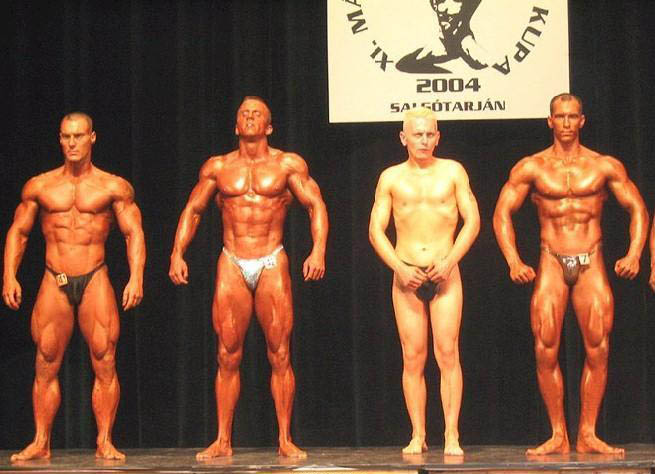
This was the ideal I had to grow up with in 1996; nowadays, kids are trying to look like Splatoon characters

No, the blog hasn’t changed topics: this is still about getting bigger and stronger.  For one, you can see my strength obsession still shines through in all facets of life, but of primary importance is that this mentality is present in my training life as well.  It’s taken me a long time for me to finally give myself permission to play the game the way I want to play it in lifting, but in turn I am the happiest I’ve ever been with what I am.  I’ve made the decision on what it is that I prioritize, and I am training for those priorities.  And don’t get me wrong; I still plan to compete in strongman, and if not that powerlifting, or possibly even an ill-fated return to combat sports, but I do those things because I enjoy competing, not because my goal is to be the best at those things.  My goal remains the same: to be big and strong.  And, in turn, it’s up to me to determine WHAT that means, so that I can determine how I want to play the game.

Yes, the “re-evaluation of values”: I realize I’m not original, but still, stay with me.  I’ve decided that the press I care about is the strict press.  Benching is dandy, push presses let me move more weight in competition, that’s all fine, but for me, my true measure of strength is this press.  And, in turn, I train in the manner that let’s me maximize my ability to strict press, irrespective of the fact that, unless I decided to compete in Mark Rippetoe’s “Strengthlifting” competitions, a stronger strict press is of less value than a stronger push press or jerk.  Could I spend this effort getting better at those things and improving my ability to win strongman competitions?  Absolutely, I could, and then I’d be playing the game the way the game wants to be played, but NOT the way that I want to play it.  I accept that I have created challenges that do not need to be there and have signed up for greater hardships, but, in turn, I am far more satisfied with what I am.

Image result for Mark Rippetoe overhead press 2.0
Take the bench press out of powerlifting, then make lifters bench press while standing.  Oh Rippetoe, only you...

It goes on of course.  I deadlift conventionally, even though everyone swears sumo carries over to the conventional, because this is how I want to play the game.  I keep myself lean enough that I enjoy how I look, even though being heavier would help me be stronger.  I use form on squats that gives the internet cancer, my bench arch and leg drive are minimal, my programming is nonsensical, I have no coach, etc etc: this is how I want to play the game.  HOWEVER, this also means I have to acknowledge that there is no strategy guide for the way I’ve decided to play the game.  Returning to the nerdom again, some of you folks forgot how to play a game without an FAQ, strategy guide, or hot tips hotline (for my REAL oldschool gamers out there).  Some of you hit the first puzzle in the game and immediately start looking for youtube tutorials.  Remember; we’re here to PLAY, and we’re playing the way WE want to play, not how someone else wants to play.

And this also means to not take any offense when you go asking for help and people tell you you’re being stupid.  You ARE being stupid; at least, insofar as it is the case when we evaluate your actions against the commonly understood metric of winning the game.  You win the game by playing the game the way the game wants to be played, and when you deviate from that, you are making a mistake.  THIS is the fundamental issue people make when they try to play the game the way they want to play it; they then go out and seek the advice of people who are playing the game differently.  People are going to rightfully tell you that you’re being stupid when you take inefficient paths towards commonly understood goals, because they are playing to win in accordance with the rules we commonly understand to be the norms.  If you have different norms, you have different rules, which means you are playing a different game, and this means you can’t get the help of other people on how to play that game.

Image result for Squatting on a bosu ball
This guy definitely has different norms

So, in turn, if you are playing the game the way you want to play it, you need to figure out HOW you’re going to play it without the help of others.  Make your own rules, objectives, standards, goals and limitations and abide by them so that you can be satisfied with the game you are playing.  Give yourself the permission to play this game the way you want.  When people chide you for eating the wrong foods, training the wrong muscles, following the wrong routines, etc etc, don’t let it dissuade you, people you are playing the game the way YOU want to play it, and, in turn, you are accepting the responsibility for the new hardships  you will endure in your quest.  However, when the game is over and everyone else retires with the same identical character made from a cookie-cutter instruction manual, you can take solace in just how much you overcame with your bizarre abomination that was never meant to make it this far. 

Sunday, March 10, 2019

I’M NOT DEAD YET


Taking a slight break from my typical 1 million mile perspective and super nihilism, let’s continue to acknowledge the reality that, yes, one day, we are all going to die…it hasn’t happened yet.  And that’s what I find fascinating about all of you, because I am constantly informed that I’m the weird one for how much I accept my mortality and speak to these tragic outcomes, yet, if one were to examine how we conduct ourselves, I find the casual observer would conclude YOU to be far more the nihilist that I am.  Why?  Because you seem to have accepted your death so much so to the point that you are living like a dead person.  And no, not like a CONDEMNED person, which is honestly freedom, but like an actual person that has already expired, because you are doing NOTHING.  In your pursuit of self-preservation, you have committed the most significant act of self-destruction, because you failed to live up to your potential.  Why do I train the way I train and live the way I live?  Because unlike you, I’m not dead YET.

Image result for princess bride mostly dead meme

This is the one live we get to live.  This is the one time we get to have youth on our side.  The tragedy of modern existence is that we get to spend a LOT of our life being old.  We get to spend a LOT of our life in decline.  The olden days circumvented this by means of tragedy; you either died in a war, or from disease, or famine, or some other circumstance that had you expire as a means of being OUT of your prime.  Your prime was the only thing that ensured your existence, and once decline set it, so began the doomsday clock, as eventually life’s challenges required one to be on top of their game, and the inability to do so spelled disaster.  But now, with modern medicine and technology and a far less arduous existence, you can safely anticipate a long life (though nothing is guaranteed), and, in turn, that you will spend a LONG amount of time effectively dying.  However, what this means is that your youth is even MORE precious than it was before, because it occupies such a small percentage of your life now that it’s existence is effectively non-existent.

So why spend this incredibly short amount of time living LIKE you’re already old and dying?  Why treat your body so preciously and fragile when it’s at the one point in your lifespan that you CAN take advantage of it?  When you know it’s going to bounce back, why not try to make that bounce as high as possible?  Look, I’m 33 now; I can already feel the difference in my recovery compared to when I was in my early 20s, and instead of lamenting that my recovery has slowed, I’m so grateful that I took full advantage of my recovery WHILE I could, and in turn, while I’m in my early 30s and my recovery is STILL better than it will ever be from this point on, I’m also taking advantage of that.  I will never get this opportunity again to abuse my body to this extent and be able to recover and grow stronger as a result, whereas I have my whole life to be gentle and ginger and ease into things.


Image result for squatting on a bosu ball
Probably doing stuff like this

Because I’m not dead yet, but you folks walk around like living corpses.  Why spend 80 years living like an 80 year old when you can live like you’re 20 when you’re 20, 30 when you’re 30, etc.  And I surmise to know the reason why; because you haven’t experienced death.  Not small, controlled dosages of it at least.  You’ve never had a chance to die and be reborn, or perhaps to die and ascend to the afterlife.  In your constant pursuit of self-preservation, you deny yourself true salvation, existing in a perpetual purgatory.  At least Hell has good company, but where you reside is permanent dissatisfaction.  Where are these small deaths to be found?  In injury, crashing to physical rock bottom and having to crawl your way back out of Hell to your perfect form, and if you’re lucky MAYBE you have a guide like Virgil with you.  In defeat, defeat so crushing you question why you even tried in the first place.  In absolute, total and abject failure DESPITE your best efforts.  The kind of failure where you realize that you literally had zero chance of succeeding.  These small deaths are what allow you to build up a tolerance to death, to be able to live like you aren’t dead yet.  To not be a walking corpse.

I know I’m not dead yet because I keep getting to come back from the dead.  I’ve found myself lying down on the floor of my garage in between sets 7 and 8 of a 10 set workout seriously contemplating quitting all of my training and selling all of my equipment, only to get up when the timer went off and hitting another squat.  I’ve sat in a lawn chair with my foot propped up and way too much ice on my knee, slowly rotating my foot to find the limits of my ROM after blowing out my ACL and contemplating if it was all worth it.  I’ve had other hardships too, but I’m not alone, and compared to others mine are walks in the park I’m sure, but the point is, I’m willing to put myself out there to DIE so that I can know I’m not truly dead yet.  To know I can keep coming back and getting bigger, stronger, better.  How about you?  Are you dead, or are you not dead yet?

Saturday, March 2, 2019

“BECAUSE I’M THE F**KING GLADIATOR”-WISDOM OF ROSS POINTON


Journey back with me, dear reader, to a simpler time.  The year was 2006, I was still in my undergrad and had it in my head that I was one day going to be a fighter, and MMA was sweeping the nation.  “The Ultimate Fighter” was in its 3rd season, heavily promoting the disastrous rematch between Tito Ortiz and Ken Shamrock, and though this, I was exposed to a wise philosopher.  His name was Ross Pointon, and his ring name was “The Gladiator”, and though his run on the show (and his career in turn) ended up being lackluster, there was still much wisdom to be gained from his words and deeds.

Image result for Ross Pointon
Get the wisdom now, before it leaks out of his head

To set the stage, for those of you that are not MMA fans, or weren’t at the time, Ross entered “The Ultimate Fighter” reality show with an ok record.  At the time, he was 4-6-0, with what could be best described as a “rudimentary” grappling game.  Of his 4 wins, 2 were by knockout, 1 was by submission to strikes, and 1 was an honest to god guillotine choke, whereas most of his 6 losses were due to submission.  He was a striker, and grappling was the chink in his armor, which of course meant he took after my own heart and I was rooting for him.  …and he lost his first fight on the show, which meant he was eliminated.  And, of course, he lost it via submission.

But Ross was not out for good.  The show had implemented a policy that eliminated fighters would still stay at the house; they were just done fighting.  That is, until, Michael Bisping, a fighter in the weight class ABOVE Ross, suddenly found himself without an opponent on the show.  I forget the exact circumstances that drove it, but essentially the fighter Bisping was supposed to fight in order to advance to the next round in the show had withdrawn.  “Well no problem”, the show’s producers thought, “We’ll just give one of the guys in Mike’s weight class who was previously defeated an opportunity to get back on the show.  If they beat Mike, they can advance.”  …and not a single fighter in Mike’s weight class took that opportunity.

Image result for negan volunteers
Pretty much what it felt like

Once again, for those of you that don’t follow MMA, let me tell you about Michael Bisping.  Well, spoilers, he won his season of the Ultimate Fighter, and then went on to become one of the most dominant fighters in his division, to the point that he was still winning fights in 2016 and has capped out with a record of 30-9, with wins against the likes of Anderson Silva and Dan Henderson.  When he arrived on the show, he was undefeated, with a pro-record of 10-0.  Needless to say, there was a deserved amount of fear when it came to facing off against Michael Bisping, and contestants in his weight class that had already been defeated chose to stay defeated rather than even TRY to face off against him.

…until Ross Pointon stepped up.  Literally too, as he would be fighting up a weight class.  AND, against a guy who had already beaten him previously.  Mike and Ross were both Brits, and had fought before in their home country.  And Ross was lighter now, and clearly the inferior fighter.  So why did he step up?  “Because I’m the f**king gladiator”-his answer, when asked the same question.  Michael Bisping had submitted Ross by armbar in their previous fight, yet of his 10 wins, 7 were by knockout, meaning he was both a terrifying grappler AND striker.  And what was Ross’ gameplan for the fight?  “I’m going to mash his f**king face in.”  Once again, his words.  And these words were COMPLETELY unsatisfying to everyone else in the house.  They KNEW Ross had a subpar ground game, and though he was a scrapper, he was squaring off against a superior striker as well.  They kept asking him “what if” questions.  “But Ross, what if he takes you down to the mat?”  “I’m going to mash his f**king face in.”  “What if he keeps you on the outside?”  “’I’m going to mash his f**king face in.”  No matter how the battle turned, the strategy remained the same.  And why?  “Because I’m the f**king gladiator.”

Image result for russell crowe gladiator battle
Hey, it's worked before

It’s no surprise that Ross lost that fight, and, in point of fact, he’d only go on to win 2 of his next 12 fights before retiring.  He simply never evolved his style.  But we’re not here today to talk about how to be the best MMA fighter possible; we’re talking about having the right mentality, and Ross had that in spades.  How?  Because Ross refused to be defeated UNTIL he was defeated.  Everyone else in the weight class above Ross had quit before they even tried.  They were fighting for a 3 fight contract with the UFC, a DREAM for all those involved, and people gave up on it because of the prospect of being beaten.  How many people do you know that gave up on their goals and dreams because of the FEAR of failure, without ever actually EXPERIENCING that failure?  Ross knew that he at least had a CHANCE of winning if he fought, whereas not fighting would give him a 100% chance of losing.

And Ross’ gameplan further exemplifies an incredibly amazing personal philosophy.  Yeah, it’s easy to sit in the comfort of your home and say it was an awful gameplan…but what gameplan SHOULD Ross have used?  Was he going to outgrapple Mike?  No.  Was he going to be the more technically proficient striker?  No.  What tools did Ross have?  Aggression.  And knowing that, why worry about the things that he CAN’T do?  Everyone else was so focused on how Ross COULDN’T overcome Mike’s submission skills, on how he COULDN’T beat his technique on his feet, etc etc…and what the hell good does that do?  Ross, instead, chose to focus on what he COULD do.  His focus was on how he was going to SUCCEED, NOT on how he was going to not fail.

Image result for "squatting on a bosu ball"
If you're going to fail, succeed at it

Think about how often you observe this in training.  How many times do you see a trainee that, before they even START a program, begin to freak out about failing.  They ask what to do if they stall, how do they bail from a botched squat or bench press, what do they do if they get injured, etc etc.  Give it the Pointon answer: “I’m going to mash [it’s] f**king face in.”  Gear up your mentality so that they only thing you concern yourself with is your WINNING gameplan, not your “not losing” gameplan.  Enter the Octagon with victory being your only concern, and be game enough to take on the challenges WHEN they present themselves.  Because challenges are simply opportunities, and they won’t always be there.  And if you won’t step up to take these opportunities, someone else will.  And they’ll be in the weight class below you, and they’ll have a terrible gameplan, and they’ll fail brilliantly, but goddamnit, at least they TRIED.

And on that note, allow me to give you a little Cinderalla story about Ross, because he may have lost the fight against Bisping on the show, and he may have lost his opportunity for a 3 fight contract with the UFC…but the UFC DID give him 2 more fights immediately after that.  Because they admired his spirit, and that he was willing to step up when no one else would.  Fate favors those who dare.

Sunday, February 24, 2019

DEAD STOP DEADLIFTS ARE EASIER: THAT’S RIGHT, I SAID IT


As a practioner of touch and go deadlifts and a combatant of stupid things being said, I find myself constantly occupied and fixated with the debate between dead stop deads vs touch and go.  I’ve written at length on the topic before, expressing the value and benefit of touch and go deads, fighting against the criticism, etc etc, and in my battle I’ve avoided attempts to critique the dead stop deadlift.  However, I can no longer stand for the absurd claim made by the dead stop camp that touch and go deadlifts are in some way “easier” than dead stop deadlifts. This affront has gone on for too long, and it is time I explain the truth: you like dead stop deadlifts because they are EASIER than touch and go, not harder.

Image result for zombie deadlift
Dead deadlift?  Undeadlift?  Too many puns

Surely I’ve lost my mind, no?  It’s obvious to even the most casual observer that one can lift more weight for more reps with touch and go vs dead stop deadlifts.  Yes, and that is why we don’t take the casual observer’s word for anything, because they are uneducated and ignorant.  You can’t just direct compare dead stop deads and touch and go rep for rep, because they are blatantly different movements.  It would be akin to saying that squats are easier than front squats simply because you can lift more weight on the squat.  If ability to move more weight determined ease of movement, then the hip and thigh lift is the easiest lift in the world.  Go ahead and attempt Paul Anderson’s 6,500lbs on it.  Go on: I’ll wait for you.

With us acknowledging that touch and go and dead stops are different movements, that means we need to understand how to better compare them to determine “ease” of lift, in our quest to find out who is in fact taking the easy way out.  The method to go about doing this would be to determine some sort of training max to work with.  Determine your theoretical 1rm by taking your 5rm with both movements and calculating a 1rm based off that.  Surprise; I bet you the 1rm is higher for the touch and go vs dead stop.  And that’s the point.  When you try to determine a 1rm for touch and go, you can’t, unless, of course, you perform a top down deadlift, which is STILL not quite a touch and go off the floor.  Your “1rm touch and go” weight will of course be the same as your 1rm dead stop weight when performed with a legit 1rm, which is why you need to calculate training percentages off a rep max.  And once you do THAT, NOW the work weights you need to use to accomplish a touch and go workout are going to necessarily be HEAVIER than what is needed to perform a dead stop deadlift.  The fact you can use heavier weights with touch and go deadlift in no way means the movement is somehow easier; it’s simply different compared to deadstops.  But NOW we get to understand how the dead stop is easier.

Related image
Clearly the easiest lift possible (hey, at least it's not the bosu ball squat photo)

Alright, so we’ve taken our dead stop deadlift and our touch and go, plugged them into a program, figured out the work weights for both, so it’s time to do a direct comparison against them in an equally matched style.  “You have to break the dead stop off the floor reach rep: so it’s harder than your bouncy touch and go deadlifts!”  Ok, sure, if we wanna be stupid and say touch and go is bouncy, know what I get to observe about your dead stop deadlifts?  YOU DON’T HAVE AN ECCENTRIC PHASE!  That’s right: you’re literally doing HALF of the reps that the touch and go deadlifter is doing.  Because for every bouncy set of touch and go deadlifts you are observing, I am observing twice as many “too harder for TnG” deadlifts practically dropping the weight from the top of the rep before they start the next set.  Even lifters I am very much a fan of have employed this style


Literally dropping the bar so hard the song on the CD player kept skipping


And hey, it’s SUPER easy to have energy to break each rep off the floor when you’re only performing half a rep each time.  And know what else makes it easy?  The fact that, in your hardcoreness, you’re getting to rest IN BETWEEN REPS.  That’s right; all you folks yelling “it’s called a DEADlift for a reason” are championing the fact that you can basically rack the bar between reps on a deadlift.  That’s not a feature; that’s a bug.  What other lift lets you get away with that?  Could you imagine how much you’d flay a lifter if they claimed they squatted 500lbs for 15 reps and then released a video of them squatting 500 for a single, racking it, spending a few seconds playing with their belt and tugging on their knee sleeves before they got back under it, walked it out, got set, squatted it again, racked it, and repeated the whole ritual?  What about a dude that is racking each successive bench rep?  Some dude curling in the squat rack and dropping it on the pins between reps?  But somehow, for deadlifts, it’s a badge of HONOR to rest between reps?  And these rest periods get RIDICULOUS for many lifts.  Sets of 5 that take 2 minutes to complete, with trainees resting so long between reps they cool down and have to warm back up between reps.  Oh mighty dead stop warrior, how much you frighten me.

Know where you need to rest on a set of touch and go reps? At the top of the goddamn rep!  Ever try resting while standing up with 600lbs in your hands?  Yeah, it’s not too restful.  You’re literally FIGHTING to rest in that position, and then you somehow have to also re-brace from there before you attempt a next rep.  You don’t get the luxury of being able to re-brace from a neutral position, weight on the floor, feet perfectly set, sweat NOT running into your eyes, hands re-chalked, etc.  This is why a good touch and go deadlifter has fantastic lung capacity; they know that, once they start pulling their reps, they aren’t going to get in another good breath, so they need to knock out as many as they can in a single breath.  Which, of course, is just another way touch and go are HARDER than dead stop deads.


Hey look, Derek is even bouncing the hell out of those reps too, and I STILL wouldn't want to be holding 800lbs at the top to rest


I’m already 1000 words deep and I’m not done yet.  Once again, people make the mistake of comparing lifts to lifts as though they directly compare, because people want to talk about how deadstop deads are like pausing on a bench press, ignoring the fact that, when you pause on bench, you still have to HOLD all the weight (unless, of course, you just go limp and let it fall on your chest, in which case, good luck with all that).  Yeah, touch and go benching is easier than pause benching, but that doesn’t mean dead stop deads are tougher than touch and go, because no one is racking the bar between reps on the dead stop bench.  And should we now acknowledge the conditioning element that is contained in having to do the majority of your reps in a single breath on a set of touch and go deads, and how people that are in the “dead stop or NOTHING” tend to also be people who have let their conditioning fall apart?  And are, in turn, the same people to say that touch and go is more injurious than dead stop?  Well yeah, of course it is: for you!  Because you lack the ability to control an eccentric, mainly because you’ve been neglecting that part of your training and can’t stay braced when the eccentric comes, so of course you’re getting jacked up on a set of touch and go.  Learn how to be strong in BOTH phases, learn how to keep your brace, and THEN you’ll see that your injury rate has drastically reduced.

And this is why, whenever I compete, I pull dead stop; because it’s EASIER.  I’ve been allowed touch and go before in a competition, I tried it for one rep and I said “screw that”, because now, suddenly, I had to control the eccentric portion of a rep.  That’s TWICE as much work.  Instead, I pull the concentric, dropped the weight, and re-braced, pulled, and waited for the down command again.  Unless they were going to allow a legit bounce (which I’ve never been so luck to receive), there was no way I was going to waste the energy trying to pull touch and go.  See if you don’t make the same decision when given the same choice for pulling as many reps as possible in 60 seconds.  A 60 second AMRAP touch and go set is realistically a 30 second set followed by 30 more seconds of breathing hard collapsed on top of the barbell, but a 60 second AMRAP set dead stop gets reps through the whole 60 seconds.


If you want to challenge yourself, go pull touch and go.  If you want to take it easy, pull dead stop.

Sunday, February 17, 2019

DUNGEONS & DRAGONS AND TRAINING: CAN WE PLEASE PLAY ALREADY?!


Been receiving more requests for more Dungeons and Dragons based posts, which shows that my demographic is just as nerdy as I am, but I’m always happy to indulge on that.  Amazingly, the parallels between training and DnD tend to be pretty exhaustive, and in turn, the frustrations I run into one are the same frustrations I run into with the other.  Specifically, in both arenas, I observe people that are interested in doing all of the things involved in the activity EXCEPT the actual activity.  People that love to read, research, contemplate, theorize, daydream, etc etc, but when the time comes to actually execute, they are found to be lacking.  At one point, the character is built, the spells are selected, the treasure is built; it’s time to play the game!


Related image
Remember to pick the barbarian

Let me spend this post constantly re-explaining my own analogy, so you too can share my frustration.  Character sheet construction is the programming portion of training, and in turn, you can observe the difficulties people encounter in both.  Some folks legitimately never make it out of here.  There are so many races to choose to be (human?  Boring!  Gnomes?  Too short), so many classes to pick, god help you if you picked a magic using class, because now you have to pick what spells to learn, there’s skills to be selected, etc etc.  How will I know if I picked the “right” choice?  Folks, it’s a goddamn game; the point is to have fun.  Pick what looks like it will be the most fun! 

…but instead, you’re going to be a min/maxing munchkin.  And for those that don’t understand the derogatory terminology of the nerd world, this is an accusation of only being concerned with making the most powerful character possible by maximizing advantages and minimizing disadvantages, and, when possible, cheating.  These are folks who don’t understand that the game is just organized make believe, and instead can ONLY have fun if they are the most powerful character to have ever existed, solution to every problem, and center of attention in every and all setting.  Here’s a secret; no one likes to play with that person.  Instead, make a character that looks like it will be fun to play, flaws and all, and when they inevitably die or the game ends and you start a new one, pick a DIFFERENT character and play THAT one and have fun with them.  …do I need to explain how that metaphor relates to training programs, or do you get it? 

Image result for DnD meme
Maybe this will help

Let’s say you somehow made it through character creation and didn’t become that guy who has 1,400 characters built and never actually played a game before; well now it’s time to actually go adventuring with your party.  Everyone wants to engage in an epic, slay a dragon, buy/discover the greatest magical gear, affect major world change in the game, etc etc.  However, you have to understand that those things make up about 1% of the adventure.  Why?  Because, otherwise, it wouldn’t be an adventure.  You need the mundane to make the amazing and wonderful seem amazing and wonderful, for without that contrast the wonderment BECOMES the mundane.  This means that, to get to your high level epic conclusion, you’re gonna have to do some low level adventuring.

Clearing out kobold holds, running fetch quests for minor lords, spending time simply BEING level 1 and pretty much worthless; THIS is the game.  THIS is what you spent all that time making a character for.  THIS is what you set aside time for in your day, time you could spend doing anything else; to play organized make believe with your friends and do some low level adventuring.  THIS is your accumulation phase on training; the time where you just clock in, do the work, get in that volume, and go home.  Yup; it can be pretty boring compared to setting constant PRs, peaking and intensifying, getting overly amped, mugging for Instagram, but guess what; that’s all high level stuff. 

And if you try to just jump right into that stuff without doing some low level adventuring first, you’re going to get stomped.  Hard.  And if you’re that guy who never shows up for a regular gaming session and only comes for the boss fight, you’re going to be low leveled, underequipped, and you’re not going to have any idea what’s going on in the story.  You skipped all that “boring” stuff because you just wanted to have fun, and now you’re the one guy at the table not having fun because you suck at the game and don’t know what’s going on.  And meanwhile, the whole party has to carry you to the end.

Image result for squatting on a bosu ball
How you look to the rest of your party

Because I swear, some of you folks, no matter how much you swear that you LIVE for this stuff, no matter how much you are begging someone to run a game so you can play, no matter how many books you buy and dungeon maps you draw, you don’t actually want to PLAY the game.  You just wanna build characters and buy magical gear with pretend gold, but once it comes time to actually sit at the table, eat the pizza, drink the mountain dew and roll the dice, you’re either physically absent or mentally checked out.  You love everything about the game EXCEPT the game.

Why do you think I always play the barbarian?  Why am I always the same character?  Because I don’t need to spend 400 hours building a character to play and have fun; I make my fun happen in the GAME.  The character building, the gear buying, the leveling up, etc etc, all of it is there to support the GAME.  And if the only way you can have fun is to do the high level stuff, that’s still fine, but you gotta recognize that you need to EARN those levels before you can play that game.  Either way, no one is getting any better without spending time on the actual adventure.

Related image
This is what happens when you skip the kobolds and jump right to the dragon

So go build A character and get it over with, start adventuring, do it for a WHILE, go get your high level quest knocked out if that’s what gets you going, and then get back on the adventure.  Your friends at the table will appreciate you more for it, and you’ll actually get pretty strong too.       

Saturday, February 9, 2019

PASSIVITY, OWNERSHIP AND “I WAS TOLD”


As something of a professional curmudgeon, one of the many things that upsets me is the use of passive voice.  For those of you not as in tune with your high school grammar as I (the irony not being lost on me, considering how terrible these blog posts tend to end up in that regard), the best way I can explain passive voice is that it’s what we used as kids to get out of trouble.  You’re playing rough inside of the house, and suddenly you break a lamp.  You go find a parent, and you say “The lamp got broken.”  That’s passive voice.  Active voice is owning it, and saying “I broke the lamp.”  You can observe the difference immediately; one is about an action occurring to an object, absent of a subject to affect it, whereas the active voice puts the acting agent first.  It’s a tough pill to swallow, but it’s ultimately the more accurate story of the two.  Why do I bring up this grammar lesson?  Because I constantly observe trainees employing a passive voice in their training dialogue, and, in turn, taking absolutely zero ownership in their training and their outcomes.

Related image
Unless your training looks like this...and even then, he said "I fight for me"

The most notorious of these examples?  “I was told”.  Oh my god do I blow a gasket whenever I hear or read this.  “I was told I need to perform mobility training before I lift weights”, “I was told I need to build a strength base before I do hypertrophy training”, “I was told that noob gains run out after 2 years”, etc etc etc.  Oh really?  You were told?  WHO told you?  “Many many sources”.  Ok, so then NO one told you; you READ/HEARD somewhere.  This is a big difference, and the phrasing is huge.  When you start with “I READ/HEARD that”, now YOU are taking ownership.  You’re saying that you read this material, and then YOU decided that it was worth considering, embraced it, and pursued it.  When you just say “I was told”, you’re taking the responsibility off yourself to critically think.  You’re saying that you were given marching orders to go forth and pursue, and if those orders are WRONG, well it certainly isn’t YOUR fault; you were just told all this.  You were just poor, innocent and naïve, and someone took advantage of that by filling you with bad information.  You poor, poor creature.

No, screw that.  This is YOUR training; YOU should be the one who cares about what you do.  All sorts of people will tell you all sorts of stuff: it’s up to YOU to decide if any of it is worthwhile.  If you want to just be told stuff, at LEAST get told stuff by people that are worth listening to.  I went to a Bill Kazmaier seminar and asked him how to get better at weight over bar, because I had it coming up in a competition and had no idea how to train for it.  No what “I was told?”  “Just show up strong and do it.”  And hey, it worked, and I was more than willing to say “I was told” in that regard, because when the question is asked “by who”, I could say “Bill Kamzaier”.  Bill coulda told me that leg press and lateral raises were the secret to weight over bar, and that woulda been enough for me.  But some random scrub on a forum, or some dude with a blog (yes, that includes me)?  Yes, certainly A data point, but one that must be weighed, measured and evaluated.

Image result for bill kazmaier throwing
Also some of the advice I got from Bill...and it's good

“I was led to believe that…”, no, stop.  You’re an adult (I presume): no one LED you to believe anything.  No one has the power to lead you to believe anything.  If you are susceptible to that sort of stuff, I STRONGLY advise you to stay away from cults, pyramid schemes, Nigerian princes, people claiming you owe back taxes with the IRS, etc etc.  Otherwise, no, you were never led to believe anything: you CHOSE to believe something, because it was far easier to accept something simply because someone said it than to hear something, critically think about it, and make a decision in that regard.  And hey, there’s nothing wrong with hearing something and trying it out for a while, but if it doesn’t work, don’t just keep beating your head against the wall saying “I was led to believe this works, and it’s not working, so something must be wrong with ME!”  Instead, try the null hypothesis that maybe, just maybe, the thing you heard isn’t true.  Now you get to say “I have decided that this isn’t true.”

This is about taking ownership of YOUR fate, your training, your process, your results.  There’s lots of people out there that will tell you things: YOU decide if any of them are worth listening to.  And when you follow a stupid guru because you’re naïve that is YOUR choice.  And when it fails, that is YOUR lesson to learn.  Failure isn’t bad: it’s an essential part of growth.  The only issue is when your ego is so big and fragile that you REFUSE to believe you could have possibly fallen for stupid advice, and so you try to make it everyone else’s fault but your own.  I’ve fallen for tons of stupid gimmicks in my time, and each time it was up to me to say “well, I was certainly stupid to believe that: lesson learned”.  And, in turn, I grew, got bigger, stronger, and better.  I didn’t wallow in what I was told: I accepted what I chose to believe, and then I chose to no longer believe it.