Friday, July 19, 2024

A SUMMARY OF THE PAST 15 MONTHS: MY EXPERIENCE AND LESSONS LEARNED LOSING 35LBS AND GAINING BACK 20

 Greetings Readers!


I took a progress photo the other day documenting where I’ve gone over the past 15 months


and honestly it was pretty illuminating to see how much has changed in that time.  I realized that this very blog has been documenting that entire process along the way, piecemeal at a time, but I saw fit to sum up the experience here in order to provide something of a road map.  In doing so, I was able to look back and reflect upon some lessons learned and unique observations I’ve been able to perceive from having radically transformed how I eat and how I train. 


My regular readers will know about much of what I reference below, and most likely recall the specific posts that relate to them, but hopefully anyone reading will be able to gain some value from this experience.  Enjoy!


SUMMARY UP FRONT


• Never counted calories or macros. Transitioned from eating a diet full of keto junk food (“keto friendly” tortillas, breads, bagels, pasta, sauces, sweeteners, cookies/cakes/brownies, protein/keto bars, flavored nutbutters) and filler veggies to a carnivore approach to eating paired with protein shakes for a protein sparing modified fast. Made use of a 2 week cut/4 week bulk style of eating for a vast majority of my losing and gaining. Changed up my form on a lot of exercises. Used a LOT of different programs (Mass Made Simple and Easy Strength, Jamie Lewis’ “Feast, Famine and Ferocity” and “Juggeryoke”, DoggCrapp, and some self-designed programs).


BACKGROUND

Thorough background checks are pretty crucial


• The first photo is of me at a bodyweight of 201lbs at 5’9 on 2 Mar 2023. The second photo is me at around 165lbs in mid July of 2023, and the final photo was taken last week, July of 2024, weighing in around 181lbs, having gained up as high as 185 in the previous month. And I want to point out that, through this whole process, I’ve never counted a calorie or macro. I’ve never found it necessary.


• In the photo of me at 201, I had just completed Super Squats (this was my third run) and was eating, honestly, just terribly. I’ve always been “low carb”, but in my pursuit of keeping carbs low, I was eating a LOT of “keto junk”. “Keto friendly” tortillas, breads, bagels, brownies/cookies/treats, flavored peanut/almond butter spreads, quest/keto bars, artificial sweeteners out the yin/yang, tons of sugar free energy drinks, etc etc. I was also eating a lot of vegetables because, for some reason, I was ALWAYS hungry, and, in turn, my guts were an absolute wreck from all the artificial garbage paired with all the fiber. I was putting away a lot of “food like objects” to get in growth, and I was also having about 6 bloody bowel movements a day to fuel that. I could not sustain living like that, despite how big and strong I became.


Yes, keto bagels...Christ I was stupid


• To reset myself, I took on the T-nation Velocity Diet, which I’d read about previously in Dan John’s “Never Let Go” book (an amazing read: please do yourself a favor and go pick it up), and ended up merging it with Jamie Lewis’ NSFW Apex Predator Diet in order to form my own amalgamation. Effectively, I had a hybrid carnivore diet, wherein I’d engage in a daily protein sparing modified fast using protein shakes during the day, and then a big “meat on the bone” meal in the evening. This had me lose 13.5lbs in 43 days, which is slightly longer than the originally slated 28 day run of the Velocity Diet, but this approach to nutrition ended up forming my baseline that I STILL use to this day.


• I continued employing the Apex Predator Diet approach while my weight continued to drop, to include some pretty epic “Rampage Day” meals (like the time I ate a 5lb cheeseburger in 30 minutes)


Yup: I'm pretty stupid


before settling into another one of Jamie’s nutrition and training protocols: the Feast, Famine and Ferocity diet. This differed from Apex Predator because it employed a cyclical approach to nutrition. There are 2 weeks of famine and 4 weeks of feasting, with the former being a more restricted version of the PSMF from the Apex Predator Diet and the latter being simply unrelenting gluttony. I used the latter opportunity to effective allow myself 2 solid meals a day on top of all of the shakes compared to my previous 1 solid meal a day approach. It also included a training plan that coincided with the diet, with a 2 week famine protocol and 4 week feast protocol.


• And she I ended up REALLY digging the cyclical dietary protocol, and employed all the way to that middle weight of 165,

here I was at the 3 months mark on 2 Jun of that year at 175lbs


AND employed it to also gain back up to the weight of 185. It was simply a matter of really leaning into the feasting portion when it came time to feast. At this point, I was fully embracing the carnivore approach to eating, as my guts felt incredible in the absence of all of the keto junk and the plant foods. A return to just meat and eggs had gone a long way, and when it came time to gain, I’d up my intake of animal fats and start allowing in some dairy in the form of cheeses, grassfed sour cream and ghee.


• I made use of various programs along the way, to include spending 2 weeks pretending that I was a Viking Dan John’s Mass Made Simple, which I blended with his “Easy Strength” program as well, 9 weeks following my own Chaos is the Plan protocol for 9 weeks while pretending I was a Cimmerian, Jamie Lewis’ Juggeryoke, Dante Trudel’s DoggCrapp, and various other distractions along the way.


• I also competed in a strongman competition while my weight was completely free falling, which went poorly and a grappling competition which I won despite having not actually grappled in 18 years…so that was cool. Oh yeah, I also did a 10 mile race with no training, which was another not smart thing I did.


• I also went on a few cruises throughout the duration of my weight loss and weight gain, 2 of which I made it a personal mission to gorge myself in as much carnivore food as possible, the most recent one (over my kid’s spring break) resulting in me consuming 102 eggs and 54 steaks in 7 days, alongside multiple triple entrĂ©e dinners and other delicious foods. I do firmly believe those cruises were pretty effective for my goal of gaining, as 1 week of full scale feasting and minimal training really had me in an anabolic way.


LESSONS LEARNED


I mean yeah...


• Fat Loss is a vacation. I’ve said that multiple times. Gaining is the HARD part: fat loss is the BREAK was get FROM gaining. To get at that initial 201lbs, I effectively broke myself from the training and the eating. I had to get healthy before I could gain again. And in the process of getting healthy, I got STUPIDLY lean. And it was incredibly easy. I never struggled with hunger, low energy, etc: I just kept eating and training and letting the weight fall off of me. I was also able to basically train anyway I wanted to during those phases (which is why I did that Viking/Cimmerian stuff), because the only real function of resistance training while losing fat is to maintain muscle, and it requires FAR less effort to maintain muscle than to build it. This is why folks should NOT worry about “overbulking”: it just means you get to spend even MORE time relaxing from the VERY hard effort you put into gaining.


• On the above, starting out from such a lean state gave me a TON of runway as far as gaining goes. THIS is the secret to “lean gaining”. It’s not about operating on the tiniest of caloric surplus margins to ensure you gain only muscle and no fat: it’s about starting off in such a physically primed state to grow that, even when you DO put on fat, you go from “peeled to lean”, rather than “from tubby to obese”. Dan John wrote about this in “Mass Made Simple”, and experiencing it first hand was pretty eye opening. Which, once again, is WHY we have phases of gaining and losing, rather than just always trying to be in a state of gaining by trying to cheat the system with tiny calorie surpluses. And on that note… 


• Everything operates in cycles. There is the bulking and gaining cycle, but even then that can be truncated into the Famine and Feast cycles I was employing (2 weeks Famine, 4 weeks Feast was standard for me). And even then, throughout the week itself, I’d cycle my nutrition: having some days that were pure Protein Sparing Modified Fasting, some that had midday meals and end of day meals, some that were just one meal a day, some that were 3 meals, etc. Trying to keep things controlled and uniform all the time just promotes stagnation: things need to be kept fresh and a little chaotic. And my training was the same way: you see the various programs I ran over this time, rather than just sticking with one way indefinitely. There was a time and a place for all of these programs, and some were there when I was ready to really push the petal to the metal, and others were there when I needed to back off a bit and prioritize something else.


• When my weight was dropping, I changed up how I DID my exercises. At my heaviest, I used a low bar squat technique


It made the internet cry


, which was something I’d been using since the very first day I squatted. While my bodyweight was falling, I knew I wouldn’t be able to match my previous performance on it, and rather than let that get in my head, I completely changed how I squat, using a high bar, very close stance, and hitting as full of a depth as I possibly could. 


Mission accomplished


I specifically used Mass Made Simple to break in this style, since Dan has you start off squatting 95lbs, and this gave me an opportunity to effectively relearn the movement from scratch and not concern myself with how much I was moving. I also started squatting beltless for the first time…ever, and removed the belt from the majority of my training as well for similar reasons: it gave me a whole new paradigm to operate off of. And now I’ve been using that in my gaining phase, and in doing so I’m bringing up weaknesses that were holding me back previously and growing/emphasizing new muscles. My quads are responding well from all the deep squatting.


• I didn’t “need’ NEARLY as much food as I thought I did. This was a boon as a gainer. When I dropped all of the weight, I was eating until satiety, and since I had radically shifted my diet so much, I reached satiety much sooner than I previously did. This meant consuming far fewer calories than I ever did before…yet I felt and performed fine in training. I wasn’t dragging, I wasn’t in a zombie state, I wasn’t starving, and I was looking pretty awesome along the way. And when it came time to gain, I didn’t need to be NEARLY as aggressive as I was in previous endeavors: I could eat slightly beyond satiety or add in some more calorically dense foods and be more than squared away.


CONCLUSION


• This was definitely a lot to read, but I’m hoping it was helpful to those who made it through.


Monday, July 8, 2024

NO, YOU DON’T GET TO BE A BARBARIAN-MONK: QUIT TRYING TO BE A MUNCHKIN


Yes, I’m sure the title to this post has already alienated some, although given my reduced readerbase these days I do imagine that those of you that DO continue to read me as so fiercely loyal that you’re incredibly well versed in my nerdery, and I thank you for being here: you’re the kind of people I want to hang around with.  But today’s topic will have us discussing two character classes from Dungeons and Dragons: The Barbarian and the Monk.  I’ve written previously about these two classes, and my love of the Barbarian is quite well known, but it shouldn’t be too shocking to others to know that I DO have an appreciation for the monk, primarily because my first “love” in the realm of physical transformation came by way of martial arts, and I still continue to train them to this day, hence, the notion of being able to play a super awesome unarmed non-magical badass in a world where people wear armor and cast spells was always pretty cool to me.  And, in turn, it’s worth recognizing that the creators of Dungeons and Dragons recognized how awesome these two classes are such that they made it that it’s IMPOSSIBLE to actually be both a barbarian AND a monk at the same time...which again, in a world where there are literal MAGIC SPELLS, alongside dragons and other mythical creators, the idea of a “barbarian monk” was so absolutely ludicrous that it was impossible to achieve…so what does that mean for you?


For me, it meant finding out that this game exists...and now I want it


How about a quick overview to set the stage and explain WHY you can’t be a barbarian monk.  Once again, what makes the barbarian awesome is that he’s a rage powered smashing machine that is able to tap into his primal instincts to make himself stronger and tougher for a short period of time, greatly enhancing his ability to engage in close quarters combat without having to rely on extensive martial training like a fighter.  Going nerdy in another direction here: he’s The Incredible Hulk.  A monk is very much the opposite: he operates outside of emotion, remaining peaceful and tranquil and employing his years of extensive martial arts training to be able to achieve unarmed combat feats that are borderline magical in their appearance.  He’s Ironfist…or Black Panther…or one of the many other martial artist superheroes out there.  But the key observation there is how opposite the two are: one powered by rage, the other a product of extensive focused training.  This is reflected in the requirement for the alignment for either class: a barbarian can NOT be lawfully aligned: their character class requires them to either be chaotic or, at best, neutral as it relates to complying with the law/codes.  A monk, meanwhile, MUST be lawfully aligned: they cannot be chaotic or neutral.  In turn, it simply is NOT possible for one character to be a “barbarian monk”, whereas for many other characters you CAN be multiple character classes at once (“fighter/thief”, “ranger/cleric”, “cleric/wizard”, etc).  You either get the be a barbarian OR a monk, and if you want to be both, your only way to accomplish that is to either abandon one class to play the other, or have your current character die off so you can roll the other and play that.


Once again: the creators of DnD recognized something about reality that many of us missed out, because even in a world of fantasy and magic they realized that there are some rules that simply can NOT be broken.  In your pursuit of physical transformation, you do NOT get to be a “barbarian monk”.  Who are the physical transformation barbarians?  Barbarians are instinctual warriors, hence, these are the instinctual transformers.  They use no spreadsheet, they perform no calculations, they track no macros: what they bring to the fight is intensity and purpose.  They also still eschew magic, like a good barbarian: they’re not going to try to figure out the way to squeeze Pop-Tarts into the diet or swap out squats with leg presses and “make it work”: they understand that the old ways are the good ways.  The monks are of opposite alignment: they are precise, measured, tracking all of the data, having a well-planned out approach with many details sorted, they engage in sessions where there is a measured reserve to ensure continued success and they don’t let emotion get in the way of execution: if they’re feeling good that day, they don’t go for that PR unless it was part of the plan.


You can see those monk habits exists across multiple faiths


And in understanding this, we fully understand how one cannot be both a barbarian and a monk at the same time.  They’re simply so oppositely aligned that they do not work together, and, most likely, pairing them together would be unfair for anyone else as they would be too powerful of a class.  BUT, what we observed is that there IS a way to play the barbarian AND the monk: it simply cannot occur at the same time!  In DnD terms, the character needs to die and a new one needs to be rolled, and we can easily extend that metaphor into the sphere of physical transformation.   We simply need to be a barbarian until we die: until barbarism becomes unsustainable OR unproductive.  We are barbarians until we simply cannot be them, and THEN we become monks.  Oh my goodness: periodization shows up again!  Because the principle of it is so fundamentally sound that no matter WHAT the venue, it proves true.


There is absolutely a time for unabashed barbarism in the realm of physical transformation.  We often NEED to engage in those instinctual unmeasured behaviors for us to return to that primal instinct of ours.  We need to train based off emotion and feel, we need to relearn how to eat based off of our hunger cues and satiety signaling, AND we need to learn WHAT to eat based off the feedback our body provides us.  We need to be in tune with ourselves, and we need to be able to unleash our powerful rage to achieve abilities far beyond our normal grasp.  And after that time has reached its zenith, we need to die and roll ourselves as a monk, taking a calculated and measured approach, studying the ways of those who came before us and using THEIR methods, operating based off the calculations rather than off the instincts, and forcing ourselves to operate AGAINST our very nature, so that we can grow strong through the discipline that this ascetic lifestyle instills in us.  And, one day, we will die from too much of that discipline, and it will be time to be a barbarian again.


The cycle perpetuates


There are no half measures here: you cannot try to have the monk’s discipline with the barbarian’s rage, nor can you attempt to pick and choose which of the two’s features you wish to possess.  The designers recognized this in their development of the game (am I talking about Gary Gygax when I say that or God…or is there a difference?) and they made it clear where the limitations are, but budding young players who DO want the experience both classes simply have to understand that the way to achieve this outcome is by simply knowing that, when your time has come up with one class, it’s time to play the other.


Thursday, July 4, 2024

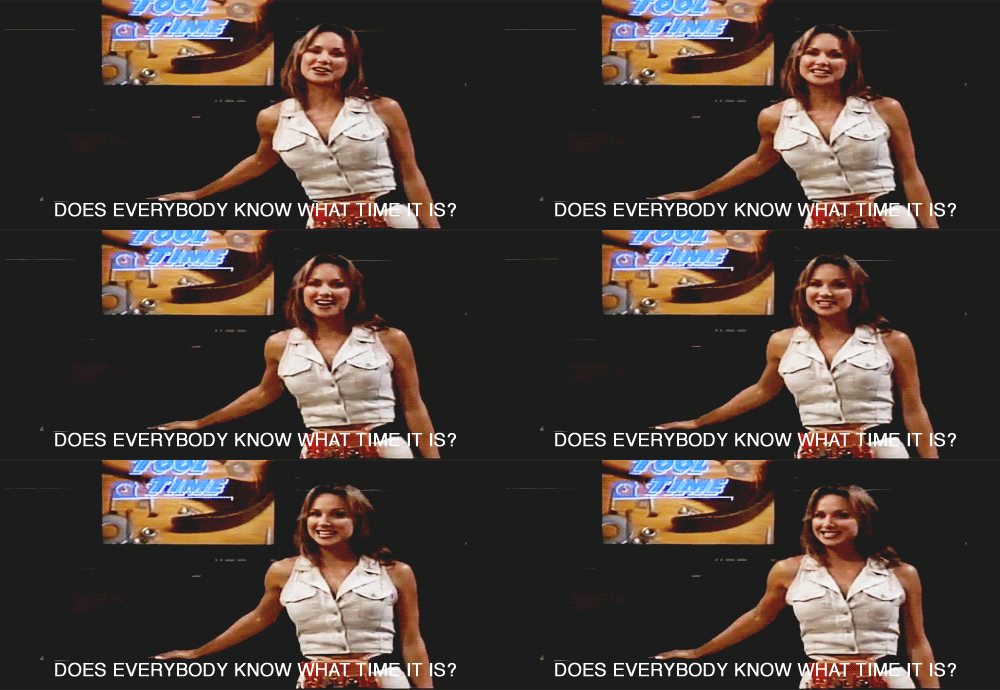
I DON’T KNOW WHAT TIME IT IS, BUT I KNOW WHAT IT’S TIME FOR

 Like many of blogposts, the above came to me in the middle of a workout.  Specifically, my most recent workout of 30 minutes of EMOM training, with axle zercher squats from the floor on one round, weighted dips on another, and weighted chins on the third, before rotating, giving me 10 rounds total of each movement.  Once this is done, I do one max rep set of trap bar lifts with 405lbs.  I was moving a little slow between the end of the EMOM workout and the start of the trap bar pulls, being somewhat leisurely as a means to recover before I put in one more hard set, and I had no clock set up to know exactly HOW off schedule I was at this point.  And that’s when I said to myself “I don’t know what time it is…but I know what it’s time for”, and I appreciated having thought that thought.  Because at that moment in time, it was true: it didn’t matter how late I was or what time it was: it was time to do my max rep trap bar pull.  It was time to perform.  And goddamnit if that isn’t THE right motto to have.


But I'll accept this as well...just because I miss the 90s


Too many trainees in the physical training realm become slaves to numbers, and in doing so, they’re never able to achieve true self-actualization.  They live on a timer and by an app, eating the macros and calories the app tells them WHEN it tells them to eat, making sure how much they eat is how much their food scale TELLS them is the “right” amount, following the “right” training program or the protocol that science tells them is the “right” protocol…and none of them actually achieve anything that is noteworthy given how much “right” stuff they are doing.  Wouldn’t it stand to reason that if a trainee is doing everything right at precisely the right time ALL the time without wavering, they would surely achieve greatness?  And if not greatness…at least success?


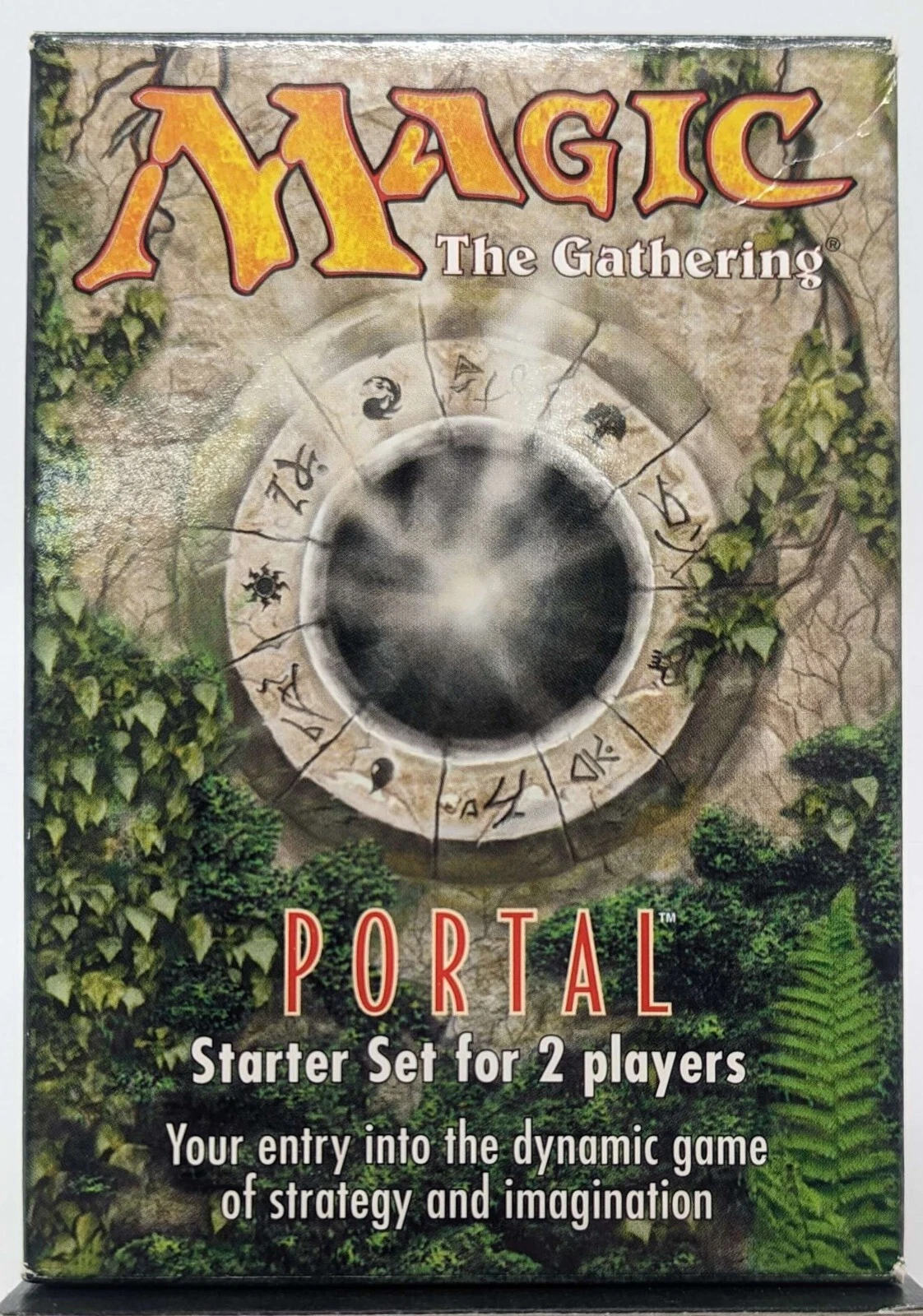
What is missing?  Humanity.  The actually strapping in and getting things done.  Stepping up when the signal is sent and the call of duty is heard.  Jon Andersen referred to these moments as “portals”, and we have to be on the lookout for them.  We can’t make them happen, we can’t will them to happen, we can’t construct a scenario to force them to happen: they are simply GOING to happen, and it’s on us, when the time comes, to do “what it’s time for”. 


This is what a REAL gateway drug looks like


And this includes when things are NOT ideal.  So many of these same trainees are so used to always setting up the most ideal circumstances EVERY time they train that they’re paralyzed whenever any sort of x-factor rears it head.  “What do I do if I only got 3 hours of sleep last night?” “What do I do if I ran out of pre-workout?”  “What do I do if I forgot to charge my earbuds?”.  Oh my god, what do you do?  You train!  Because THAT is what it is time for.  It doesn’t matter what time it is: what matters is what it is time for!

And this speaks even FURTHER, onto the level of understanding instinct instead of trying to deny it.  I may be a misanthrope, but I am human: all too human.  Some of you others are in such a rush to deny your humanity that you in turn deny your ability to ascend BEYOND humanity due to an unwillingness to realize your full potential.  You try to turn your complex, unique biological processes into a math equation so that you can attempt to play God by eating the EXACT amount of calories that will yield only muscular gains with no fat whatsoever, instead of listening to the signals your VERY intelligent body sends you saying “We NEED more food because we’re training HARD you idiot!  We WANT some bodyfat because it’s going to make us function better!”  You deny your body nutrients trying to hack it with “If It Fits Your Macros” quackery and then wonder whey you’re starving and underperforming on your diet of Pop Tarts, ice cream and protein powder.  You diligently follow your precisely calculated maximum recoverable volume with your specifically designated reps in reserve and scientifically approved training frequency, rather than listening to the ebb and flow of your body informing you when it’s time to train hard and stupid and when it’s time to throttle back, and recover.  OR when your body gasps and chokes in the training hall and you think the solution is simply more rest vs subjugating yourself to some hard and rugged conditioning to turn yourself into something greater.  Your body doesn’t know what time it is, but it certainly knows what it is time for!


For instance, when your body sees this, it knows to go into the fetal position and start crying


Unplug and go be something.  Listen not to the ticking of a clock or the sound of an alarm or the demands of your digitized outsourced thinking, but instead hear and heed the call of what it is time FOR!  These portals are limited windows, and refusing to acknowledge them when they are there is a surefire way to cut yourself off from them in the future, or, if nothing else, continue to remain unprepared to act when the time comes.  The experienced portal hopper is going to succeed more and more with each passing opportunity and gain the skillset necessary to be able to listen to the signals their body is sending and be able to respond appropriately, whereas the timid hopper will continue down the path of mediocrity.  Folks, if all it took was doing everything “right” all of the time, why aren’t there MORE physically amazing people out there?  We’re too good at “set it and forget it” living: it’s the folks out there that are doing what needs to be done when it’s time to do it are the ones that are going to achieve something greater than the others.


As I’m writing this on the 4th of July (Happy Independence Day to my American Readers!) and the band “Chicago” made an amazing song celebrating this particular day, allow me to end with a quote from another one of their songs.


“Does anybody really know what time it is?  Does anybody really care?  You know, I can’t imagine why”


Thursday, June 27, 2024

IT’S SO HARD TO GET FAT

I genuinely have no idea where this one is going to go, but I’ve had this thought circulating for a bit now and it’s pretty entertaining to me.  I was thinking about Paul Anderson the other day, primarily because, as I said in the very first entry to this blog: when my mind idles, it defaults right to getting bigger and stronger, and I’ll think of WEIRD stuff when that happens.  So anyway, what I specifically was thinking about was how Paul was a firm believer in the value of sugar as it related to getting bigger and stronger.  Whereas most meatheads were…well…meatheads, and therefore focused on meat and protein, Paul believed that SUGAR was necessary for the digestion of all of that meat and protein, and it’s presence WITH the protein was crucial for the process of digesting the protein and getting bigger and stronger.  That’s honestly not too far off from the en vogue notion of pairing post workout protein with some manner of insulin spiker to create an anabolic effect via the “storage” mechanism of insulin to drive protein into the muscles…but Paul took this in an interesting direction.  Primarily, Paul had the habit of drinking HALF A PINT of honey during strenuous workouts, alongside a protein drink consisting of “ice cream, milk, soybean meal, and raw eggs”.  To crunch the numbers on that, there are about 60 calories in a tablespoon of honey, 17g of carbs, of which 16 are sugar.  Half a pint is netting you 16 times that amount: 960 calories, 256g of sugar…which was what was consumed DURING the workout ALONGSIDE his “protein” concoction of ice cream and milk, being a part of the OG “Gallon of Milk a Day” tribe.  All of this eating and drinking got Paul to a bodyweight of 360lbs at his heaviest at 5’9, and a competition weight of 304lbs when he won Gold at the 1956 Olympics.


Paul ready to crush dreams and break hearts


What’s the point of that history lesson?  At 304lbs in the 1950s and 360lbs at his all-time heaviest, Paul was absolutely a big man…but compared to today?  You can go into any Walmart and you’re BOUND to find at least one 5’9 360lb man, to say nothing of significantly heavier men than that.  We have a television series titled “My 600lb life” that documents humans that have massively eclipsed (pun partially intended) Paul’s downright diminutive 360lb frame.  And Paul got there by DRINKING HONEY AND ICE CREAM as though they were beverages.  He had a goal to get as heavy as he possibly could so that he could lift as much weight as he could, and he couldn’t catch up to reality TV stars of our current era…peculiar, no?


Let’s take another case study: Bruce Randall.  My love and admiration of Mr. Randall has been well documented, because any man who can get a 680lb squat after breaking their leg in 7 places from a motorcycle accident by employing a style on the good morning that makes the internet scream is definitely my kind of hero.  Bruce, like Paul, understood the direct relationship between how much he weighed and how strong he was, and he achieved an absurd bodyweight of 401lbs at a height of 6’2 so that he could be one of the strongest humans of his time, before then cutting down to a svelte bodyweight of 222lbs to win the 1959 NABBA Mr Universe.  And he accomplished his 401lb bodyweight employing a progressive overload approach to nutrition, gradually adding extra food to each meal, “an extra chop, glass of milk, slice of bread”, etc, eventually totally out to an average (as reported by Randy Roach) of “eight to ten quarts of milk a day along with 12 to 18 eggs” and a semi-regular breakfast of “two quarts of milk, 28 fried eggs and a loaf and a half of bread”.  Once again, because math is fun, that’s a breakfast of 1,171 calories of milk (64g of fat and protein, 88g carbs), 2,262 calories of eggs (145g of fat and protein) NOT counting the butter they were fried in, and (assuming 20 slices per loaf and a wheat bread) 2100 calories of bread, (about 30g of fat, 100g of protein, and 360g of carbs): a total of 5,533 calories, about 240g of fat, 309g of protein and 448g of carbs…for breakfast!


It's absurd to think that he was nearly 100lbs away from his al time high in this photo


And again, is a 401lb 6’2 man a big man?  Absolutely!  Is that the fattest a man can be at 6’2?  Not in the slightest.  Hell, at 1” taller, Eddie Hall was 433lbs, and ALSO a strong human, to say nothing of the people you’ll see at any public gathering that have “achieved” an even higher bodyweight through sheer “grit and determination”.  And examples are abound of this in other historical locations: the Saxon Trio were famous for their eating feats, which included a breakfast of “24 eggs and 3 pounds of smoked bacon; porridge with cream, honey, marmalade and tea with plenty of sugar. At three o’clock they had dinner: ten pounds of meat was consumed with vegetables (but not much potatoes); sweet fruits, raw or cooked, sweet cakes, salads, sweet puddings, cocoa and whipped cream and very sweet tea. Supper, after the show, they had cold meat, smoked fish, much butter, cheese and beer.”  If you look at the Saxons, none of them would even register as “fat” by today’s standards.  What about legendary J.C. Hise?  Along with also abiding by the Gallon of Milk a day, according to a report on the 1934 Senior National Weightlifting Championships, J.C. Hise “steadily ate for over two hours, consuming half a gallon of coffee, much water, and unaccounted for stacks of grub” prior to arriving to compete and finish third, beating out the legendary John C. Grimek.  Was J.C. large?  At 5’9 and 298lbs, most certainly.  Can he measure up to what we see today?  Not at all.  John McCallum, creator and consumer of the “get big drink”, made up of “two quarts of milk in a bowl, at least a day’s supply of the Quick Gain Weight, two cups of skim milk powder, two eggs, four tablespoons of peanut butter, half a brick of chocolate ice cream, a banana, four tablespoons of malted milk powder and six tablespoons of corn syrup”, consumed on TOP of a diet heavy in whole foods.  John was a meaty man, based off his photos, but definitely not some sort of land whale that you’d anticipate based off his dietary intake.


J.C. Hise and John McCallum, respectively.  Big men, yes, but not what society would call "mega obese"


I could honestly just keep on listing more and more examples here because I really find this stuff fascinating (oh hell, also go look up Hugh Cassidy and Louis Cyr), but I’m already at over 1000 words and haven’t even made my point yet, but considering the majority of the examples I’m listing trained in an era where steroids either did not exist or were merely in their infancy, it’s worth appreciating that they were eating in manners that common sense would tell us will ABSOLUTELY result in ballooning up JUST like the modern obese people we see today that have completely surpassed Bruce Randall’s 401lbs…yet Bruce remains the heaviest among the group.  In spite of ALL of their efforts to gain, these folks could NOT match the obesity that we see today…and why is that?      


Exactly how I feel whenever anyone brings up genetics


Because as I wrote in the title: it’s HARD to get fat.  People that have grown to 500lbs and up got there through a VERY dedicated and concentrated campaign of physical neglect.  They had to make some of the WORST nutritional decisions possible, and they had to do this consistently over a prolonged period of time, ignoring all the discomfort that comes alongside this lifestyle.  And, on the flipside of the equation, dudes that are out there training REALLY hard in the pursuit of trying to become as big and strong as possible are simply putting their bodies through so much trauma and toil that they simply do not possess the ability to grow so monstrously fat.  Hell, the best example we have is strongman competitor Glenn Ross, who grew to a top weight of 475lbs at 6’1, and in doing so remains the exception among the norm of athletes who eat like it’s their job and STILL cannot get mega-obese, as you’ll observe whenever you view the dietary videos of dudes like Brian Shaw and Thor talking about how “eating is the hardest part of the job.”


What sort of helpful conclusions can we draw from this information?  One is that, by referencing a “pre-steroid era” grouping of athletes, I’m also referencing a “pre-current nutritional debauchery” era of humanity, because our current state of nutrition is absolutely abysmal in the west.  These dudes simply didn’t have access to the ridiculous food-like products that we currently have: they had to “force” themselves to gain on good old whole foods, pasture raised eggs/chicken, grassfed cows, locally grown fruits, veggies, tubers and grains, etc.  Even their “junk” food was healthier than what we had, and Paul Anderson even had the wherewithal to appreciate that the honey he got from local beekeepers seem to provide him better energy than the stuff he got from the grocery store.  In turn, this leads to a second conclusion: you aren’t going to get “accidentally obese” in your pursuit of growing bigger and stronger.  It’s HARD to get fat: you have to make a LOT of bad decisions, and this includes a diet consisting primary of modern processed junk and foodlike products AND engaging in a campaign of NO physical activity.  The fears of “getting fat” are just as unfounded as the fears of accidentally getting “too muscular”: you have to make an effort to get there.


I suppose sometimes we can accidentally achieve one in pursuit of the other


Meanwhile, what DID happen to these dudes when they went out of their way to try to find a way to get in as much quality food as possible while training as hard as possible?  They ALL got incredibly big and strong, to the point that we’re STILL talking about them decades if not a hundred+ years later.  They became legends from their efforts.  Did you ever hear about the kid that ate a moderate surplus on a long slow bulk employing the optimal amount of frequency of 2x per week for all of their muscle groups?  Yeah: me neither.  Damndest thing really.              

Thursday, June 20, 2024

BARBARIANS AT THE GATE

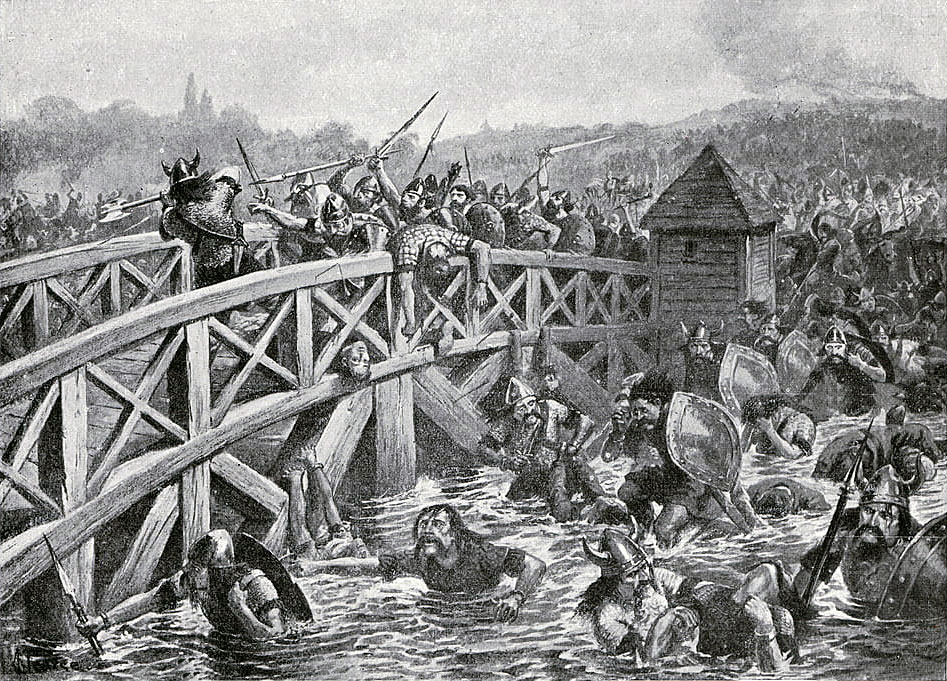
Despite the inclusion of my favorite character class, this is NOT a post about Dungeons and Dragons, but instead I wish to discuss barriers of entry and gatekeeping.  People say “gatekeeping” like it’s a bad thing, but consider the origin of such a phrase: WHY would we keep a gate?  What is the function of a gate?  The gate is there to protect something that we deem valuable.  You wouldn’t construct a gate to protect something that was worthless: you’d simply leave it out in the open, exposed to the elements, unprotected, raw, exposed and vulnerable.  We put our precious things behind the gate, lock them up, and keep them safe…and that’s exactly WHY we have “barbarians at the gate”.  The barbarians KNOW that all the good stuff is behind that gate: and they want in.  They WANT go get to all that good stuff, they want INSIDE your city, and they want to get AWAY from all that bad stuff that is out there in the raw, exposed elements.  The barbarians will storm the gate, crash the drawbridge, bring out the battering rams and endure the boiling oil, spears and arrows so that they can get BEYOND the gate.  These are the barriers to entry they must bypass, the very ones erected by the gatekeepers, because BOTH sides understand how valuable the stuff beyond the gate really is…do you?


Sometimes it's not a gate but a bridge....and it's the barbarians that are keeping it!


What inspired this post was an interaction I had online recently.  I was discussing 5/3/1 with a trainee and explaining the function of the assistance work: to build muscle.  Jim has said this on many occasions during his weekly podcast, specifically highlighting that the assistance work is where his athlete tend to exert themselves the MOST, because there’s minimal risk of getting hurt going to failure on a set of chin ups or push-ups compared to the core lifts, and this sort of effort is great for building muscle.  The trainee asked where I heard that from Jim and I explained it was in the weekly podcast, to which the trainee informed me that he didn’t listen to them because “There is an annoying sound in the background of a dying smoke alarm”. 


If you were to ask me to pinpoint the exact moment I lost my faith in humanity…ok, it wasn’t here, but this definitely helped re-affirm my decision to be a misanthrope.  That is the SMALLEST barrier to entry I have ever seen.  This isn’t gatekeeping: this is like a single blade of grass that is slightly taller than the rest of the lawn, and acting as though this is providing too much resistance to go forward.  Jim Wendler is a 1000lb squatter that was directly trained and mentored by Louie Simmons who has coached athletes ranging from high school kids to collegiate athletes and elite powerlifters, authored several books, and provides a FREE weekly podcast where he directly answers questions submitted to him by viewers on a wide variety of topics…and you can’t be bothered to benefit from this knowledge because there is an annoying sound in the background?  While you sit there in your climate controlled him in the most comfortable chair you own, munching on a snack with your favorite beverage and your designer headphones pumping in crystal clear sound, this minor annoyance has halted your ability to gain wisdom?


How long must I suffer!


Do you have any conception of the idea that, “back in the day”, the only way you gained this knowledge was to TRAIN alongside this mentor?  That there was no internet, no weekly newsletters, no 1-800 numbers to dail: the only way you had access was to actually ACCESS the person, in person.  And that meant you were SWEATING alongside them: loading and unloading plates and bars, going set for set, following them around the gym like a puppy-dog, and just hoping you’d learn something through sheer osmosis, to say nothing of if they actually took the time to REALLY explain what the hell it was they were doing.  THAT was the barrier to entry, and we barbarians were at the gate ready to tear it ALL down so we could get to the good stuff.  And that was just if you wanted the local “big guy” to share his knowledge.  Someone like Jim?  Dudes would drive for hours just for the chance to meet up one time and get whatever download of info they could.  There are SO many stories of folks back in the day getting to York or Gold’s or any of the Meccas of physical transformation just for ONE session to try to learn as much as they could…and you can’t be bothered to sit through an annoying sound?


Think of the other ridiculous barriers to entry that are keeping some barbarians at the gate.  How often do you hear someone say “I’m not a fan of” when discussing a food product.  Not a fan of?  Does EVERYTHING you put inside your face have to be the most delicious and opulent thing in the world?  Do you legitimately have no room in your life for food that provides a function outside of satisfying hedonism?  Do you have a childlike approach to eating: being a “picky eater” that will only subsist on a diet of chicken fingers, French fries and ketchup (ruled a vegetable by the government!)?  To say nothing of those who claim “I don’t know how to cook”, in an era where, once again, we have INSTANT access to information such that you can LEARN how to cook in the span of minutes.  And if you’re REALLY short on time, you can find a youtube video on how to cook and watch it at 1.5x speed so that you learn FASTER. 


However, don't try to COOK the food 1.5x faster by cooking it 1.5x hotter...


And really, the “I don’t have time” barrier to entry is so patently ridiculous.  Super Squats is my go to book for anyone interested in physical transformation.  It can be read in an afternoon and will give you all the tools you need for completely transforming yourself…and yet people REFUSE to read it.  And here comes the comedy: they then go and run what they THINK is the program, screw it up because they don’t know HOW to run the program, and waste 6 weeks of their lives.  They didn’t have time to spend an afternoon reading, but they DID have time to waste 6 weeks?  How does that even work?  Once again: reading this ONE book was the barrier for entry, and it was enough to keep some barbarians at the gate.  Each and every book you DON’T read is simply you allowing the gatekeepers to keep keeping the gate! 


Think of how diminutive these barriers to entry are, compared to the REAL ones that are out there.  Think of the barrier to entry that exists between rep 19 and rep 20 of Super Squats.  Or the barrier to entry as you’re 4 gulps away from finishing the gallon of milk for that day.  Think about the barrier to entry that exists between sets 6 and 7 (of 10) on Deep Water.  Laying on my back in my garage, within the 2 minutes of that rest period, I legit contemplated selling all of my home gym equipment and quitting lifting because I was feeling so miserable…and then my timer went off and I got up and knocked out another set of 10.  Because that misery was the barrier to entry, and I was a barbarian knocking at the gate because I WANTED IN.  Think of all those trainees who never even got to this GATE because they were denied entry into the first circle of the promised land from something as inconsequential as a yucky tasting food or an annoying background noise.  Some folks don’t even get to KNOW about the good stuff that is being gatekept because they don’t even get far enough to SEE the gate. 


Those who refuse to give up their abs will never see the gate of squatting 1200 f**king pounds


Be the barbarian you know you are.  Allow no gates to stand in your way.  Allow no gatekeepers to keep their gates.  Overcome all barriers to entry.  They wouldn’t have a gate up if there wasn’t something REALLY good on the other side: go get yours.    

Wednesday, June 12, 2024

‘IF YOU HAD TO PICK JUST ONE”

This is always a fun mental exercise: limiting ourselves and seeing what we come up with.  What initially inspired this was watching a video from Alex Bromley, where he totally blew my mind by performing cambered bar squats with an open trap bar, because it got me thinking about how awesome that piece of equipment is…which, of course, led to the question of “if you had to pick JUST one…”


BAR


I’m going to be a total cad here, because I DON’T own it, but because of that video, if I DID have to have ONLY 1 bar, I’d actually opt for an open trap bar rather than a conventional barbell.  I’m specifically a fan of the design of the Rep Fitness open trap bar design, which a few other companies utilize as well (I’m unsure who the originator is), primarily featuring a rounded tubing compared to the square style tubing typically seen in trap bars. 


The trap bar/hex bar/Gerard bar was originally conceived of as a way to allow those trainees with brittle lower backs to still have a manner of deadlifting available to them, as it centered the weight around the lifter rather than putting it out in front of them.  Paul Kelso shook things up quite a bit when he demonstrated that you can also press overhead with this bar as well, which is a unique training stimulus by putting the weight center aligned AND also creating a bit of a deficit, since the bar goes around the lifter rather than stopping on their clavicle.


This book will definitely sell you on the bar


But this open design also allows for cambered bar squatting, as I mentioned in the intro, alongside zercher cambered squatting.  THIS is huge, because though some folks argue the trap bar deadlift is more like a squat than a deadlift, this is simply ACTUAL squatting, which opens up a lot of avenues.  Along with this, lunges, rows, and even benching can be performed with this bar.


Mind...blown


But so far, I’ve said things that can ALSO be done with a barbell, but the OTHER movement we can do with the open trap bar is the farmer’s walk.  And yes: I’ve spoken before about how farmer’s walk handles are superior to the trap bar when it comes to a farmer’s walk, but ultimately we’re discussing a “Swiss army knife” approach when it comes to this one tool.  No one part of the Swiss army knife is going to be superior to an individual tool specifically designed for one function, but the knife is full of “good enough” tools to get you through whatever situation you encounter, and the trap bar farmer’s walk absolutely answers that mail.  NOW you have one bar that can train all the essential movements for getting bigger and stronger (squats, deads, presses, rows) AND you’ve got loaded carries covered as well.  You hit ALL the Dan John bases there (push, pull, hinge, squat, loaded carry) with just one piece of equipment, and it’s about the same price as a quality barbell as well. 


CAVEAT: If at all possible, I’d include some rubber patio pavers in this set-up. For one: It’d open the door for ROM progression training with the pulls, but along with that, you could go by with JUST the trap bar this way…meaning you wouldn’t need a rack or set of stands!  You could simply stack the pavers up like jerk blocks in order to elevate the bar high enough to set up for squats or presses, and THAT means that this whole set up could be stripped down and put away in between workouts.  SUCH a low footprint with such a high effect.


FOOD


Rocky was a chump


Eggs.  Keep in mind, I am saying “food” and not “meal”, because, of course, I already wrote a post titled “when in doubt: steak and eggs”, but also because I know some of you asked yourself this question and answered with “chicken, rice and broccoli”, to which I say of course, shame on you: how boring, and NOT in the spirit of the exercise. 


No: if I had to pick one FOOD, it would be eggs.  Why?  For one: they’re a complete protein, which is kind of important for a goal of physical transformation, to say nothing of simply STAYING ALIVE due to the whole “essential amino acids” concept.  And the same goes for fats: eggs contain all the essential fatty acids we need to survive, let alone thrive, especially if these are some good pasture raised eggs that have a solid amount of Omega 3 in them.  The saturated fat in eggs are crucial for testosterone production, and eggs also contain vitamin A, D, E, K, and a whole host of B vitamins.  So, already, eggs are awesome, but along with that…


They bring us so much joy! (props if you at all get this reference)


…just like the open trap bar, eggs are like the Swiss army knife of food, because there’s a million different ways to make eggs.  Of course, you can Rocky them and just drink them, but you can fry them in SO many different styles (sunny side up, over easy/medium/hard), soft/hard boil them, poach or scramble them, make them into omelets or frittatas, etc.  And along with THAT, you can change the macro composition of your egg dish by using either the yoke OR the white in varying degrees.  If you want to make it protein heavier, use more whites.  Heavier in fats?  Use more yolks. 


And funny enough, eggs even have a trace amount of carbs in them, for those of you that care about that sort of stuff.  They clock in at about .6-.7g of carb per egg, which may seem insignificant, BUT, if we ARE going full on Gaston mode here and eating 5 dozen eggs each morning, that’s 36-42g of carbs, which CAN be enough to stay out of ketosis, if you’re wanting to do just that.  AND, if you are antsy about carbs, once again: play around with the whites to yolk ratio.  It goes to show the versatility of this one food.  And hell: I’ve ONLY been discussing chicken eggs here: there is a whole WORLD of eggs to explore, each with their own unique attributes.  I still have it as a goal of mine to one day eat a platypus omelet: made with the eggs, meat and milk of this unique egg laying mammal.


BOOK


You probably had a coin flip between this and Deep Water


As challenging as this idea may have seemed for me, given how many books on lifting I’ve devoured due to my nerdery, I quite quickly settled on “Super Squats”, to the surprise of some and total and utter lack of surprise of others.  But allow me to discuss the merits here.


Like the other previous two entries, what I dig about Super Squats is that it CAN do it all, and it does it quite efficiently.  It’s a book you can read in an afternoon, but it can set you up for the rest of your life.  The book contains THE Super Squats program, for sure, but it also contains an abbreviated version of that program, AND a follow-on 5x5 program to be run AFTER 6 weeks of Super Squats, in order for the trainee to get some time away from the high reps and rediscover some low rep strength while their body recovers.  Along with that, it even has some alternative Super Squats protocols listed, to include 2x15, 3x10 and 1x30 approaches for the breathing squat sets.  With all this, we already have “programming for life”, for those out there that only ever want to read just ONE book.  But wait: there’s more!


Almost as good as chocolate and peanut butter


The book ALSO contains instructions on how to perform ALL the exercises in the programs, along with alternative exercises that can be used.  So, once again: with the alternatives, we open ourselves up to even MORE programming options, and, in some sort of desert island scenario where we have no access to the internet, we STILL have a resource that can teach us HOW to lift.  And don’t laugh: reading descriptions of HOW to lift is exactly how I learned.  Occasionally, I’d even get a picture!  So now the book is going to teach us HOW to lift and then give us all the programming we need…but it’s not done yet!


The book ALSO contains nutritional protocols specifically for achieve the goal of getting bigger and stronger.  It lays it out very plainly with simple, quality foods that are primarily single ingredient, not ultra-processed, and wholesome.  There’s no calorie counting, macros, etc, just a focus on taking in a large amount of quality food…and, of course, milk.  Is it perfect?  Of course not, but as far as the Swiss army knife approach goes, this will definitely get you to your goals.  And we still haven’t even discussed the parts of the book that go into the psychology of training in such an intense manner or the delightful retelling of the history of the squat/program.  Really, if you only had one book and this was it, you’d be set.  


Are there others out there that could do a fantastic job?  Absolutely, similar to how there are other answers to the other two questions that would be just dandy (a good traditional barbell has withstood the test of time for a reason, and folks have lived quite well on diets of beef, salt and water), but, for me, at this moment, I feel like these are the best answers I have.


NOW LET'S GET CRAZY


Get?  We're there dude!


What makes this mental exercise even wilder is if I actually thought about taking these 3 and putting it all together.  You absolutely COULD do Super Squats with the open trap bar.  In fact, squatting with that bar might be ideal for Super Squats, because failing with it wouldn’t be quite as catastrophic as what typically occurs with a barbell: you can simply squat down and set it on its feet, similar to a yoke. You may have to get creative with the pull overs, or just find a doorway to do radar chest pulls, but you can quite easily do rows, straight legged deadlifts, presses, some manner of benching, curls, calf raises, etc with this one bar.  You’d be limited on the follow on 5x5 program, since power cleans would be a no-go, but maybe we’ll just do some trap bar high pulls and call it good. 


As far as the nutrition goes, you definitely won’t have milk on your side, but eggs CAN be consumed as a beverage (egg whites, in particular, go down pretty easy), and you can also just plain eat enough eggs to facilitate growing, as I’m not going to say one NEEDS to drink a gallon of egg whites a day… 


Although now that I’ve said that, let’s compare the macros.  If we’re talking egg whites, I feel like the most accurate comparison would be against skim milk, as both are fat free protein sources.  A gallon of skim milk is going to be 1,440 calories, with 144g of protein, and 208g of carbs, of which 192 are sugar.  If we went with Fairlife, that’s 1280 calories, with 208g of protein, and 96g of carbs, all of which being sugar.  Compare this to egg whites, which will clock in at 1,872 calories, with 424g of protein and 29ish grams of carbs.  Technically, you rack up 6.4g of fat as well when you drink a gallon of them, and I’m sure there are some trace fats in the skim milk as well, but still…looking at how things shake out, a gallon of egg whites MAY not be the craziest thing you ever drink.


Hell, let’s just keep getting wild here and compare whole eggs to whole milk.  A gallon of whole milk clocks in at 2384 calories, with 128g of fat (80 of it saturated) AND protein, and 192g of carbs, all of which being sugar.  If talking Fairlife, we’re looking at 2400 calories, with 128g of fat (80 of it saturated), 208g of protein and 96g of carbs, all of which being sugar.  To do this with whole eggs, we’re going to call an egg 50g, understanding a cup is 243g (should it be fluid ounces/milileters?  It’s getting a little confusing at this point), that means 3,888g per gallon, which equates to 77.75 eggs.  We’ll round that up to 78, and realize that Gaston was a chump with his 5 dozen each morning.  There are a LOT of opinions on how big an egg is, but according to SOME stats that claim a large egg is 50g, drinking a gallon of whole eggs a day will get you 6,084 calories (it’s actually 78 squared to get there: how fantastic), with 390g of fat (125 of them saturated), 468g of protein, and about 47g of carbs, all of which considered sugar.


We all have our limits


Holy crap: drinking a gallon of eggs is some Bruce Randall stuff right there!  And, of course, price factors into this as well.  According to a quick google search, I can buy 60 large eggs from Walmart for $7.47, so to get to 78 I’m gonna be paying $9.70.  A gallon of milk will cost me around $3.50, and a gallon of Fairlife is going to run $11.05 (4.50 per 52 fluid ounces) For reference, I’m currently in the middle of the United States: your prices may vary.  …holy crap, the eggs are more economically viable than the Fairlife!


Man, this took a WEIRD aside, but I honestly had a blast writing it, so hopefully you had fun experiencing my insanity firsthand here.  And I never even got into the discussion on “just one movement” (log viper press, btw, if you’re keeping score, with keg one motion being a close second), or any of the other “just ones” that are out there, but go ahead and ask yourself these questions.  When you do so, you find out just how much “extra” stuff you have in your life.