Friday, July 24, 2020

BOOK REVIEW: JOSH BRYANT'S “TACTICAL STRONGMAN”


I’ve recently gone though and re-read my favorite books on training (Powerlifting Basics Texas Style, The Complete Keys to Progress and Super Squats) and was on a roll and wanted to get something more modern.  I saw Josh Bryant’s “Tactical Strongman” on amazon for $10 on Kindle and thought it’d be perfect.  Josh Bryant has a pedigree of producing successful athletes, I know strongman, and the stuff I’ve seen/heard from Barbell Tactical has been pretty slick.  As I’ve been losing weight and doing more martial arts and running, I thought it’d be cool to get a book that included that and strongman.

Tactical Strongman: The Complete Guide - Kindle edition by Bryant ...
That terrible artwork actually gave me hope about the contents

Without spoiling the book, let me explain to you the difference between a Tactical Strongman and a regular Strongman…nothing. At least, according to Josh’s book.  This is purely a book on strongman.  As such, it was very much a disappointment and I don’t recommend it to anyone that was looking for what I was looking for.  There’s not even any discussion on running in ANY capacity in the book.  To put that in perspective, Josh Thigpen’s “Cube Method for Strongman”, a book PURELY about training for strongman, included a discussion on sprint training because that’s a crucial part for a strongman competitor to be able to sprint between events at a medley.  This means that Tactical Strongman not only fails in the tactical part, but even misses on the strongman part.  It does provide a decent primer for a person who is new to the sport and wants to start competing: that’s just not what it is advertised as being.

I decided to make the most of my $10 and get a blog post out of it.  I was smart and actually took notes as I was reading about things that I observed through the book.  I was really hoping to have more pros than cons, but it didn’t shake out.  Here’s what I got.

THE GOOD:
Peter Graham faces former World strongman champion Mariusz ...
When strongman gets tactical


-Fun historical overview as part of intro.  History of physical training starting with Greeks to modern weightlifting to powerlifting to strongman.  Lists key players.  Solid storytelling here.

-The book contains a “Safety Section” for training strongman events that has a lot of good info.  Something I particularly liked was advocating to use straps and pulling double overhand with them on deadlifts.   It’s great to get that drilled in to a new strongman early and overcome the internet stupidity regarding it.  Also a good tip to progress slowly a good tip regarding adding weight to implements within a session.  Josh explains how you wouldn’t jump from 400lbs to 600lbs on a bench workout, but such jumps and larger are very possible on the yoke.  Instead, work up to top weights slowly.
-This is the only time I’ve seen someone other than myself advocate for using straps on farmer’s walks in training.  I love seeing that.  More people need to try that.

-The book contains some solid training programming recommendations for moving events, which is something that definitely confounds newer trainees.  It gives a few different approaches, to include how to train for speed, strength, hypertrophy, overload, etc.  Answers a lot of questions.

-Solid advice for first time competitors, especially regarding observing how rules are being enforced at the competition.  Often promoters will say one thing and judges will rule another.  They might say “no touching the belt on cleans”, and then totally let everyone get away with it.  Don’t hold yourself to a higher standard than needed. Only dumb tip is to abstain from sex the week of the comp.

THE BAD AND THE UGLY:

Pin on Funny stuff
More realistic tactical strongman

-The book starts off as a story about 2 guys observing a strongman training, and I got excited because I thought I had bought a book along the line of Powerlifting Basics Texas Style or The Complete Keys to Progress.  That made thing sting far worse, because the author introduces the strongman character of “Thic Vic”, and he is totally unendearing character and cringy.  Very cringy.  If he’s real, he’s unbelievable, but he comes across as a parody of a caricature.  He’s a former star athlete that dropped out of school and fell off the grid and then became some mysterious spec-ops ninja before coming back to Texas to fight in super secret underground cage fights and uses strongman to get in shape to crush skulls and look jacked.  Machismo overload.  Also, don’t forget that he’s a warrior monk, and even though he’s big strong and jacked and fights ALL the time, strongman training is how he centers himself in a universe full of chaos, points he eloquently pontificates to the youths watching him load stones.  MAY appeal to a very young teen audience.  Vic’s sole purpose is to explain to the reader the “WHY” of “tactical strongman”, but it’s an obvious point: lifting things makes you jacked and strong.

-I genuinely can’t tell who this is book written for.  There are constant mentions of “Cairo fish market/streets of Cuidad Juarez/Gas Station altercations”.  This is lifting weights.  Let’s not get silly.  “Can keep you safe when things go south at $1 kebab night at your local dive-hookah bar.”  The violence fantasy is just ridiculous.  I wrote “46 pages in and it DOES NOT STOP” in my notes, but, in truth, it’s though the WHOLE book.  I’m in my mid-30s, I’ve moved across the country several times, I’ve been to many exotic locales, and I’ve encountered none of the violence that Tactical Strongman is preparing mefor.

-16 of the 124 pages of the book are on history and why you should do strongman. So now it’s a 108 page book on training.  Except ALSO the last 19 pages are “the science of strongman”, which is just explaining why you should do strongman AGAIN but this time with scientific studies, followed by a few interviews of current (at the time) amateur strongman competitors.  So it’s actually a 89 page book on training.


-The book is in a weird space where it says it’s tactical but it’s not, but it’s also trying very hard to NOT be for a competitive strongman either.  For moving events, it keeps reinforcing keeping things slow and steady rather than training to be as fast as possible, emphasizing that you can save that “for competition”.  Where that gets ugly is the instruction for the farmer’s walk, specifically to stand up straight with the implement, effectively deadlifting it off the ground, THEN start walking with it.  Most folks that are decent with moving events know that you have to basically explode up AND forward at the start to be able to ride that momentum and move fast.

-Another quip from my notes “This author’s writing style is just exhausting.”  And it’s funny, because Jon Andersen’s Deep Water book is stupidly over the top, but it feels like you can grin right the cheese.  It’s like pro-wrestling: you know it’s ridiculous and that’s the fun.  And I get that people are over  Jim Wendler’s “be your own person”/rugged individual rhetoric, but I feel like “gas station ready” is just critical mass levels of lacking self-awareness.  I can’t imagine who it appeals to. 
Jon Andersen Clothing
You gotta at least embrace how ridiculous you are being 

-The nail in the coffin that pissed me off when I got to it: Tactical Strongman training is PHA training, straight out of “The Complete Keys to Progress”.  They use the same name and everything.  Had I JUST re-read the book recently, I may have missed it, but it stood out clear as day.  Trying to re-package a training program that has been out since the 60s as “Tactical Strongman” is lame.  Yeah, they use strongman moves in it, but that’s such a minor change.

-The other Tactical Strongman program they include, “Gas Station Ready”, just seems like a mash-up of things.  Part of this is my fault, as I’ve read through the Metroflex Gym “Powerlifting Basics” book before and had similar issues with Josh’s programming: it’s all VERY heavily based on percentages and fixed movements.  Sure, he offers alternative exercises, but it’s still “Do X for Y sets of Z at N%, then do A for  sets of C at N%, then etc etc”.  I always wonder: what if I have a bad day?  Or a good one?   And unlike Deep Water, which is also heavily percentage based, nothing in the programming grabs me in the “How the f**k am I supposed to do THAT” way.  Building the Monolith had a similar mystique to it.  This just looks like a very rigid and structured approach.

-On top of that, both the PHA and Gas Station ready programs rely on a trainee to have access to a lot of different equipment AND the ability to have multiple circuits loaded up and ready to blitz through in many cases.   This contrasts greatly with the “lone wolf” stupidity of Thic Vic and similar rhetoric the reader encounters through the book, because you’re definitely going to need a team and a well stocked gym to be able to make these things work.  YES, you can get creative, but the initial wag isn’t great.  I racked my brain on how to make things work in my single car garage set-up, and was stumped.

IN SUMMARY:

A Fool and His Money are soon Parted. - Download Free Vectors ...


This book isn’t tactical.  It’s also not really strongman.  I regret buying it.  There are a FEW things in here that would be nice to someone new to the sport of strongman, but you could pick the ideas up for free by just hanging out on “starting strongman” or going to a strongman comp and talking with the competitors.  I’m currently re-reading 5/3/1 Forever and will say flat out that it’s a better “Tactical Strongman” book because it at LEAST covers running and conditioning on top of lifting.


Thursday, July 16, 2020

WEIGHT GAIN TRAINING GOALS: PRESS DRIVES PROGRESS


This is something I realized while typing out a response to someone on t-nation regarding training and gaining weight (shout out to dagill2 for letting me abuse his log for that purpose).  Specifically, I was discussing my approach to gaining weight, in that I let training drive a recovery demand that necessitates an increase of calories, and then I eat the greater amount of calories in order to recover from such training, which results in muscular growth.  None of that is new to my regular readers, but in discussing the process, something dawned on me: I got my best results gaining weight whenever I focusing on improving my press overhead.  Specifically, this was whenever I had signed up for a strongman competition that was a weight class above my usual one that required me to hit a press that was well outside of my current abilities.  The two best instances were a competition where I was slated to hit a 260lb log press for reps and one where I was slated to hit a 275lb keg press.  I write “slated”, because in the case of the first I was eventually able to compete in my normal weight class, which only required a 225lb press while in the second case the competition eventually got canceled, but simply TRAINING for these goals got me the best results I’d ever had regarding weight gaining (one ofwhich I documented in an earlier blog entry found here ).  It’s worth exploring WHY this is the case so that others can make use of this.

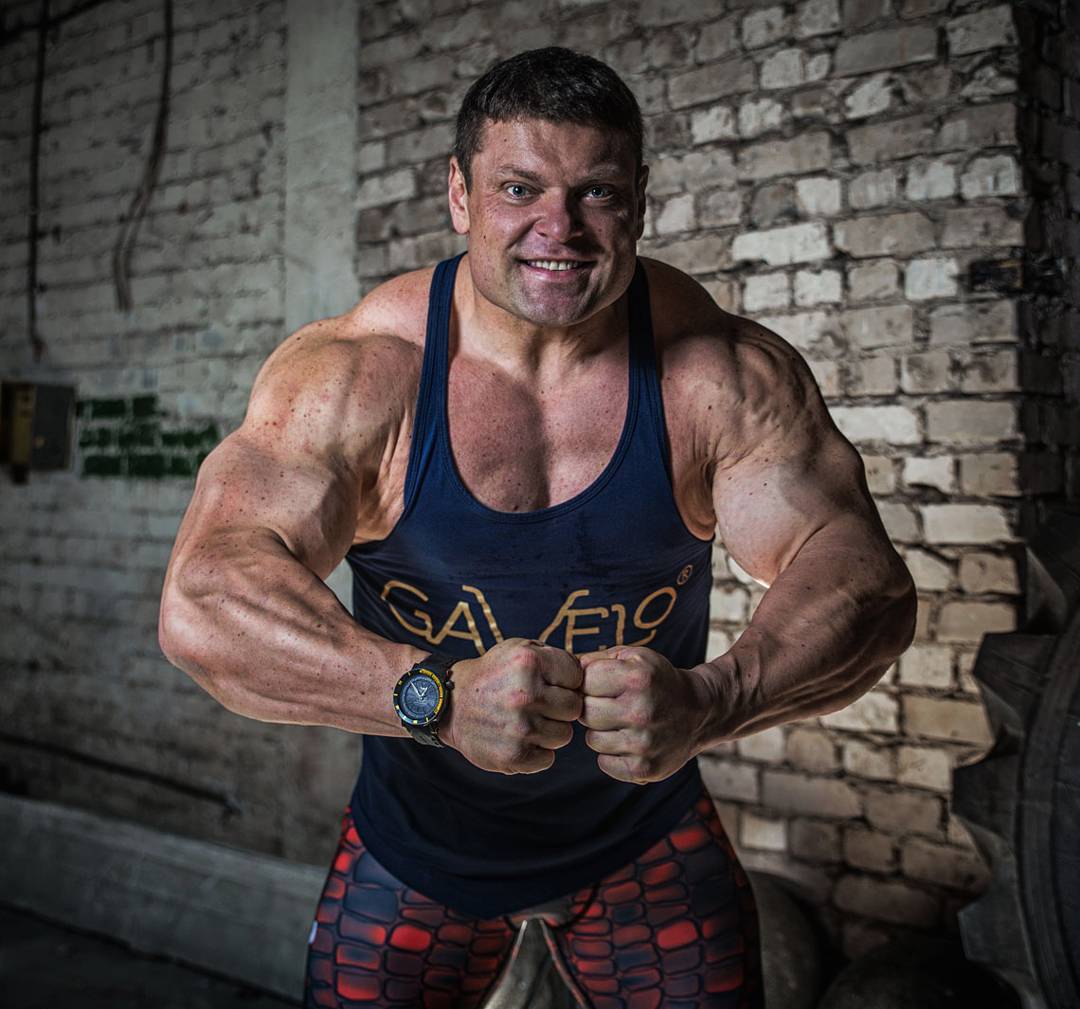
The Tight Tan Slacks of Dezso Ban: The Press - Greg Zulak
But often pictures speak louder than words

What makes the press such a good goal for chasing weight gain?  Assuming there’s even the smallest element of vanity for one’s weight gaining goals (which is to say, assuming we’re being honest with ourselves), the muscles involved in strict pressing are the muscles that appear visually impressive.  The shoulders (all 3 deltoid heads) and triceps are the most obvious muscles necessary to press big weights, and big arms and shoulders are always cool, but on top of that the traps, lats and middle/lower back play a valuable role in stabilizing big weights, especially on a log or keg.  Logs and kegs and other similar weights will ALSO bring in some element of the pecs to the equation, as there will be a necessary degree of leanback in pressing big/awkward implements, making pressing in an incline a part of the process, to say nothing of the value of a “shelf of upper pecs” to press from.  A meaty set of legs and a strong core are going to be of value as well, even if we aren’t push pressing, because we still need a stable base to press from.  And we can see the testament of the value of strong pressing as it relates to strong physiques by examining the physiques of historically strong pressers, and specifically people that used more of a stricter style of pressing vs significant amounts of leg drive.

Bill Kazmaier announced to LIVE Broadcast …destination 9th Annual Show of  Strength - ...destinationDerek Poundstone, US Strongman | Strongman, Fitness inspiration,  PowerliftingThe Secret to Become an Alpha Male by Jon Andersen | Monster MindsetClassify Krzysztof RadzikowskiEverything You Wanted To Know About Strongman Zydrunas Savickas

(This isn’t to say that the press itself is all one needs in order to achieve a striking physique or to ensure positive weight gain (though it’s a fantastic movement to base training around), but that chasing a large press will help vector one’s goals in the right manner.  I write this because my older blog entry “On Overcoming” got wildly misinterpreted in a similar manner.  One will need to press to drive the press up, which will develop the pressing muscles, but one will also be orienting their training toward driving up the press, which means orienting all their assistance and supplemental work to benefit the press.)

Now comes the part of the blog where I piss people off with wild and baseless speculation, because I’m going to discuss why focusing on just getting strong on the squat or deadlift isn’t going to have the same results.  The squat, unfortunately, can and will reward simply getting fatter around the midsection.  Make no mistake: getting a big and strong posterior chain and quads will definitely improve your squat, but your squat can ALSO improve just from having a bigger midsection, because now your squat leverages improve and you have a more stable core due to the wider base.  If you set your sights on squat goals, you can definitely walk down the wrong path as far as weight gain goes, putting on significant abdominal fat, watching your squat rise, and tricking yourself into thinking you’re putting on quality weight. 

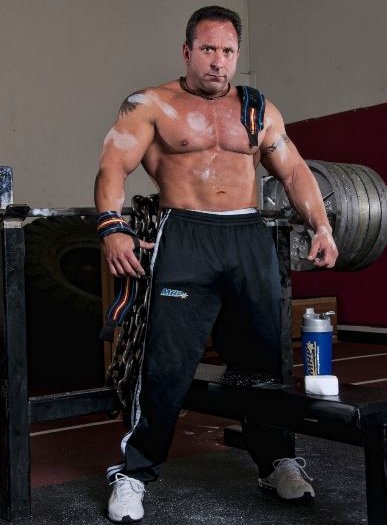
Jeff Lewis - USA Powerlifting of Illinois | Facebookjeff lewis" powerlifter - Google Search I've read a couple interviews Jeff  has done - he seems testy about anyone knowing his wais… | Jeff lewis, Big  guys, Guys
No question Jeff Lewis squats big weight, but that gut gets int he way on the pull

With the deadlift, my experience has been that weight gain will actually NEGATIVELY impact the deadlift.  Keep in mind I’m a conventional puller, so when I say deadlift, I’m talking about an actual deadlift and not your sumo monstrosity, wherein who knows how that works, but with a conventional pull, if you like to have your feet closer together like I do, abdominal circumference growth can really throw off the pulling style.  I actually tend to see my best deadlifting growth when I LOSE fat after a weight gaining phase, something I’m currently experiencing and have experienced in the past.  So deadlift growth might be a good indicator that your weight gain phase WAS successful, but it might not be the best bet for if it’s currently BEING successful.  Meanwhile, watching the press grow and grow is a fairly good sign that you’re putting on some quality muscle.

I didn’t bring up the bench, because I haven’t chased a bench specific goal since around 2012 or so.  In theory, it should pan out well, but there is the possibility of growing your belly so big it cuts down ROM and your bench goes up despite your muscles not really growing.  But big strong benchers who don’t rely on a ridiculous amount of back arch tend to have pretty awesome physiques, especially so among bench specialists, so there’s a fair chance it has merit.

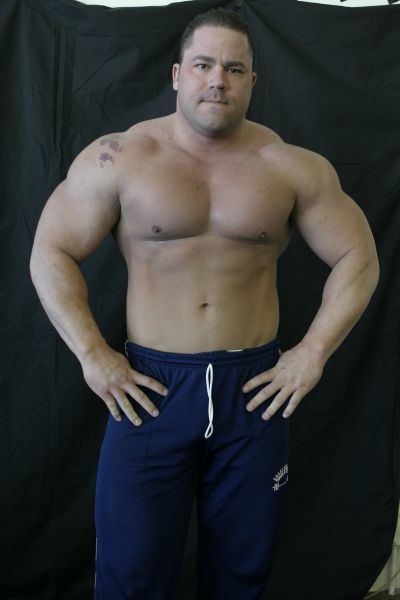
The Tight Tan Slacks of Dezso Ban: J.M. Blakley Interview (1997) - Mike  LambertMHP on Twitter: "MHP #BenchPress specialist Joe Mazza still holds the  ALL-TIME RECORD bench press with a 705 lb. lift at 165 lbs.!  https://t.co/KpR2TKumVR"Ryan Kennelly - Alchetron, The Free Social Encyclopedia
Traps seem a little smaller on the benchers vs the pressers, so maybe something to say there, but still big and strong physiques

The big element that needs to come into play here now is having a goal that is a SIGNIFICANT reach with a deadline that seems too short.  In the 2 examples I provided at the start, I was talking about strongman competitions which, in truth, is the reason I compete in the first place: having that sort of incentive gets me much bigger and stronger vs when left to my own devices.  But given the current global situation, I get that competitions of such manner are sparse.  That acknowledged, two of my other best instances of weight gain were running 5/3/1 Building the Monolith and Jon Andersen’s Deep Water program, both of which have the press as a significant portion of their programming and both of which require the user to achieve a certain specific goal in a specific time that will be a reach UNLESS one really eats well enough to put on the necessary amount of muscle.  In all 4 instances, the takeaway is the same: chasing the press means gaining QUALITY weight.

So now we know the secret: big press goals in short timeframes.  When I signed up for the competition with a 275lb keg, the heaviest keg I had ever pressed was 200lbs, and I had 6 months to remedy that (man they announce competitions far out these days).  I remember seeing “275” on the entry form and knowing that THIS was the competition I needed to sign up for.  I remember thinking to myself just how big and wide my back and shoulders would have to grow to be able to press that keg, especially since I was going to strict press it instead of push press it.  I went out and got a Barto’s Power Keg so I could easily practice with progressively heavier kegs, and in 3 months’ time had managed to set a lifetime PR by strict pressing a 250lb keg


By that point, the competition weight had been reduced to 250lbs, which honestly upset me significantly and just about had me withdraw from the competition.  I was actually pretty happy when it got postponed due to COVID, because I lost the drive to train for it, but I kept pushing forward in my pressing riding the momentum I had established and set a huge lifetime PR strict pressing an axle for 5x241 and 1x266 with a VERY near miss of 276.


Up until this point, 240lbs was a number I had been stuck at since 2013, never able to strict press more than that for a single.  I had completely blown it out of the water, and as I cut down bodyfat my upper body musculature had significantly grown.


Most of you have seen my face already, but still, the internet can be weird.  And that is a small bit of log bite on my abs, because I'm STILL pressing


Needing to add 75lbs in 6 months got me to accomplish something awesome.  Put yourself under the same kind of pressure.

Saturday, July 11, 2020

ON LIMITATIONS


I know for sure I’ve written on this topic before, but at almost 8 years deep and writing an entry each week, I’m bound to repeat myself a few dozen times.  Recent events have forced most of the world into something of a “constrained” environment, where limitations are being harshly imposed, either by self or external forces.  People can’t go do the gyms they want to go to, use the equipment they want to use, eat the same foods they want to eat, etc etc.  What is frustrating is how much people lament this situation insofar as it relates to their ability to accomplish their goals.  Don’t get me wrong: the situation sucks at its most basic level, but as far as training and nutrition goes, limitations are a POSITIVE, not a negative.  Through limitations, we now have MORE freedom.

WAR IS PEACE. FREEDOM IS SLAVERY. IGNORANCE IS STRENGTH. : t:1984
Relax: it's not that kind of blog

Why is that?  Because once limitations are imposed, we are no longer bound by the burden of “optimal”.  When all is well in the world and we have unlimited freedom, many experience significant existential angst due to a (self-imposed) drive to make full use of this freedom to only accomplish the absolute most best and optimal plan of action to achieve our goals.  It’d be a squandering of one’s freedom if they were to choose poorly, no?  Well hell, I already disagree with that, but supposing I didn’t, NOW that this freedom has been removed, we no LONGER need to be optimal, which means that the removal of one freedom opens up near UNLIMITED freedom to do anything we want to pursue our goals now.  With limits, we are FINALLY free.

All one need do is allow themselves to employ some lateral thinking and pursue things that AREN’T optimal.  I’m going to actually provide some actionable examples here, in the hopes that it gets some brains moving.  So your gym is closed down and all you have are some powerblocks: how can you possibly get in a good workout?  Now is the time to use all those bodybuilding tricks you thought either didn’t work or were too advanced for you.  You’re just too damn strong to get in a good chest workout with a set of 50lb powerblocks? Do some pre-exhaust work first.  Burnout with some light sets, or train your isolation exercises FIRST, or do a bunch of push ups before you start benching, or if you have an adjustable bench, set the incline as high as possible and work you way down to flat benching while keeping the dumbbell weight the same, or do some 21s.  And that’s to say NOTHING of if you had some resistance bands on hand, because now you have like a jillion different ways to tweak everything I just said.  Burnout with the DBs AND the band (hold an end in each hand and have the band go around your back), then drop the band and burnout with the DBs, then drop the DBs and burnout with the band.  If you have one of those super cool slingshots (or whatever name used by other companies), you could even work THAT in after you’ve burned out to just keep milking reps out. 

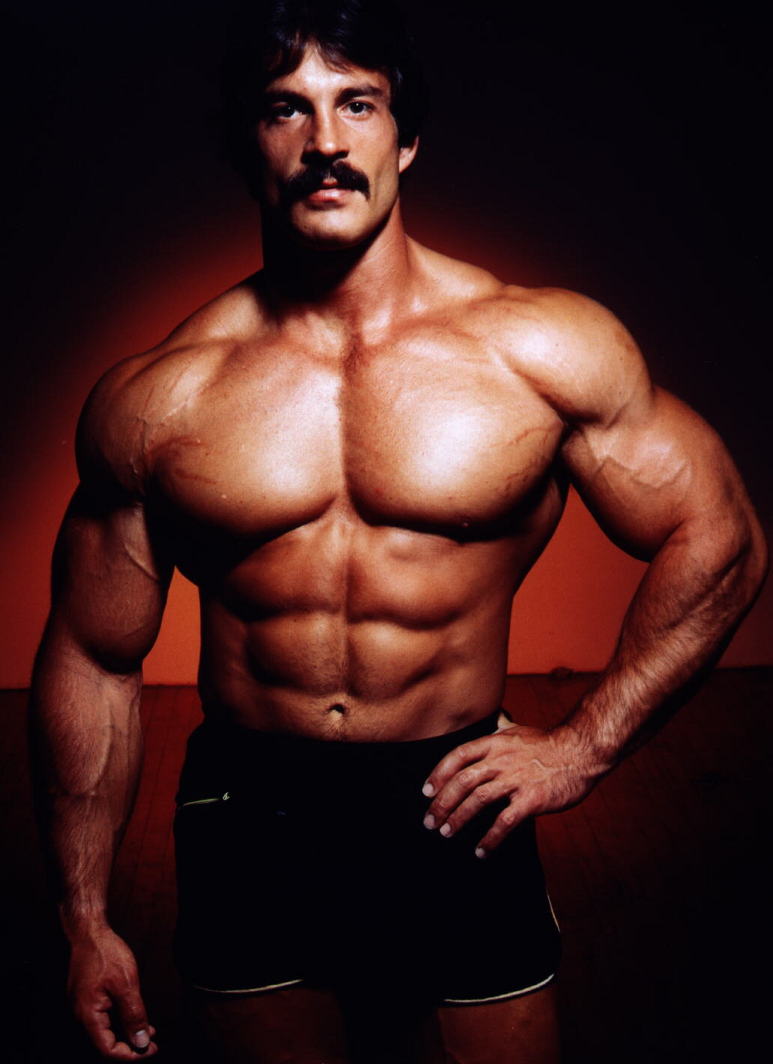
Mike Mentzer | Age • Height • Weight • Images • Bio • Diet • Workout
Take a page out of this dude's (absolutely insane) book

Is any of that optimal?  Who cares?!  We’re limited: we work with what we got.  We find new ways to progress.  It’s a revaluation of values!  Thanks Nietzsche!  And what doesn’t kill us is going to make us stronger.  Perhaps now is the time to stop training and start working out.  Somewhere Mark Rippetoe spit out his coffee (black of course, cowboy style), but do you REALLY think you won’t get big and strong as hell if you spend a few months just absolutely slaughtering yourself in the weight room with any diabolical method you can come up with just to make light weight feel heavy?  This is what dudes did BEFORE we were all so goddamn smart.  You just give the body crazy stimulus and force it to grow and heal.  Challenge yourself to come up with something even crazier than the last time you trained. 

And don’t stop there: start limiting your diet too.  I recently wrote my “the nutrition post” that detailed how I eat to gain and lose weight, but have recently started manipulating ANOTHER variable in my diet: saturated fats.  Specifically, I’ve been seeing if I can reduce them to the point of near elimination WHILE still maintaining my very low carb lifestyle.  This has forced me to eliminate a lot of staple foods from my diet, and has forced me to get creative with my nutrition.  The result?  I’m the leanest I’ve ever been in my entire life, and was 185.4lbs on Monday of this week: a bodyweight I haven’t seen since college.  The one exception to that statement is that I WAS 184.4lbs the week after my ACL surgery, but during that time my wife asked me if I had stopped eating as I looked completely emaciated, whereas now it’s a stark difference.  People constantly stress and struggle about how to eat, what to eat, when to eat, etc etc, but when you start REMOVING options from the table, you can suddenly laser focus your nutrition.  Some other limits I impose on myself: whenever possible, I don’t mix fats and carbs together, and I only eat carbs pre and post training.  It doesn’t matter if those ideas are scientifically true, accurate, proven, etc: by HAVING those limitations, my nutrition is stupidly easy, and crazy effective.  What more could I want?

Hate BOSU Balls? Don't Use Manual Perturbations | Driveline Baseball
For my regular readers, it's usually this photo

We’ve gotten soft with too many choices: we lost our ability to think.  In the absence of choices, people HAD to get creative to come up with solutions to problems.  We need to get back to “working with what we got”, instead of lamenting what it is that we lost.  The mind has such unfathomable, nearly unlimited potential: it just needs to be allowed to realize that potential, and we need to allow it that freedom by giving it limits to work within.  The world may give you limits, but if you’re not so blessed to be limited, give yourself some and see what you come up with. 

Thursday, July 2, 2020

“I DO IT BECAUSE IT SUCKS”


The quote for today’s title comes by way of a fantastic podcast Will Ruth linked me to (since I’m so dark on podcasts) of Laurence Shahlaei talking to Derek Poundstone about the latter’s training and competition experience.  I’ll post the link to the video here, since it’s fantastic, and worth watching.


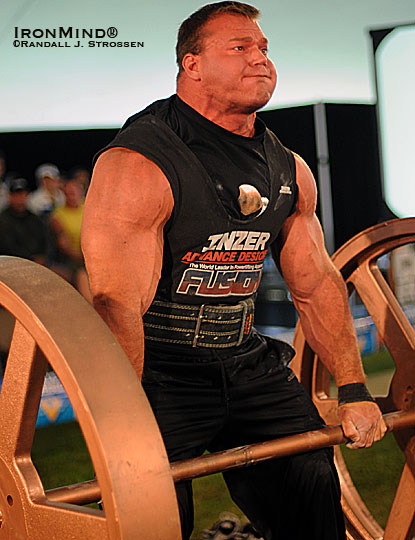
If you somehow don’t know who Derek Poundstone is, he won the Arnold twice, came in second place in the 2008 World’s Strongest Man (losing the Mariusz by a single point), won the first ever Fortissimus competition by lifting an impossibly heavy 530lb natural stone (billed as 517lbs because no one actually weighed it) that no one else in the field could manage, to include strongman legend Big Z on the last event, and is the dude I’ve posted a ton of photos of here in the blog because he’s one of the dudes that has totally captured “big and strong”

Derek Poundstone Uses Mental Toughness To Become Arguably The ...Despite Torn Quad, Derek Poundstone says: “I'm Going to Compete ...

I’d been following Derek as much as I could over the years, but he’s a pretty reserved dude and doesn’t put himself out there much.  In turn, I never knew how much of a shared philosophy we had until this video.  The part I want to focus on today is the quote “I do it because it sucks”.  This quote came about from Derek relaying a story about how, as a police officer, he works traffic detail sometimes, requiring him to stand out in the street on hot days.  During these days, he still wears full length pants and boots, despite the fact that shorts are authorized for wear.  His co-workers ask him why he wears the full length pants and boots, and his answer is “I do it because it sucks”.

Derek does that quote justice in his video, but I’m going to write on it as well, because it’s my blog and I get to do that.  “I do it because it sucks” is such a fantastic guiding mantra for anyone looking to achieve self-improvement in pretty much ANY aspect of their existence.  Bigger and stronger, sure, but you wanna get faster, smaller, become a better musician, family member, student, worker, etc etc: do things because they suck.  Why?  It’s not the doing things that suck that make us better, but the ENDURING and OVERCOMING of them that does.  And seeking out those opportunities to engage in things that suck give us multiple opportunities to practice those skills of enduring and overcoming, which, in turn, improve them and make us BETTER at enduring and overcoming, which makes us better at EVERYTHING else.

Hate BOSU Balls? Don't Use Manual Perturbations | Driveline Baseball
Probably even this

I’ve dropped 25lbs since March and am at the leanest I’ve ever been in my life right now.  I did it pretty much on a whim, since a competition I was training for was canceled and I no longer needed to be up a weight class.  It’s been the easiest fat loss phase in my life, and people get VERY upset whenever I say that fat loss is easier than muscular gain, and the sole difference is that SO many people DON’T “do it because it sucks” that they simply have no experience in dealing with even the most minor of discomforts like non-starvation levels of hunger such that all attempts at losing fat are met with disaster.  Think about HOW many diets are marketed about “never feel hungry!”, how many people are willing to use all sorts of drugs and voodoo to avoid that SLIGHT discomfort, because they’d rather irreversibly damage their endocrine system than “do it because it sucks”.  It’s practically a real life cheat code if you’ll accept something sucking and be ok with it vs trying to find all possible ways to circumvent ever feeling discomfort.

And hey, I get it: some people actually HAVE had to do things that sucked and had no choice in the matter.  However, those people most likely aren’t reading this blog right now, because odds are they either already “get it” or getting bigger and stronger isn’t a priority for them compared to surviving (because let’s face it folks: these things are a luxury).  But for those of us that have been living well and are #blessed, we are quite frankly pampered and soft BECAUSE we have so few opportunities to do things because they suck.  Which is WHY Derek wears long pants in the heat: because it’s a freely available opportunity to go do something that sucks, and, in turn, get BETTER at enduring and overcoming that feeling.  I get excited when the weatherman says it’s going to be record high temps on a certain day, because now I have a freely available opportunity to go outside and do some conditioning under awful conditions “because it sucks”.  When it’s winter and bitter, I can go train in those elements “because it sucks”.  I don’t drink water when I train, and I didn’t drink any during my half-marathon “because it sucks”.  The opportunities are abundant! 

Amazon.com: Deep Water: Overcoming the Waves of Life eBook ...
In case you're struggling to find the opportunities

All these freely available opportunities to do things because they suck, and with enough practice, when you encounter things in life that DO suck, you’ll find that they don’t suck nearly as bad as they could.  Like your body’s immune system, your psychology has some sort of “this sucks” codex that it can reference in times of duress and discomfort and run its own playbook on.  When you experience hunger from fat loss, you lean back on previous “this sucks” experiences and remember how you overcame them/what you did, and you run that play.  That’s what resiliency is, and you can either work to actively build it so that, when you need it, you have it OR you can wait until life puts you in a situation where you need it and THEN you start building it.  The former sounds much better, doesn’t it?  In fact, the former sounds like it sucks LESS than the latter. 

Thursday, June 25, 2020

OVERSIMPLIFICATION


This is going to be a wild departure from what I typically write about, because for once, instead of making things too complicated, folks are making things too simple and it’s preventing them from learning REAL lessons about training.  Specifically, individuals are observing processes and from the process attempting to discern the motive and from that arrive at a conclusion.   And already I’ve made things too complicated in my attempt to explain how people are oversimplifying, so we see what sort of headspins this is about to cause.  I’m going to talk about me for a second, because I get to do that when I write the blog, and talk about 2 specific cases I constantly experience regarding oversimplification: how I eat and why I train. 

That's enough about you. Let's talk about me. - Hey Girl Johnny ...
Proof that no one cares how much you train legs

How I eat has become especially relevant as of recently due to my release of “the” nutritional post, which, if you haven’t poured over that tome, basically describes how I gain and lose weight without counting calories.  I employ what most would consider a VERY regimented approach to nutrition, eating the same or similar meals daily, making small adjustments based on goals, eating at the same time each day, etc.  However, I’ve had multiple people since tell me that they WISH they could eat intuitively “like me”.  Huh?  Nothing about how I eat is intuitive.  If I ate intuitively, I’d be MASSIVELY fat, as I have a voracious appetite and very much enjoy decadent and calorically dense foods (any fan of the blog knows my penchant for nachos). I’d NEVER eat a vegetable if I ate intuitively, my portion sizes for meats would be completely absurd, and I’d most likely have diabetes.  But people hear “doesn’t count calories” and immediately oversimplify that to mean that it’s intuitive eating.  The notion that it could actually be a complex, well thought out and multi-faceted approach is too much to undertake.

My training receives similar oversimplification.  People hear that I engage in long, grueling, strenuous sessions, that I use no fans during the hottest days of summer in my garage and no heat in the winter, that I train outside during the hottest parts of the day, that I will lie on the floor between sets before getting back up and knocking things out again, etc etc, and I keep hearing the same thing: “you’re a masochist”.  Once again: huh?  Being a masochist would completely defeat the purpose of the training here, as I’m training to make myself BETTER, and giving in to my desires would be the opposite of getting better: that would be satisfying perversions (in the case of a masochist).  I DON’T like pain, I don’t like discomfort, I don’t like exerting myself, and that’s WHY I do it: because being miserable builds character (which is a quote from Bill Waterson via his creation Calvin).  The oversimplification results in missing the point: the training isn’t an instance of someone doing something they like, it’s someone doing something they DON’T like because exposure to that misery results in self-improvement.

Pin on Calvin and Hobbes (DA)
He's not wrong...

These oversimplifications are honestly a means of combating cognitive dissonance, because both are approaching an idea that people don’t WANT to hear: that the process of physical transformation is going to result in discomfort.  People would much rather believe that those that achieve their physical goals are simply blessed in all aspects of transformation, with genetics being the obvious cop out, but here we observe individuals assuming some sort of X-men like mutant ability contributing to the success of the trainee.  They assume someone not counting calories must just somehow, through the powers of sorcery, crave EXACTLY the amount of food needed as it corresponds to their goals of fat loss or weight gain, to include the right types of food to support that training and zero inclination to eat anything that would derail them from their plans.  That person is blessed that they don’t STRUGGLE with the sensation of unnecessary hunger: they simply eat when they are hungry and then they aren’t hungry anymore.  And the person that trains hard? Why, it’s because they are suffering from some sort of mild psychosis that makes them WANT to train hard. That person doesn’t get how HARD it is for us mere mortals that DON’T like training.

And we’re all guilty of this.  People see high level competitors doing something “off script” by using bizarre technique, weird eating habits, insane programming, etc etc, and it’s always “oh, well they can GET AWAY with that because of XYZ.”  That’s oversimplifying it dude.  Why don’t we actually take some time to examine it, deconstruct it, and see if maybe we can figure out WHY they do what they do.  But here’s the mistake trainees make: once you (maybe) figure out why, that DOESN’T mean that YOU immediately need to go try that thing out and implement it.  Put that information away for now, keep it safeguarded, be willing to come back to it when the time is right, but don’t let it take you off the current path of success you’re on.  We tell new trainees not to worry about what the pros are doing because beginners tend to immediately try to COPY said pros, but to hand-wave the reason away as simply being something pros can do because they’re pros is being disingenuous and wasting a potential learning opportunity. 

Hate BOSU Balls? Don't Use Manual Perturbations | Driveline Baseball
For instance, I've posted this photo for years and STILL have no idea what's going on

There’s no need to overcomplicate your own training.  If something is stupid and it works, it’s not stupid.  If you’re in doubt, follow someone else’s plan, so long as that person has demonstrated a way to produce results.  The 3 keys to success are effort, consistency and time.  Etc etc.  None of these things are wrong.  BUT, when observing others, allow yourself the ability to dig a little deeper, ask yourself some questions, engage your curiosity and do some thinking.  And this doesn’t mean you need to rush out and find studies that confirm your findings: go ahead and try to understand it under the frame of your own paradigm, and if THAT doesn’t fit, be willing to shift your paradigm for the sake of understanding the approach.  You may walk away with something valuable.


Friday, June 19, 2020

ALWAYS PICK THE HALF-ORC


(For the purist out there, I’m going to be shamelessly blending systems together here, but I grew up playing 3rd edition and AD&D, so that’s where this is coming from)

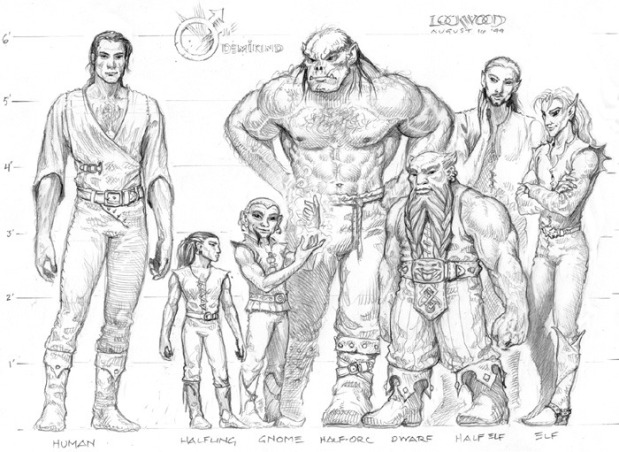
I’ve had more requests for more Dungeons and Dragons inspired posts, and luckily for those readers something came along and struck me.  I’m going to do my best to explain myself, for those of you that grew up actually having a real social life, so that you too can fully speak nerd.  In DnD, players pick two things that define their character right off the bat: their class (what the character does, such as a thief, fighter, wizard, etc) and their race (not as in color of skin, but as in human, elf, gnome, etc).  I’ve discussed class in many blog posts before (summary: the Barbarian is always the best), but today I intend to discuss race and, specifically, why one should always pick the Half-Orc.  I’ll start first with a photo of all the races, which should already make the choice obvious.

Halflings through the ages and D&D Editions | Roguish

So of course, with the name “half-orc” we have to wonder what the 2 halves are at play here.  One half is human, and the other half is orc.  What the hell is an orc?  Assuming you never watched the Lord of the Rings movies, they’re big, strong, brutish monsters and typically the enemy of all the other “civilized” races.  I won’t explain the rest of the fantasy creatures, as most people, even without nerdy interests, are most likely familiar with them.

Why does one select a race in DnD?  Because each race has their own unique advantages and drawbacks.  The Elf, for example, gets a bonus to how dexterous they are, they only need to sleep 4 hours a day, they get natural bonuses to resisting certain types of magic, they start off naturally skilled with the longsword and longbow, and they make excellent wizards, but they are frail and take a penalty to their constitution score.  The dwarf is the opposite: a hardy race with a bonus to constitution, heavy natural magical resistances, bonuses against certain monster types, they don’t move slower in even the heaviest armor, can see the in the dark, etc, but they are dour and take a penalty to charisma.  Pretty much every single race gets a bonus to one stat (the stats being strength, constitution, dexterity, wisdom, intelligence and charisma), a penalty to one, and a slew of magical resistances, bonuses to certain skills, perhaps some sort of natural magical ability, a bonus language to speak, etc.  All except the Half-orc: all the Half-orc gets is a bonus to strength.

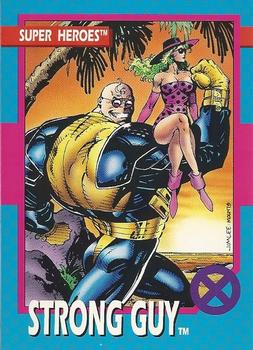
Strong Guy Gallery | Trading Card Database
But sometimes that's all you need to be a hero

That’s it.  Ok, he also can see in the dark, but that’s it.  OH, and also, he takes a penalty to intelligence AND charisma.  In addition, the only classes he can play are fighter, thief, barbarian and cleric (priest/healer): he is allowed no offensive magical ability.  So doesn’t this mean that the Half-Orc is the worst race to pick?  No: quite the opposite.  What this means is that a bonus to strength is SO ridiculous of a gift to get in this game that the ONLY way to possibly balance it out is to penalize the player in TWO different stats (whereas one typically understands balance to be 1 for 1), give them NO additional bonuses to magical resistance, skills, talents, etc, and forbid them from ever learning any sort of magic. 

Stop and marinade on that for a second there: in a game where MAGIC is real, the creators of the game admit that being physically stronger is so much more significant an advantage than having magical ability that the only way to balance it was to give the magic casters a whole slew of other bonuses (to include one of them only needing to sleep for 4 hours) while double penalizing the guy with the strength bonus.  In fact, the Half-Orc’s advantages are so immense that he was REMOVED from several editions of Dungeons and Dragons (specifically the Advanced Dungeons and Dragons variant) and only begrudgingly brought back in 3rd edition.  You even see this reflected in the video game variant, where he’s absent from the first Baldur’s Gate but present in the second.  And if you play the revised first edition of the game where he IS present, you see why he’s removed: you can TERRORIZE the game at early levels with his advantages in strength.

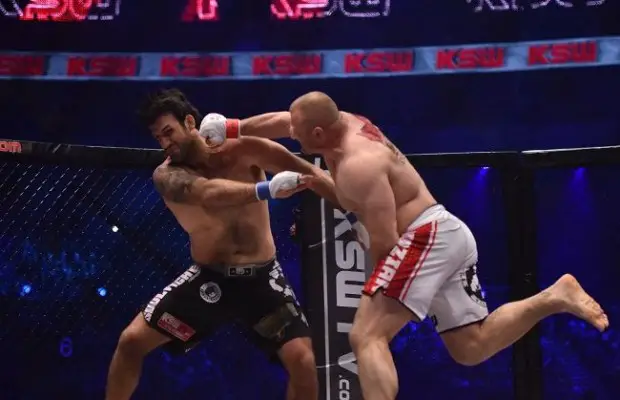
On This Day: Peter McNeeley took the money and ran... at Mike ...
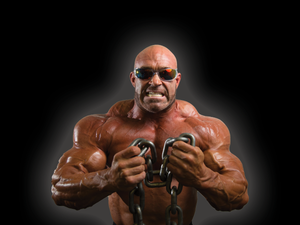
This is pretty much how every fight goes down in that game if you're a Half-Orc

This is because strength is its OWN magic.  One can accomplish phenomenal feats with an abundance of raw physical strength that can only possibly be matched through mythical arcane ability through pacts with diabolic creatures, demons in one’s bloodline or decades of studying musty tomes and growing long white beards.  And there’s no limited spell slots to deal with, no need to rest to restore spells, no eye of newt or elaborate rituals to contend with: the magic is always there, ready to go.  It is honestly, blatantly, totally and completely unfair to have a bonus to strength.

And if this holds true in a world with magic, just imagine what this means in our far more mundane world.  You make yourself a different species when you pursue and obtain raw physical strength.  You grant yourself advantages that are going to appear magical to those that are without them.  You’ll possess the ability to achieve ridiculous accomplishments through sheer strength alone, and your magic will always be there, ready to go, limited only by your energy and any injuries you may have accumulated along the way.  And Hell: even WHILE fatigued and injured, you will still possess more “magic” than many who are lacking in said physical strength.  This is why we pursue getting bigger and stronger: it’s the closest to magic we will ever come in our mundane life.

Hate BOSU Balls? Don't Use Manual Perturbations | Driveline Baseball
Although I'll admit I have NO idea how he's doing this

When picking your race: always pick the half-orc.  Unless you can pick the full orc.  Or the ogre.  And be a barbarian.