Friday, December 14, 2018

DEEP WATER INTERMEDIATE* PROGRAM REVIEW


In continuing with my adventures into Jon Andersen’s Deep Water training, I took on the intermediate program from his book, with a few changes.  This was challenging like the beginner program, but in a different manner, and the results were still very awesome.

BRIEF PROGRAM OVERVIEW

Related image
You basically walk around like this for 3 out of the 6 weeks

You can buy the ebook this program is in for $10 on amazon, or get it for free off Jon Andersen’s Instagram account, so I’m not going to spell out the whole thing here.  For a recap though, it’s 4 days a week of lifting.  3 of those days feature a 100 rep workout (a squat or deadlift, a powerclean and a press or push press) with some other moves, and 1 day is a bench workout.  There is a 5th day for conditioning.  In weeks 1-2, you get the 100 reps done 10x10, week’s 3-4, it’s 100 reps in 9 sets, weeks 5-6, 100 reps in 8 sets.


WHAT MAKES IT DIFFERENT

Related image
Same but different

The beginner program was about staying at 10x10 for the big days and focusing on reducing rest times from 4 minutes between sets to 2 minutes between sets.  This, as you can imagine, sucks.  The intermediate program was about hitting the same total number of reps (100) but using 10x10 the first time, 9 sets the second time, and 8 sets the third time.  As you can also imagine, this ALSO sucks, but differently.  Rest times stay at 4 minutes per set the first 2 times, and you are granted as much rest as needed to get through the 8 sets on the final stretch, just so long as you get it.

In addition, there is 1 extra 100 rep day in here compared to the Beginner program. The beginner program had a “back day” that was more bodybuilder-esque, whereas this one uses a back day based around 100 reps of power cleans.  This means you spend 3 days a week working with 100 reps (A squat or deadlift day, a clean day, and a press or push press day) and 1 day doing a bodybuilder style chest workout.

Other factors to consider are that the lunges have been removed from the lower body days and replaced with box jumps on the deadlift heavy day and hyperextensions on the squat heavy day.

WHAT I DID DIFFERENTLY

Image result for I gotta be me
Because I'm an individual, just like everyone else

Whereas with the Beginner program I tried to stick with the source material as closely as possible, with this one I made a few more deviations.  In part, this is because I couldn’t quite understand some of the decisions made with the program.  In the book, the trainee is supposed to push press 5 out of the 6 pressing days, with a strict press workout in the final week.  I preferred to stick with the beginner structure of alternating push press and press days per week.  In addition, between weeks 3-6, the squat and deadlift days quit alternating, and you end up doing 2 squat workouts back to back on consecutive weeks with the deadlift workouts book ending it. I honestly thought these were just transcription errors, because it wasn’t consistent with how the other training programs were built, so I stuck with alternating each week.

However, the biggest changed I made was in weights used.  Jon prescribed 70% of your 10rm for weeks 1-2, and then 80% for weeks 3-6.  Having just come off the beginner program, 70% with 4 minutes rest for weeks 1-2 woulda been a massive step back.  However, 80% for the next 4 weeks ALSO appeared insurmountable.  So I compromised and stuck with a hard 75% throughout the program.  It was challenging and absolutely awful, and I can only imagine what sort of animal could’ve made the jump to 80%.  This is why I put the asterisk by the title, as it technically was not the intermediate program, and in my own training log I called it the “intermediate bridge”, closing the gap between the two.

Other small changes are that I replaced the hyperextensions with reverse hypers, I did all the ab work separate from the main exercise (lift in the morning, abs in the evening), and my lightweight technique work for the lowerbody days was done AFTER the heavy workout, rather than before.  I added 100 band pull aparts on my overhead pressing days.  For the conditioning work, I stuck with using the prowler.  These were just personal preferences.


NUTRITION

Image result for borderlands psycho
This was pretty much me for 6 weeks

I discussed nutrition in my previous write-up, and nothing much changed here.   Still went with the “no carbs, all proteins and fats” approach prescribed by Jon.  Only real interesting game change here is that I implemented a legit cheat meal the evening before the last squat workout wherein I had 5 slices of stuff crust pizza.  I did this because thanksgiving fell during this training cycle and I enjoyed a good meal there that wasn’t quite cheat meal status, but still significant, and I observed my next training day being very successful, so I decided to implement this as a nutritional trump card.  I think it’s worth undertaking if you run the program, but only for the squat workout.  I wouldn’t make it a regular occurrence.  And, once again, I ate unrestricted as far as portion sizes went.  It was basically impossible to overeat on the program.


RESULTS

Image result for jason voorhees coming out of water
Deep Water has a proven track record of making you unstoppable

I started the program at 202.2lbs bodyweight, and my heaviest weight reached was 205.6.  This is a much smaller weight gain compared to the 10lbs I put on running the beginner program, but it’s also the heaviest I’ve been in about a decade, and I’m much leaner than I typically am at this weight (and also means I’ve put on 13lbs in 12 weeks).  My abs are blurry, but the telltale sign for me of fat gain is love handles, and usually by 202lbs they start spilling over my jeans, but right now I still have straight lines on my sides.  Lower back fat is accumulating, so the handles will be here soon if I keep pushing the weight up, but still in a better place than usual, and I’m still fitting a size 31” waist jeans.  Also worth keeping in mind that I’ve had zero dietary restriction as far as portion sizes go.  For 12 weeks now, I’ve been able to eat as much as I want, whenever I want, with minimal concern of fat gain.  If you like eating, that’s awesome.


As far as lifts go, the program carried me all the way through.  I went from squatting 290lbs 10x10 to finishing with 290 for 1x16 and 7x12.  Deads went 365 10x10 to 100 in 8 sets.  Similar results for cleans, presses and push presses.  I started benching 3x10 at 266lbs and finished 2x10 and 1x7 at 286lbs, going from 4 minutes rest between sets to 2 minutes rest between sets. 


What’s of more particular interest is that this was my first time seriously power cleaning since…ever.  And though I’m still awful at it, 100 reps a week, performed under a significant amount of fatigue, really forced me to get good at them.  I have a much better understanding/appreciation of triple extension than I did before, and this in turn showed up in the push presses.  I had the best push press workout of my life the very training session for them, going 4x13 and 4x12, because I was so exhausted I couldn’t rely on strength to move the weight so I suddenly discovered every single trick I could to get to lockout.  This is especially so because the push presses are the workouts AFTER 100 reps of squats, so my legs would always be shot and I’d have zero hope of using them, instead having to rely on my hips and ankles to get things moving.


But honestly, all this pales in comparison to the psychological growth of the program.  I like to think of myself as pretty tough, and this program honestly broke me.  Specifically, the squats.  I never much cared for them in the first place, and after blowing out my ACL they’ve REALLY become something I can’t stand.  After doing the very first 10x10 workout, the sheer thought of having to get it done in 1 fewer set in 2 weeks filled me with dread.  I’d honestly get upset when the next workout in the program rolled around, because it meant I was now 1 workout closer to the NEXT squat workout.  I’d catch myself thinking about it and feel my heart racing.  I did the second squat workout in the program and just about quit on the first set of 12, because I could not get my heart to stop beating and I was sweating way too much for just 1 set.  I had anxiety and fear and a whole bunch of emotions I was genuinely not accustomed to for training. 


However, after THAT workout was done, a switch flipped in my head.  Don’t get me wrong: I still racked the bar on the 100th rep (which I failed on the first try, had to strip the bar, re-rack the weights, and then hit the final rep) and started a countdown in my head for 2 weeks, but the fear was gone.  I knew it was going to suck and I was going to hate it, but my mind was at peace with that.  To the point that, the day before the final squat workout, I was hurting.  I ate something bad, and was passing blood in my stool through 10 trips to the bathroom.  I was dehydrated and my guts were cramping, but once the workout started, I knew I was going to finish it.  I hated every single rep and set, but I knew it was getting me closer to being done, and that was enough to get me through one of the hardest workouts of my life.  Jon talks about “portals” in the program, and I’m pretty sure this was me diving through one.  I realize how dramatic that all sounds, and it’s cringe inducing to have to write it out, but it’s the honest truth.

LESSONS LEARNED, TAKEAWAYS AND CLOSING THOUGHTS

Image result for I am so stupid
For me, it's that reason more than just "sometimes"

-Just like the beginner program, expect to limp for 6 days after the squat workout.  Also expect to field a lot of questions of “are you alright?”

-On the above, I know people are going to get chapped that you only squat heavy once every 2 weeks (same with deadlifts) and they’re going to get in their own heads about frequency, but here are 2 things to consider.  1: as someone that had knee surgery, this is the best my knees have felt in a LONG time.  Yeah, the day that I do the squat workout my knee flares up pretty good, but after that I feel awesome and very painfree.  Been a long time since I felt that.  Meanwhile, I’m definitely still getting stronger while employing the frequency of the program, and this is easily measured by the fact that I’m able to progress per the schedule.  Getting 100 reps done in 10 sets, then 9, then 8 is absolute progress.  This leads to the second point in that Jon talks about being in a constant state of recovery in order to ensure you are growing as much as possible, and I believe the frequency achieves this effect.  People observe that they are always sore when they train a bodypart less frequently, and with the frequency of this program, your legs get sore as hell after squats and your back tends to get beat up with deads, and it’s because they never get a chance to really adapt to the training style.  Sure sure “soreness doesn’t mean anything”, but maybe it DOES mean that we threw some stimulus at the body that it needs to recover from.  I think there is a method to the madness.

-I think I made the right call on the program changes here.  You can make a sound argument that push press is more “full body” than strict press, and better fits with the Deep Water paradigm, but with a goal of maintaining strict pressing strength, alternating seemed right.

-I honestly wish I pushed the calories a little harder.  I was getting nutritionally lazy as time went on.

-You have to remember that this program is more a challenge than anything else.  I’ve seen people get chapped about doing 100 power cleans in a workout or 5x10 box jumps and how that won’t train power well, but it’s honestly more about just gutting it out and getting it done.

-This program remains one of the most effective programs I’ve ever used for increasing my bench press, and that is while still benching only once a week.

-I originally planned to do 75% of my 10rm for this program and then re-run it with 80% to do the “true” intermediate program, but in all honesty this put me through the wringer so bad that it’s just not on my radar.  Instead, I’m going to give the advanced program a shot for 6 weeks, and from there I’m thinking of just doing it all over again with the beginner program set to higher percentages.


Sunday, December 9, 2018

BLUNT FORCE INSTRUMENT


People seem fond to repeat the phrase “when your only tool is a hammer, every problem looks like a nail”, but they seem to lack appreciation for the fact that you can solve a LOT of problems with a hammer.  A hammer is inelegant and unprecise, but as a blunt force instrument it is fantastic, and many MANY issues can be resolved through its implementation.  Oh sure, they won’t be solved in the best, more optimal way possible, but they’ll be solved alright.  In this, we recognize the real value in a blunt force instrument as a means of diagnosis.  If applied to every problem as though it’s a nail, we can discover, in the aftermath, what problems really DID require something elegant versus which ones needed to be hit just a LITTLE harder than the others.   So what are the blunt force instruments in your life?

Image result for hulk vs hulkbuster
Billions of dollars in the latest of scientific technology cannot overcome being big, green and angry 

We apply the blunt force instrument of intensity in our training.  Once again, for my lifting nerds in the audience, I utilize “intensity” in the bro-sense to mean “working hard” and not in the glasses pushed up high on the nose sense of “percentage of 1rm utilized”.  Intensity is a true blunt force instrument because, when in doubt, we can just throw that at our training and see what it does.  AND, like most blunt force instruments, it’s honestly rather amazing how many problems intensity can solve.  If your only tool is intensity, every problem looks like a lack of intensity, but really, think about how true that statement is?  Think about how many times you observe a trainee “stalling” in their training, and it’s abundantly clear that it all stems from a lack of intensity in their training.  They simply need to try harder, work harder, eat harder, etc etc.  They need to employ a blunt force instrument into their training.

And think once again of the VALUE of this blunt force instrument as it relates to a diagnostic tool.  So many trainees attempt to address stalls via programming sorcery and recover manipulation.  They’ll add or remove sets, play with rep tempos, change the split around, eat more, sleep more, etc etc, BUT, in the absence of necessary degrees of intensity, it’s honestly impossible to determine the effectiveness of these methods.  Perhaps they’re simply STILL failing because of the lack of a blunt force instrument to implement them.  BUT, if you simply up the intensity with your current approach, you can measure the effectiveness almost immediately and determine if this is the right course of action or if a more elegant solution is in order.

Image result for squatting on a bosu ball
Maybe we shoulda just tried harder first

But blunt force instruments exist outside of our own training as well, instead occupying the world of leaders and mentors.  My favorite blunt force instrument is Steve Pulcinella.  Steve is my spirit animal, he is my Id, his words and thoughts are what go through my mind when I am forced in other situations to remain polite.  If you’ve never had a chance to observe Steve interact with people on or offline, it’s ultimately worthwhile, because Steve’s personality personifies a blunt force instrument.  Why is that?  Because Steve got to the highest echelons in his sport by utilizing a great deal of effort and not a whole lot of magic, and he’s not afraid to bring that up with any chance he gets.

My favorite response I’ve ever seen him offer when someone mentioned the dire importance of some new wave in training (I forget if it was foam rolling or undulating periodization or whatever was the topic du jour) was “Funny: I didn’t need that when I competed in the World’s Strongest Man.”  And how does one respond to that?  How do you withstand the blunt force instrument crashing into your fragile logic and knowledge?  It shatters your paradigm and causes enough cognitive dissonance that you have to rebuild from scratch, and the only parts that remain were those hardy enough to withstand the force of such a harsh blunt force.

Image result for steve pulcinella world's strongest man
Steve is also literally a blunt force instrument

And, once again in turn, we can apply these blunt force instruments among the pool of eligible mentors.  Much like how Steve can fall back on what it took to get to WSM, you too can sort through the charlatans from the real deal by implementing a blunt force instrument of criticism.  “How do I know who to listen to?  Everyone sounds so credible!”  By employing the blunt force instrument of saying “Oh, this person is a coach?  Great: who did they coach?”  It’s not about where they studied, what they studied, how smart they are, how many books they’ve written, how popular they are: show me the results.  Your blunt force instrument of criticism smashes everything else and only the outcome remains.

Identify the blunt force instruments available to you.  Identify what tools you have that, when applied, allow every problem to look like a nail.  Smash through the delicate, precise, elegant parts of the equation so that only the hardy and strong aspects remain, and rebuild with what is left behind.  That which can survive the assault is genuinely worthwhile.

Sunday, December 2, 2018

YES, ONCE AGAIN, EVEN MORE BULLET POINTS


-Ever notice how fat people seem to be overly concerned with recovery and skinny people seem to be overly concerned about overtraining?  Kinda a funhouse mirror moment.  Recover too much and you get fat.  Don’t train hard enough and you don’t gain muscle. 

-What did you do to earn that cheat meal?

-On the above, why is it that the people that want me to have a “healthy relationship” with food tend to be in poor shape?  Seems like the people that are winning aren’t having a great relationship with food.  If anything, it’s an abusive one.

-I need more gym music, which really means I need Nine Inch Nails to release a new album.

-You didn’t lose muscle on a cut; you had less muscle to start with than you thought you did.


Related image
"It's only because I messed up my tan!"

-If you ever find yourself starting a statement with “People say” or “I’ve read somewhere” and can’t actually remember WHICH people say this or WHERE you read it, just stop.  Nothing you’re about to say is helpful, and you’re just deluding yourself.  If the information was good enough that it was worth remembering, so was the source.

-All of the people I look up to are pessimistic, damaged or psychotic.  They’re also really great at what they do.  I wonder what it says about me and about life.

-Now that Eddie Hall has announced he’s retired from ALL strongman competition, where will the fans go?

-We’re all stupid in different ways.  My generation was stupid by following workouts in muscle mags.  The current generation is stupid by following social media advice and the 5x5 craze.  There will ALWAYS be someone out there willing the prey on the stupid and gullible, and there will always be a wizened group of veterans looking at it, laughing, and remembering.

-Damn curious how so many trainees know the benefit of caffeine and taurine as it relates to training but just about none of them can tell you what vitamin A or K do.

-I’m trying to get LASIK, and I’m excited, because maybe after it happens I can finally judge bodyfat% and who is and is not using steroids using just my eyes, like so many other people somehow manage online.

-I took Stan Lee’s passing about as hard as Paul Kelso’s.  Both amazing storytellers with a huge influence on my training, and I’m sure I’m not alone.

Image result for Juggernaut vs hulk
You are bound to have liked at least ONE of the people in this photo...and it was the Juggernaut


-Hook grip is a meme.  That’s right, I said it.

-Watched the Ronnie Coleman documentary on Netflix.  It’s honestly not bad.  Reminded me how much I miss that era of lifting.  However, also found myself tuning out when it came to the actual bodybuilding competition aspect.  I still just plain don’t get that.  I have nothing but respect for the guys that can actually commit to a show and pull through, but I’ll never understand the motivation.

-I can’t tell if the internet is further radicalizing crazy people or if they were already there and I’m just now finding out about it, but either way I keep seeing the same photo of some narrow shouldered bodybuilder and hearing about clavicle lengthening surgery and it’s making me weep for the future.

-What is the point behind questions about “how much damage did I do” or “how long will it take to recover from X?”  What will you do with this information?  Will it at all change how you move forward? 

-The amount of Nazis being found out in powerlifting is becoming alarming.  I genuinely don’t know what to do with that information, but it seems noteworthy in some regard.

-“Recovery is more important than training?” Oh really?  Cool, let’s try an experiment.  You do zero training and spend all your time recovering.  I’ll go train and have awful recovery.  Guess which one of us is going to turn out better than the other?

Image result for navy seal hell weekImage result for Teenager sleeping in
Who do you think is going to get stronger between the two of these photos?

-Can we please stop saying “side lateral raises”?  If it’s lateral, I know it’s a side raise.  It’s right up there with saying “katana sword” or “bo staff” or “boot shoe”.  “But what about rear lateral raises?”  Yeah, cool, keep that, just like how we say “front squat” because we know that, when we just say “squat”, it means the bar is on our back.  Also, swear to god, if I see “lat raise” again, I don’t know what I’m going to do, because it’s that sort of laziness that makes people THEN say things like “lateral pulldowns”

-“Jim Wendler is a VERY confusing author”-the words of someone who never tried to read anything Louie Simmons ever wrote.

-“How do I meal prep?”  Really?  Make dinner, but when you make it, make it for 1 more person than you need to feed.  Congrats: you just made lunch for tomorrow. 

-In a world where you can get a direct answer from elite coaches/athletes and follow their programs (Tuchscherer, Simmons, Tate, CWS, etc etc) WHY are people still in such a rush to follow Instagram stars with fake names?  When I started training, at most we had some articles on the web and MAYBE the author still had a forum or a Q&A, and WE had it good, because the generation before me relied on magazine articles, in person advice and MAYBE a phonecall if they were feeling brave, and now that the chance to get great advice is rapidly available, no one wants to get it.

-Now that belt squat machines are becoming more widely available, I can’t wait to see what sort of bizarre mutations people come up with regrading how to train with them.

-I bought a bottle of apple cider vinegar.  It now hangs out in my supplement drawer, unopened.  I’m wondering if this may just be a reminder for me.

-I’m going to scalp the next person who asks if creatine causes hair loss.  I can’t tell if that is ironic or not.

Image result for alanis morissette ironic
"No Alanis: it's unfortunate"

-While talking movies, I watched “Transformer”, which was the documentary on Kroc’s transition from male to female.  Please keep the comments tame on this one, but in general, if you are/were a Kroc fan, it’s worth watching.  It honestly features enough lifting to satisfy the meathead audience, but I was also just curious about what had been happening, and it created a good summary of things.

-That said, I STILL can’t figure out Kroc rows.  But the shirt is still cool.


Sunday, November 25, 2018

BUT BEGINNERS SHOULDN’T


One of the constant criticisms I hear in regards to my writing is that everything I write is all well and good for an experienced trainee “but beginners shouldn’t” X.  It’s all well and good for an experienced trainee to focus on technique rather than form, for an experienced trainee to train in a weakened state, for an experienced trainee to hit stupid dropsets and stripsets, for an experienced trainee to keep pushing volume until they break, etc etc, but a beginner shouldn’t.  There are SO many guardian angels for beginners out there that it’s a goddamn miracle how many weak beginners are out there spinning their wheels for years.  Where are the results for the hard work of all these valiant guardians?  Why, with so many helpful, watchful eyes out there dictating what is good and not good for beginners, do we still see SO many beginners struggling with just the basics?  It’s because your mother henning has made them soft, weak, and fearful.  You’ve spent so much time preoccupied on what beginners SHOULDN’T do that you’ve completely forgotten exactly what it is that they SHOULD do.

Image result for jeff goldblum jurassic park
It sounds better when he says it

First, let’s start with the obvious: I don’t write for beginners.  I don’t write for anyone but myself.  I’ve said many times that this blog is for me; it forces me to write about 1000 words a week and get rambling thoughts out of my head and onto paper, much like what is happening here.  The cautionary tale for beginners is unwarranted, especially when considering that my sphere of influence is GREATLY diminished, as I have minimal social media profile nor do I engage in self-promotion.  All of THAT aside, the warnings are STILL silly, because they seem to operate from people who must have forgotten what it was like to be a beginner.

I haven’t forgotten.  It’s been 19 years and I still remember.  I still remember saving up cash to buy a standard bench and dumbbell set from Play it Again sports at age 14, putting it in my backyard with a tarp over it to protect it from the elements, and doing bench and dumbbell curls 5-7 days a week on it.  I still remember that bench giving me the confidence to train in my high school weight room, where me and my buddies would take turns trying to max out on every machine and barbell lift possible.  I still remember slinging iron with wild abandon, not having any idea that there was a “right” pair of shoes to wear, how to brace, optimal training frequency, protein timing, MRV, low testosterone markers, fatigue management, etc etc.  And I STILL remember that, after a few years of that, people started considering me big and strong.

Image result for obesity chart 
You gotta keep in mind that, as you keep training, the standards keep getting worse

I STILL remember getting into my college weight room, which was a dank little poorly outfitted afterthought that was STILL twice the size of my high school weight room, my eyes lighting up, and deciding I was going to get “serious” with my training and start a bodypart split.  Yes, the same kinds of splits that the internet SWEARS “don’t work”.  I remember gaining 20lbs in college while STILL having no idea what I was doing: just training hard, training often, and eating very well.  How did you forget?

How did you forget that it was effort, intensity and consistency that got you to where you are?  How did you forget that people had been getting big and strong for decades without ANY real knowledge of training?  How did you forget that what is now called “bro-science” was the stuff that WORKED?  And now, here you are, saying that ADVANCED trainees can get away with training hard, often and for a long time, but that BEGINNERS need to do something super duper special?  That beginners are just fragile little snowflakes that will rupture the instant they do anything outside of the party approved method for training?


Image result for starting strength meme
Oh hey, a new one

“But if they fail, they’ll get discouraged and quit!”  Let them!  Folks, anyone who is going to quit the instant they meet resistance is simply not long for this activity.  It does you no good to coddle, protect and “save” them from themselves.  If the ONLY way they’ll stay on the path is by encountering nothing but success along the way, not only are they simply not going to last, but they’re also going to miss out on the ACTUAL value of training: learning how to overcome adversity. And I say this understanding how sheltered it is to say such a thing, but that’s the point.  For many of you, this is going to be the ONLY adversity you really have to overcome, and that is especially true for those beginners that are ready to quit as soon as they encounter failure.  If your first instinct is to quit, follow that instinct.  Find another hobby.  It’s not for everyone, and that’s fine.  I quit guitar for the same reason.  But if you have some tenacity and wherewithal to hit a wall and decide to figure out how you’re going to get past it, you might just make it.

There are no restrictions or limitations on what a beginner should or shouldn’t do.  They should absolutely copy the routines that are too high in volume, they should train like people far more accomplished than themselves, they should push their limits too far, burnout, fail hard, and crash.  The ones that survive are going to be pretty awesome.  “But that’s survivor bias!”  I certainly hope so.  Not everyone is going to succeed, and it’d be MUCH better for you to figure that out at the start of your journey rather than be 5 years deep because you followed every possible path that WOULDN’T lead to failure only to discover that the absence of failure isn’t success: it’s simply ambivalence.  But hey, maybe, just maybe, there are a LOT more survivors than failures among the population, and all we have to do is LET them go out on their own to figure it out.  Maybe just hitting the weight room hard for a few years will get you some results, the same way it gets results for thousands of high school kids every single year.  Maybe we’ll be surprised from the results, and maybe we’ll start saying that the only thing beginners shouldn’t do is go online and listen to every guru that comes along with minimal accomplishments and a lot of youtube videos.

Image result for Jason Blaha
I genuinely have no idea who this is, but he seems to pop up a lot on the topic of lifting

All I can do is hope.

Sunday, November 18, 2018

ON WEIRDNESS: A STEP SIDEWAYS IS A STEP FORWARD IF YOU CHANGE YOUR PERSPECTIVE


Recently, my post “What Have You Done To The Farmer’s Walk” was posted on a thread on the fitness subreddit, wherein many posters took exception to me having written about how the average person is en route to being average, and emulating them is how you end up being average.  This was taken as elitism, denigrating average people, and hipsterism purely for the sake of counter-culturalism.  I make no apologies for what I think or write in that regard, but moreso I feel a need to elaborate further on this, as it seems worth further elaboration.  The fact of the matter is that it is simply the truth that, if you do what everyone else does, you will get the results everyone else is getting.  To expect otherwise is simply madness.  What this, in turn, speaks to is the value of being different simply for the sake of being different.  People demean this concept and talk to “special snowflakes” and all other demeaning names, but again, consider the reality of it. Doing what average people do makes you average.  Doing what average people don’t do makes you NOT average, and maybe it won’t be greater than average necessarily, but it will be DIFFERENT than average, and different from average is at least A step closer to greater than average.  You may not always be stepping forward, but sometimes a step sideways is a step forward when viewed from a different perspective.

Related image
Trust me: it's going to get worse

I’ll level with you right now and tell you I have no idea where I’m going with this and that this piece is a total stream of consciousness, but join me for the ride will you?  It’s no secret that I’m a misanthrope.  I am a major non-fan of humanity.  I have said that Thanos lacked ambition, and I apologize if I managed to spoil an old comic book storyline for you with that last bit, but you get the picture.  Of course, misanthropy tends to be, like most prejudices, based off of stereotypes that are amalgamated regarding the majority of a demographic.  And quite frankly, the majority of humans are lacking.  That’s what makes them the majority.  It is what makes them average.  In turn, emulating them is hoping to be them, and this, in turn, is hoping to be something very uninspiring.  And I assume, dear reader, that if you read a blog tangentially based around training to become bigger and stronger, you have a vested interest in becoming bigger and stronger, both compared to your current self AND compared to the average baseline of humanity.  So, once again, why do what everyone else is doing if you hope to be different from everyone else?

And that’s the word we focus on here: different, not necessarily better.  Bigger and stronger is an outlier, as is smaller and weaker.  In both instances, you find yourself in that 10% part of the bell curve on either end, which is, at least, DIFFERENT than average.  To be different than average, one must do the things that are different than average.  Quite simply, one must be “weird”.  They must be off-beat, counter cultural, different, barbaric, alien, foreign, strange, etc, because all of these things are DIFFERENT than average, which in turn promotes a possibility of being GREATER than average.  If you simply do what the average person does, you have a 100% chance of being average.  If you do something that is DIFFERENT than average, you now stand a 50/50 shot of being greater than average, with the other possibility being to be less than average.  But hell, given a 50% chance of failure vs 100% failure, what odds would you take?

Image result for squatting on a bosu ball
Although this is that 50% chance that will 100% of the time result in failure

What are the ramifications of this thought process?  It means you need to start listening, paying attention, and observing the trends around you.  And when you start hearing the same things repeated over and over, ad naseum, it’s time to start doing something OTHER than that.  This is legitimately how I achieved the best results I’ve managed.  Need to give muscles 48-72 hours to rest?  Time to start training everyday.  Need to eat carbs to grow?  Time to cut them out.  Deads have to be deadstop?  Touch and go only for years.  Need to stretch and do mobility work?  Time to cut out the warm ups.  Cardio kills gains?  Up the cardio.  Take time off for injuries?  Train 2 days post surgery.  The advice you hear the most frequently and with the greatest volume is the advice that resonates the greatest with the majority and, in turn, the advice that, if followed, will make you average.

Think of how often a superior trainee puts on a superior display and the majority rushes to rationalize it to fit within their paradigm to avoid cognitive dissonance.  “Oh, that trainee can only do those things because they are the genetic elite/on steroids/lucky/going to get injured ANY day now/fake plates/photoshop/actually a government engineered superhuman powered by the earth’s sun/Mariusz Pudzianowski (wait, I already said superhuman, crap), etc.”  Perhaps, instead, we should consider that MAYBE we observe those that are greater than average doing things DIFFERENT than the average trainee because these differences are HOW one becomes greater.  We see the “cheating” technique on lifts and say it’s something they can “get away with”, NOT considering that MAYBE it’s the thing that helped MAKE the difference.  Instead of diligently running the party program with the party technique, these individuals BECAME individuals, established themselves as different from the pack, and parlayed that difference into greatness.

Related image
*Psh* Everyone knows you have to be fat, tall and slow to be a strongman

This is NOT a call for you to go onto some poor forum and inflict yourself upon them, asking them to tailor make a program specifically to your needs.  That’s not being different: that is asking for the MAJORITY to help tailor the knowledge of the majority specifically to you in order to become a paragon OF the majority.  This is a call for you to find those things that no one else is doing and go do them, in the pursuit of getting results that are in any way DIFFERENT from the results everyone else is getting.  Maybe, sometimes, those results will be worse and you’ll have to start over.  But maybe, sometimes, they’ll be better than what everyone else is getting.  Either way, you’ll be on your way to getting different results, and that is the first step on the path to making yourself different from the norm.  If that means you end up better than the norm, that’s just swell.

Saturday, November 10, 2018

NOWHERE TO GO BUT UP


Stalling and a general lack of progress is a crippling fear among the training populace.  Trainees are constantly scouring their sources to look for the secret of continued progress, and constantly self-analyzing to determine if something they are doing could potentially be setting them up to stall, or not progress as fast as possible.  Above all else, the trainee seems to want to never encounter a situation where their training isn’t working.  But why?  Stalls are a blessing, stagnation is a gift, ineffectiveness a joy.  Why is that?  Because now you know what DOESN’T work.  When you identify that, you now have a fantastic baseline to operate off of, because your current approach is failing, and it’s time to do something different.  And that is the joy of failure: when you reach rock bottom, you have nowhere to go but up.

Related image
This show was awesome when it was good

Why is that a good thing?  Because rock bottom is the very idea of freedom.  Think about how enslaved you are to the process when it’s working.  You have the faintest of idea of how all the pieces of the process come together, and are operating off a mere hope and a prayer that you continue success.  “But I am well researched!” you say?  How much credit are you giving yourself here on your mastery of human biology and exercise science?  Do you truly have a formal education in it, or are you a mere hobbyist who has read many an abstract and consumed much media on the topic?  I dare say, if the former, you would recognize just how incredibly limited we, as a species, are in understanding the inner workings of our own biology.  We are just now scratching the surface on some basic concepts of how the body operates, and still much of it remains a mystery where, at best we have correlations and observations to guide us.  …but I digress.  The point is, when things are working, it is fear of deviation from the path of success that compels us to act and, in turn, we become stagnant.


But in the face of failure?  NOW we know what doesn’t work; what we’ve been doing.  So now what?  Now we do whatever we want!  There are no more rules to govern us, because the system has FAILED us, and thus we owe it no more loyalty.  It is anarchy of training: anything goes, there is no right or wrong, there are no morals, there are no values, all that matters is to break from the old purely for the sake of doing something, ANYTHING, different than before.  Now is the opportunity to become wild and stupid.  Now we can try that training protocol we read about that seemed way too crazy to actually work (Super Squats anyone?  Or Deep Water?  Or HIT?  Or GVT?  Or Bulgarian?  Etc etc).  Now we can do high carb, low carb, no carb, paleo, keto, IIFYM, super clean, etc.  Now we can do ANYTHING, because we have a baseline of what DOESN’T work established, and as long as we quit doing that, we are making steps toward progress.

Image result for squatting on a bosu ball
Maybe we need to give this a FEW more tries, just to be safe

And what if that next plan fails?  How fantastic: we found something ELSE that doesn’t work!  Do you know how valuable that data is?  For us to be able to continue to rule out ineffective processes?  By determining the ineffective, we determine the de facto effective.  By ruling out those things that will not work for us, we get closer and closer to finding out what is truly effective.  Once again, being at rock bottom is freedom, because we have the ability to continue experimenting, testing, and discovering.


And what are the implications of this notion?  It applies not just to training, but to competition as well.  If you compete, and you come in dead last…you have nowhere to go but up!  When you take first, or place well, you find yourself bound to the protocol of success, and the battle to remain at the top begins.  The pressure mounts, the self-reflection and doubt begins, but for those who have hit rock bottom?  They have the absolute and total freedom to try ANYTHING else.  I came in 4th in my first 2 strongman competitions and 6th in my next one, and I had been using the same protocol throughout them.  What I was doing wasn’t working…and I now had the freedom to try something, ANYTHING else, to succeed.  And in doing that, I experimented and found what works, and took second in my next and first in the competition after that, and have since always placed in competition.  Failing in competition was a benefit, because through it I discovered what DIDN’T work, which got me closer to figuring out what does.


Sometimes learning can be painful and frustrating


Failure is freedom.  This is something that needs to be embraced and understood by all trainees.  So many are crippled by the fear of failure that they end up FAILING because they refuse to fail.  Let the insanity of that sink in for a second.  Out of fear of the risk of consequences of experimenting, trainees will stick with an ineffective program simply because it’s the one they know versus trying something new and different and learning from the process.  You will have a LONG time to train.  A failure that takes you off course for 3-6 months is just going to be a blip in the grand scheme of things.  Meanwhile, the lessons you learn from it will be invaluable, and in that 3-6 months of failing, you may very well save yourself 3-6 YEARS of banging your head against the wall trying your absolute hardest to make a failing program succeed.  When you’ve hit rock bottom, you have nowhere to go but up, and honestly, that’s a pretty good direction to start heading.   

Saturday, November 3, 2018

FIRST MEET POWERLIFTER: WHAT ARE YOU WAITING FOR?


Like a bad relationship, here I am coming back to powerlifting for reasons I myself don’t completely understand, but now you get to suffer.  This is once again about a phenomenon I observe constantly both on and offline: the almost powerlifter.  The guy that has been training for YEARS, has read every book (read: watched every youtube video[read: viewed every Instagram story{read: scrolled through every tweet}]) on the subject, has favorite lifters in the sport of powerlifting, owns a 13mm belt, squat shoes, Kevlar knee sleeves, every variation of the slingshot…but has never competed in a meet before.  And when asked why, they say “I want to spend a little more time training to make sure I’m ready.”  HUH?!  What insanity is this? How could you possibly get more ready than this?  Seriously: what are you waiting for?!

Image result for Inzer leviathan ad
Seriously, if you own one of these but don't have a total, just start over

Once again, I feel the need to explain what powerlifting is in the context of other sports to understand how truly crazy this is.  In powerlifting, the “game” is the powerlifting meet.  The meet IS powerlifting.  All the time spent in the gym is simply time spent training to play the game.  Understanding that, what other sport on the planet has a following of people who dedicate themselves diligently for YEARS studying every aspect of the sport, buying all the gear, and training before they ever actually play the game?  Before the first time you ever played a pick-up game of basketball, did you train for years, practice your freethrows and strategize how to play defense, or did you and a bunch of friends just grab a ball, find a court, and figure it out as you went?  And you were awful at it.  And it was fine!  It was fine, because you were LEARNING how to play the game.  It’s the same for football, soccer, baseball, or any sport that can be played by 5 year olds.  Hell, my very first wrestling practice in high school, I was taught a double leg takedown and 6 minutes later we were wrestling.  And I sucked at it.  And it was fine!  First you play, THEN you learn.

Why is the play first part important?  Because you have to figure out if you even LIKE the sport in the first place.  Can you imagine what a letdown it would be if little Jonny first picked up a basketball at age 5, dedicated himself for the next 5 years to becoming the best player he could be, diligently practicing and sweating and drilling, only to play his first game at age 10 and discover that he didn’t really find basketball fun and he was more a baseball fan all along?  That can happen with powerlifting!  I’ve competed in 3 meets, and after the third I was done with the sport.  I just didn’t find it interesting.  I didn’t enjoy spending 10 hours to do 9 reps.  I didn’t enjoy how much focus was on form rather than just getting from A to B.  It just didn’t jive with what I thought a strength sport would be.  Thank god I figured that out at age 27 and had time to transition to strongman, where I found something I enjoyed.  Imagine if I had just kept waiting before taking the plunge into a sport I didn’t like.

Image result for hit by javelin
I also think I'm going to take a pass on the javelin

And powerlifting IS a sport that you can just jump into.  All you have to be able to do is squat and bench a 45lb barbell to compete in a meet.  I honestly have no idea if they can support deads lower than 135lbs due to plate diameter, but whatever, you get the point.  It’s not like strongman, where the loads are determined by the promoter and you can be too weak to participate.  You can find out VERY early in your training career if you even LIKE the sport of powerlifting before you dedicate years, if not decades, “preparing” for your first meet.  And meet experience is invaluable in any capacity, because there is an immense difference between lifting in a gym and lifting in a meet.  Getting THAT sorted out early will only benefit you in the long run. 

So why do people delay?  Let’s be real honest here folks: because they want to win their first meet.  The sheer idea of coming in any other place than first in a competition is so upsetting to people it can cause serious emotional trouble and turmoil.  They will wake up in the middle of the night in a coldsweat fearing coming in second place.  Well hey, here’s some good news for you; the sport of powerlifting is so fractured (at least in the states) that you have a VERY solid chance of coming in first in your first meet…as you may be the only person in your weighclass and division.  If trophy hunting is so important for you, just sign up for 181lb liftetime natural left handed Methodist division and you’ll be set.  Probably set a record too.  However, IF your ego can possibly spare to do bad at something the first time you do it, you may find out that powerlifting is your thing.

Image result for 3rst place
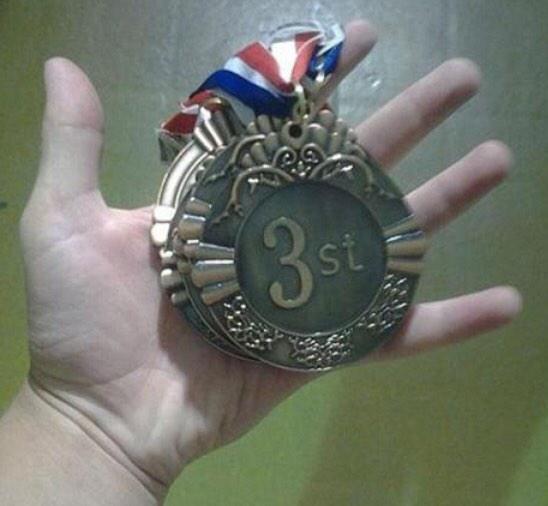
I'm serious: EVERYONE will get a medal

Or you might not!  And that’s the point!  Get that sorted out NOW so you can actually vector your training towards A goal.  The amorphous sorta powerlifter hangs around many locales and spends a good amount of time accomplishing nothing, as they truly have no real goals.  They train “like a powerlifter” and they care about their “total”, but with no meet to peak for, no records to chase, no competition to defeat, they just spin their wheels for years.  Someone with a real deal meet on the horizon start transforming their training, things start to matter more, and growth start to happen at rates not previously observed.  When something is actually on the line, you start caring more, and it’s reflected in your training.  When the only thing that’s on the line is your ego in a not for real possible future meet, you’ll end up sandbagging your training so that you never actually ARE “ready” to compete, as that is the only way to truly ensure your feelings are spared.

Go do a meet and see if you even like powerlifting.  What are you waiting for?

Image result for squatting on a bosu ball
I know my regular readers were waiting for this photo

And once you’re done with that meet and you find out powerlifting is boring, go compete in storngman.