Monday, February 10, 2020

THE BARBARIAN VS THE MONK: BRUTALITY OVER TECHNIQUE-PART I: SLAMMING YOUR WAY OUT OF THE TRIANGLE CHOKE


This title is a massively over ambitious word salad, but this is fundamentally a combination of all of my nerdy obsessions and philosophy, so let’s give it a shot.  In fact, it got so overly ambitious I ended up having to break it into a few parts. 

This request comes by way of reader “The American”, who requested I discuss my experience in combat sports as it related to my focus on strength, and I quickly replied that I was a pretty awful combat sports athlete due to my inherent lack of athleticism and coordination along with my propensity toward oafishness.  Techniques basically took me twice as long to learn, which also meant my toolbox was half as big as everyone else, so I only knew a handful of submissions and the odds of me really landing one was pretty limited.  However, the one area I DID tend to shine was strength and conditioning (ok, so that’s two areas), with the former seemingly significantly neglected by a majority of those training for the sport.  Sometimes this was a hindrance, as it meant that I was prone to trying to force submissions to work rather than rely on technique, but other times it opened up avenues that were not regularly afforded to other trainees, to include one of my favorite submission defenses of all time: slamming out of the triangle choke.

Before going on any further, for those of you unfamiliar with the triangle choke as it relates to combat sports, allow me to provide some examples of what I’m talking about

Image result for triangle choke

For you BJJ elitist out there, I'm sure everyone in these pictures is doing it wrong and only you have the one true lineage

As you can see, the move is fairly technical and relies on the mastery of the person on the bottom (in the guard position) to be able to effectively position and maneuver themselves such that they use their aggressor’s OWN arm along with the defender’s legs to choke out their opponent.  Like the majority of submissions, there’s an understanding that the only defense against a submission is BEFORE it’s locked in, as, once it’s locked in, it’s not simply a matter of time before the person being submitted either passes out or has a limb broken, at which point they need to “tap out” and admit defeat.

However, for those of you that aren’t versed in combat sports and simply read my blog as lifters, let me ask you something: doesn’t this look like the bottom of a good morning?

Image result for triangle chokeImage result for weightlifting good morning
Rest assured: someone is about to have a bad morning

Oh boy did I love slamming people once they had the triangle choke on me, because it is one of those things you can only get away with if you’re decently strong, which, in turn, makes it a pretty unpredictable “submission defense”.  And I put submission defense in quotes because anyone who actually plays the submission game will scoff at this, since it’s absolutely NOT grappling and is simply pure brutality as a means of escaping.  But slamming people out of the triangle choke wasn’t just as active submission defense: it was passive as well.  Primarily because, once you slam a dude out of a triangle choke the first time, they REALLY don’t want that to happen to them again.  Most folks tend to think they’re going to be in a “comfortable” position when they have the triangle choke locked in, and when you start aggressively slamming the everloving hell out of the back of their skull, that comfort is gone, and now you’ve removed that entire tool from their toolbox.  This is true to the point that I’d very often BAIT the triangle choke, get into someone’s guard, give my arm away as a gift, wait for the triangle to start getting applied, and then smash them until they gave it up, knowing that I’d now removed that threat from the fight and they had to now fight MY stupid game of fighting, with little technique and lots of brutality.  Because, as we often observe, one can overcome a discrepancy in technique with a massive surplus of brutality.

One of the best displays of this ever in the sport of MMA was Bob Sapp vs Antonio Rodrigo Nogueira which, if you’ve not had the delight of viewing before, I will link below.  Specifically with the Joe Rogan commentary, because Joe (rightfully) spends the majority of the fight marveling over how gigantic Bob Sapp is and how he was holding his own against one of the greatest Jiu Jitsu fighters of all time


Image result for bob sapp piledriver nogueira
Here is the most important part, if you don't want to watch the whole video

Coming into this fight, Bob had an amount of fight training time and experience that could be measured by episodes of King of the Hill, but he brought something that is very hard to prepare for in training: an absurd amount of brutality…paired with a 150lb bodyweight advantage that was ALL muscle.  When Nog went for a takedown, Bob sprawled on Nog, wrapped his arms around his body, PICKED HIM UP AND PILEDROVE HIM.  They may say that a triangle, once successfully applied, has no defense, but I’m pretty sure they meant the piledriver when they wrote that, because what the hell are you supposed to do there?  Watch the whole fight, see Bob muscle out of subs, throw Nog out of the mount, and spend his time “trapped” in Nog’s guard smashing his face into a bloody pulp with hammerfists, completely oblivious to the “danger” of being in the guard of a talented jiu jitsu fighter.  Yes, Nog DOES win (spoilers), but boy did it take a LOT of technique to finally survive and overcome that brutality.

And we saw this same sort of brutality when it came to Tank Abbott and Brock Lesnar, and in doing so, people will say the same thing: “that wasn’t brutality winning: it was strength.  The weight difference was so significant that it was insurmountable”.  Ok: let’s take an example of two guys in the same weight class: Matt Hughes vs Carlos Newton


Image result for street fighter double ko
Once again, a quick summary


There it is.  Carlos Newton was a phenomenal jiu jitsu fighter, and though Matt Hughes was a very accomplished wrestler, he wasn’t known for his submission game or technical skill.  And when Carlos had that triangle locked on, I’m sure he thought that the fight was over.  It was sunk deep and as tight as it could get, and when Matt picked him up, you can briefly see where Carlos gives it a smirk, as though it was the desperate act of a dying man…until it dawns on him just how committed Matt is toward getting this slam.  To the point that Matt employed his own body’s failing consciousness as the mechanism to slam Carlo’s skull full force into the mat, rendering him totally unconscious.  And all Matt needed was for the blood to get to his brain faster than Carlos regained consciousness from a massive concussion: the kind of insane plan that can ONLY be hatched from brutality.

This discussion can go on forever, and for the sake of brevity I’m going to wrap it up here and save more for future parts, but think of the lessons one can take from the example of slamming your way out of the triangle choke.  In competition, you’ll inevitably go up against someone that, on paper, is better than you in every single way, yet the variable you can control that can lead to victory is just how much brutality you are willing to bring.  Someone who is technically better than you may simply not be prepared for just how ridiculous and mean you are willing to be in order to escape defeat and secure victory.  The same is true when it comes to dealing with the adversity of existence or your training: even when you are “beaten”, there is always the option of success by brutality.  And much like how it’s a passive defense of the triangle, display enough brutality often and frequently enough and, pretty soon, nothing seeks to ever put you in that triangle choke again.

Sunday, February 2, 2020

LAO TZU AND LIFTING


Today’s post comes inspired, once again, by way of Will Ruth over at r/strongman.  He and I share a nerdy bound over many different topics, and will have a series of different discussions going on regarding lifting, strongman, philosophy and general frustrations over all of the above.  He shared the following quote from Lao Tzu with me, after being disappointed with how it was handled in a recent article he had read:

“Those who have knowledge, don't predict. Those who predict, don't have knowledge.” 
Image result for King of the hill lao tzu
A rebuttal 

Before going further, I’ll cop to the fact that I’m far rustier on my eastern philosophy/religion/spirituality than I am on western thought, so I’m already living up to the stereotype of out of touch white dudes trying to ham-fistedly co-opt eastern philosophy to a separate interest (hello every business student with a copy of “The Art of War”), but let me at least re-share the story of the time in undergrad that I asked my philosophy of religion professor “The Tao Te Ching says ‘the Tao that can be spoke of is not the true Tao’, so does that mean if I leave the question about Taoism blank on my exam I get an A?”  My professor confided in me that, if she had tenure, she would totally let that happen.

But I have already digressed before I even began.  Let me just say that I LOVE this quote, and it gets at a ton of great stuff.  And given what I said about western philosophy being my strong suit, we’ve also heard this exact same sentiment echoed by Socrates, who was famous for only knowing that he knew nothing.  Socrates annoyed the wisemen and nobility so much by only knowing that he knew nothing that they made him drink hemlock, so maybe keep that sh*t to yourself, but the point remains that this isn’t necessarily an “original” sentiment, but that just goes to strengthen the truth and value of it.  If two different dudes, held in high esteem by their respective peers and schools of philosophy, arrived at similar conclusions without collaboration, it’s most likely worth listening to.

Image result for calculus textbook
Besides, it will keep the textbook industry afloat

And honestly, we’ve seen his sentiment reflected with even more modern psychological research as well, as the ever popular “Dunning-Kruger effect” highlights.  If you’re not privy to the latest and greatest in internet insults, the basic premise of such effect is that people who are inept at something are, by definition, too inept to understand how inept they are at something.  In order to objective evaluate your placement in terms of skill/knowledge at an activity, you need to possess a high level of said skill/knowledge to be able to recognize what a low level of it resembles.  When you only have a low level of said skill/knowledge, you can’t actually grasp just how much you DON’T know, so you falsely assess yourself as possessing greater ability than you actually do.  This results in those that are inept believing themselves to be quite talented and, in turn, making the kinds of mistakes that can ONLY be made by people with just enough knowledge to be dangerous and not enough to be effective.  The truly dumb people recognize that they are too dumb to try anything stupid, and the truly smart people realize when something is stupid, but those folks riding that razor’s edge of critical ineptness end up making truly amazing, catastrophic mistakes as a result of their small degree of knowledge.

Now that my introduction has taken up the majority of my workspace (the true sign of someone that spent too long in academia), what is this all getting at in simple terms?  The fact of the matter is, those that truly have knowledge DON’T predict, because those folks know enough to know that they don’t know crap.  They’ve both learned enough AND seen enough to know that plan fail at such a comically frequent rate that it’s almost silly to make them at the first place.  Something that we take for granted having occurred one thousand times out of one thousand will fail us at the exact moment that we need it to, and suddenly all of our plans fall apart and our predictions were meaningless.  Hume presented this very notion in his works, that all actions and reactions one observed were merely coincidental and there was no guarantee of sustained cause and effect, and it so terrified Kant that he dedicated himself to refuting Hume’s work, which gave us the categorical imperative, which means we should all be very mad at Hume.  But enough about that.

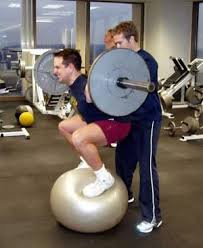
Image result for squatting on a bosu ball
Although this trainer could stand to have a little more categorical imperative in his life...

People without knowledge LOVE to make predictions, and this is because there’s something SUPER reassuring about predictions.  A prediction is a security blanket: as though one were an oracle, gazing into the future and seeing events before they unfold.  Its soothing in a chaotic world to be able to say “I know that, if I do 3 sets of 5 reps on squats each time I train, I’ll be able to add 5lbs to the bar each training session, and if I do it 3 times a week, I’ll add 15lbs to the bar each week, which means I’m going to increase my squat by 180lbs in 3 months!”  And think of how little knowledge was needed to make such a prediction!  It operates off the premise that progress itself is predictable, and the outcome mathematical method (the perfect amount of reps, sets and frequency of movement), as though there are no external variables such as fatigue or nutrition to manage, or that injuries large or small can upset the outcome, to say nothing of the chaos of daily existence throwing a wrench into the plan.  The one without knowledge says “You’ll add 180lbs to your squat in 3 months”, the one with knowledge says “I will happen when it happens, and no sooner.”

Those with knowledge have no need for predictions, for there is nothing to be concerned about when things do not go “according to plan”.  Those without knowledge need their predictions, and they will suffer NO deviation from those predictions, as they lack the skillset necessary to adapt to and overcome those deviations.  A trainee whose toolbox extends only as far as the number 5 for reps will have no ability to make progress once those sets of 5 stop working.  The trainee who has knowledge, that made no predictions, did not plan for WHEN those sets of 5 were going to stop working, but has a solution for when it happens.  They tap into that knowledge and come up with a new way forward, absent, once again, of a prediction for it succeeding, but at least with a willingness to try it and see if it works.  And, if it does, they keep moving forward until it doesn’t.  And, if it doesn’t, they try something else.  Because there are no guarantees, nothing is set in stone, and if you have knowledge, that’s nothing to worry about.


Sunday, January 26, 2020

SACRIFICE NOTHING


A literary theme I’ve always found particularly interesting is the notion of trading humanity for power.  We saw this classically with Faust and the typical “deal with the devil”/selling of one’s soul, but it’s been a persistent theme for centuries and still finds home in contemporary sources as well.  What tends to be interesting about these instances is that it is either a villain or someone who begrudgingly makes this sacrifice that is the focus of this theme, and in both cases, the message conveyed is clear: no rational, heroic, GOOD person ever makes this sacrifice.  You are either black of soul or put in a situation where you have no other choice to make this sacrifice, making you either evil or pathetic.  But here is what is interesting: heroes are EXPECTED to make sacrifices: just not THAT one particular sacrifice.  Heroes are supposed to sacrifice time, self-interest, and in many cases glory and riches, in order to achieve heroic ends: it’s just the sacrifice of humanity that is deemed “unacceptable” due to the value that we place on humanity as an entity.  In this, the message is clear: in order to make acceptable sacrifices, one must not value those things that are needed to be sacrificed and, in turn, the power an individual has is the power to alter their values such that they, ultimately, sacrifice nothing to reach their goals.

Image result for kefka palazzo
It's a pretty safe bet this guy didn't mind sacrificing his sanity for power

That was a mouthful, and in full disclosure I was just trying to shoe-horn the title in there.  Breaking it down, it boils down to this: the value of a thing is fundamentally a quality that YOU can decide upon.  Yes, many other entities can weigh in on the matter, and some may even weigh heavily in their influence by force of law or societal pressure to hold the same value as everyone else, but, fundamentally, the decision on what you value and how much you value it is ultimately up to you.  In turn, this means that, the degree of significance of what gets “sacrificed” in pursuit of your goals fundamentally rests within you as well.  This is Nietzsche’s “revaluation of values” in action: a conscious decision to re-order and prioritize the things that you hold valuable and do so in a manner that fundamentally benefits you and your goals.

In the instance of those that sacrifice humanity in order to achieve power, those that hold humanity in the highest regard will see such a sacrifice as abhorrent: nothing is worth that. But what if the truth of the matter is that those that were seeking such power ultimately held little value for humanity.  What if they felt humanity was the one thing holding them back from achieving their goals?  They’d gladly jettison humanity, for power, sure, but hell, maybe for anything.  Maybe they valued it so little they’d trade it for a sandwich, and they were just happy with how good of a trade they got on the matter. 

Image result for briar rabbit
Oh please no, anything but that...

This is what “giving up what others are unwilling to give up” really boils down to.  You don’t need to make bigger sacrifices than others to get ahead: you can simply value things they value less than they value them.  Can you imagine what you could achieve if you didn’t value your time?  You could train like it was your job, quite literally, spending 8-9 hours in the gym, with prodigious rest periods and insane amounts of volume.  If you didn’t value our money?  Imagine the unfettered access you’d have to the greatest gadgets and toys, meal plans, etc etc.  Don’t value your health or longevity?  That is the training equivalent of “trading humanity”: sacrificing your “self” in order to obtain as much strength as possible.  And if none of these things hold any value, you wouldn’t even really need to sacrifice them at all: it’d be considered a sucker’s trade.  You got something for nothing, assuming that is how you regard these qualities.

And this also means having an honest self-assessment when determining a training plan.  People make so many empty claims, saying things like “I’d give ANYTHING to train at Westside Barbell”, yet when pressed to quit their job, sell their house, drive across the country to Ohio and go train there, they rebuke the advice and offer excuses.  Be honest: you won’t actually give anything.  In point of fact, you’re willing to give very LITTLE to train there.  You’d give anything to get jacked…except lift weights 4 days a week.  Ok, then be honest: you’re more willing to sacrifice getting jacked than you are to sacrifice training only 3 days a week.  There’s nothing wrong with HAVING these priorities: the only issue exists when we refuse to acknowledge that THESE are the actual priorities.  Sacrifices are for martyrs: we just need to figure out what our values are here.

Image result for squatting on a bosu ball
Clearly not safety. Or effectiveness.  Or dignity.

The big takeaway is that it’s borderline ridiculous how empowered you are when it comes to determining your fate.  This is Sartre’s “radical freedom”: terrible, oppressive, choking freedom.  It’s far easier to make yourself a slave and paint yourself as powerless than it is to accept just   how much YOU are the reason for your limitations.  And it’s only when we view our decisions with regret that we find the situation disagreeable: if we are at total peace with our decisions, we have nothing to regret and have reached our max power and potential under the conditions we have decided to permit to ourselves.  When we take owernship of the fact that we have decided that certain things hold higher value than our success in pursuing a specific goal, there is nothing to lament, but when we delude ourselves into thinking WE are not the ones that made this decision, the dissonance between reality and the delusion we live under will constantly cause frustration.  Make the decision, figure out what you value, and sacrifice nothing.     

Saturday, January 18, 2020

SUCCESS CAN’T BECOME OBSOLETE


It most likely shocks no one that I’m not an “early adopter” as far as technology goes.  I didn’t get text messaging until 2013, and that was only because my work was sending schedule changes by text and I wasn’t getting them.  I still don’t own a tablet.  I write these blogs on a laptop I bought in 2015, and I also use that same laptop to play through my 300th playthrough of Fallout and Diablo (man, 1996-1997 was a GOOD era).  I’m still driving the first car I ever bought back in 2008.  Examples abound, the fact of the matter is, when something works, it doesn’t really matter to me if something better comes along: I only tend to make changes when I need to.  But here’s the crazier thing about this: this is me not adopting new technology in the face of the fact that obsolesce is a real concept in the world of technology and still achieving success.  So why would you need to change how you train to avoid obsolesce?

Image result for louie simmons
This is the exact look I imagine I'd get from him after he read that

Where is this rant going?  Specifically, I’m rallying against people that read one article or watch one Podcast (say, the Joe Rogan Experience, featuring Pavel Tsastouline or Rob Oberst) or one study (abstract of course) and suddenly decide that their entire training protocol needs an overhaul and everything needs to be thrown out.  These trainees discover that any rep above 5 is “garbage volume”, or that they should never do deadlifts, or that they should never strain in training, or that they need to train bodyparts twice a week, etc etc.  And I ask them “Was your training working PRIOR to this discovery?”  And what do I get in response? 

People act like that question is completely immaterial to the conversation at hand, and that, quite frankly, is insane.  And not the kind of insanity that I champion, of Viking berserkers charging headlong into battle against mounted armored cavalry wearing nothing but bearskins, but more the “tinfoil hat to keep the government radiowaves out of my skull” kinda insane.  The primary goal of training is to achieve your goals: THAT is why you train.  If your training is achieving your goals, IT IS WORKING.  If you are getting bigger and stronger training a bodypart once a week, you have demonstrated that this method is a method that achieves success.  If a study comes out that says otherwise, THAT STUDY IS WRONG.  At least, insofar as it relates to you.  The same is true if you’re the kinda dude that squats until you puke and find out that submax training is what works, or if you’re a walking JPS meme and have “there is no reason to be alive if you can’t do deadlift” tattooed on your body and discover that you’re not supposed to deadlift: if it works for you, then the “new technology” is wrong.

“But I want to be optimal!”  Oh my god, shut up.  I think I had plans to make this into a paragraph, but honestly, that about says it all.

Image result for step brothers you sound stupid

Folks, the human body is not evolving at a rate that you can perceive, to include by the decade.  Things that worked in the 1920s are going to work in 2020, let alone things that worked in 2010.  Sure, there are a few mutations roaming around, but you’ll know if you have one pretty quick, and unless you’re a new X-man, it means that methods that work will work for you.  This includes things like “bro splits”, which were just called “splits” back in the day, because people somehow were less stupid despite having access to less information and “knowledge” back in the day and didn’t need to give derogatory names to a way to train.  It includes HIT, Heavy/Lights, Arnold’s Encyclopedia of Bodybuilding training, Abbreviated Training, Heavy Duty Training, Dogg Crapp, and yes, EVEN the first edition of 5/3/1 (so you can stop getting upset that Jim released newer editions, because you can still use the old one if you want to).  Simply because new information came along doesn’t somehow invalidate the success of that old information: it just means there’s even MORE ways to achieve your goals now.

And let me just make the observation that, the more I see trainees try to follow the “new rules” of training, the more I see trainees failing to make results.  One of the most popular programs I’ve seen recently is a 6 day a week Push/Pull/Legs program.  Since push/pull/legs would only train the muscles once a week (taboo, you see), this means trainees need to run the program 6 days a week, in order to hit that holy “2 days a week’ for training muscle groups.  And every time I’m online and I see someone say that they’re stalling in their training, I ask them what program they’re running and they reply with this.  And I can’t help them.  Primarily because I grew up in an era where, if you told any dude you were lifting weights 6 times a week, their immediate reply would be “stop doing that: it’s too much training”.  Primarily because there was an expectation back then that you were absolutely slaughtering a muscle group when you trained it, and that you needed to rest it so it could recover and grow.  And now we’re told that idea can’t possibly work, in spite of the fact that it does, and that instead, this new idea is what works…in spite of the fact it doesn’t?


Image result for squatting on a bosu ball
I suppose I've seen crazier ideas...

And before I get flooded by people that want to defend their holy PPL program, LEARN the lesson of what I’m writing here.  If I’m writing a blog saying your program can’t work, and your program HAS worked for you: that means I’m wrong.  BUT, if someone wrote that the program you’re following will work, and it’s NOT working: that means THEY’RE wrong.  Success can’t become obsolete, but failure is a SURE sign that something needs to get evolved.  And maybe, sometimes, evolution moves us backwards or sideways instead of forward.